The Israel Brief – 08 April 2019 – Eve of Elections! Israel readies for moon landing. South Africa downgrades embassy in Tel Aviv.
The Israel Brief – 09 April 2019 – Election Day!
The Israel Brief – 11 April 2019 – Election results!

Reliable reportage and insightful commentary on the Middle East by seasoned journalists from the region and beyond

The Israel Brief – 08 April 2019 – Eve of Elections! Israel readies for moon landing. South Africa downgrades embassy in Tel Aviv.
The Israel Brief – 09 April 2019 – Election Day!
The Israel Brief – 11 April 2019 – Election results!

At midnight on the 25th March 2019, I recall the last sound I heard before dropping off to sleep was a clap of thunder.
Five hours later, I awoke to another BOOM! This time it was not thunder but the deafening sound of a missile having landed nearby destroying a house near Kfar Saba in the centre of Israel, injuring seven.
It was a reminder that the murderous intent of those who govern Gaza extends far and wide.

It further reminded the writer of a visit to a number of army basses close to the Gaza border a few months earlier organised by ‘English-Speaking Branch of the Association for the Wellbeing of Israel’s Soldiers’.
There were fifty in our group who were invited to the official opening of two new army-base clubhouses, sponsored by Dave and Rae Kopping, a couple originally from South Africa. It also provided an opportunity to learn firsthand how the Israeli civilian population in the small towns and kibbutzim near Gaza were coping under the constant threat from attack from below the ground from tunnels and above the ground from rockets, mortars and inflamed kites and balloons.

As I write recalling that visit, I cannot fail to reflect that the loud BOOM that awakened my family last week and had us scurrying off to the bomb shelter was nearly a daily occurrence to the brave and resilient Israelis living in the south.

While Israel battles politically to get its ‘house’ in order regarding Gaza, Dave and Rae Kopping ‘enlisted’ in their own way to provide club ‘houses’ for soldiers at IDF bases near the border.

They began four years earlier following Operation Protective Edge in 2014 when the IDF had to protect Israeli civilians facing a daily barrage of missiles from Gaza for 50 days. The Koppings showed their heartfelt gratitude by donating a clubhouse at the Palmachim Airforce Base for the Drone and Helicopter Pilots. “They operate under enormous pressure, protecting us from this constant threat,” said Ray at the official opening. “They deserve a special place to unwind and relax.”
Four years later, what had changed was not the political but geographic landscape with expansive swathes of black cutting across the North Western Negev countryside caused by incendiary balloons and kites sent from Gaza and landing on fertile fields. This was all too apparent from the bus window as we saw once green fields now black from the fires caused by the balloons and kites.

As my companion on the bus remarked “how sad that kid’s kites and balloons in Gaza are weapons of death and destruction.”
As a running commentary to the visual horror playing out on a blackened somber ‘stage’, our guide related how much livestock and natural wildlife had perished in the fires.

Southern Comfort
The Kopping clubhouses replete with comfy couches, coffee tables, kitchenettes, TVs and sound systems, honour – like the earlier one at Palmachim – the memory of the Kopping’s daughter Greer-Rose Sandler who sadly passed away fourteen years earlier from an illness, and Rae’s brother Isaac Melcer, who was killed in the Sinai during the Yom Kippur War in 1973. “He was a tank commander who served under General Ariel Sharon,” reveals Rae, “and had only been married a year.”
“What better way to honour their memory,” adds Dave, “than to know that Greer-Rose and Isaac’s names will be forever associated with those who protect Israeli citizens from harm.”

Tunnel Vision
The day proved an eye-opening window into the life – with all its complexities – of the civilian population living ‘Under Fire’ near Gaza, and the role the brave soldiers play in providing protection. Entering the first base, ‘X’, we noted with surprise that far outnumbering the parked tanks, were giant bulldozers.
We did not have long to wonder why!
Earth-moving equipment usually associated with construction elsewhere, were used here to counter destruction “as we dig up the earth in search of terror tunnels,” explained a young soldier. A recent immigrant from the UK, he related a recent incident when they were out nearby on patrol.
“We were walking along single file in the fields, when we passed a plastic pipe protruding from the ground. There was nothing unusual about this, as the area is always scattered with farming equipment.” That was until one soldier, keeping up the rear, “looked back and noticed a slight sudden twitch of the pipe.”
“That’s odd; there’s no wind,” he thought!
“Rega (“wait”),” he bellowed.
Doubling back, the patrol discovered it was an oxygen tube for the terrorists deep below who were digging a tunnel, and “we radioed in for the bulldozers.”
Relieved by their discovery, “We also knew from our intelligence there were fourteen more tunnels to locate.” Last year, the IDF destroyed a 2km long Hamas tunnel that entered 900 meters into Israeli territory. The problem is, “The terrorists need to be on the job for us to detect any subterranean movements.”
Such is the day in the life of a soldier protecting Israel’s southern communities – a game of cat and mouse.
Tough Times
The name of the 2014 war, “Protective Edge” had a resonance about it as “protection” is what this conflict is about. On a personal level this was brought home when a soldier asked, “Anyone want to try on our bullet proof gear?”
Some did, and were surprised by the weight, and left wondering how soldiers patrolled for hours wearing it in the blazing heat. There was sadness as we were reminded “that one of our comrades, Staff Sgt. Aviv Levi, was killed last week, by sniper fire.” He had been wearing the very same bulletproof jacket! The answer to the predictable question of how the bullet lethally penetrated – “special bullets made in Iran” – was met by a collective sigh.
Moving on to the second base, ‘Y’, we saw from the moving bus, more fields black from fire – a patchwork of this new type of warfare of kites and balloons, which much of the world media presents as “child’s play”.
Passengers flicked away with their cameras in disbelief.
Arriving at the base, we were escorted by young male and female soldiers to the new Kopping clubhouse for the official opening. Members of the Kopping family spoke as did some soldiers, who explained how tense this new warfare was.

Said one soldier, “We know how terrified the civilian population is of terrorists coming up through tunnels who could murder them. It is our job to find these tunnels and prevent this.” A responsibility fraught with anxiety, all the soldiers appreciate after tough days on patrol, “we now have a clubhouse where we can relax and unwind.”
Another female soldier expressed how proud she was to be serving in a combat unit, and this writer could not escape the thought that their peers elsewhere in the Jewish world would be at universities…. here they were immersed in the “university” of life – protecting “our family – Israel.”

Later, seated for lunch in the army dining room, a young soldier, an immigrant from the Argentine, addressed our group:
“These are tough times for the civilian population and for the soldiers. It is a tough war, but we are trained, and we are equipped, and we are inspired – not only do we know WHAT we are doing but WHY we are doing.”
Yes, these are “tough times”, but so are these ‘kids’ – tough and proud – proud of their country, proud of their units, proud of their service, and proud of each other’s capabilities. The camaraderie was palpable. There was much food for thought to ‘digest’ beyond the lunch!
Witness To War
Our tour concluded with a visit to the Black Arrow Memorial, west of kibbutz Mefalsim near the Gaza Strip.
Operation Black Arrow (In Hebrew: “Hetz Shachor”) was an Israeli military operation carried out in Gaza on 28 February 1955 while under Egyptian control. It was in retaliation to Fedayeen terrorism unleashed by President Gamal Abdel Nasser who broadcast on August 31, 1955:
“Egypt has decided to dispatch her heroes, the disciples of Pharaoh and the sons of Islam and they will cleanse the land of Palestine….There will be no peace on Israel’s border because we demand vengeance, and vengeance is Israel’s death.”
As we stood at the Black Arrow Memorial, we saw balloons flying from Gaza in the distance then descend on fertile Israel fields and suddenly there was a blazing fire. We were witnesses to war. Over six decades later, the message from Gaza remains:
“…vengeance is Israel’s death.”

For more information on the English-Speaking Branch of the Association for the Wellbeing of Israel’s Soldiers, contact volunteer Ian Waldbaum at Tel:
(054) 4745 092.
Association for the Wellbeing of Israel’s Soldiers
(Feature picture credit: Tamara Cohen)

The Israel Brief – 18 February 2019 – Israel-Poland diplomatic spat. PA accuse Israel of Piracy. Has the world lost patience with Palestinians?
The Israel Brief – 19 February 2019 – Qatar cuts Hamas electricity bill, France protests anti-Semitism, ISIS brides and Yisrael Beyteinu
The Israel Brief – 20 February 2019 – UK Labour Party Exodus. PA refuse tax money. Elections a Game of Thrones style?
The Israel Brief – 21 February 2019 – Israel to the Moon! France adopts IHRA definition of anti-Semitism. Iran threatens war. Major election news.

Although a tiny country geographically, Israel’s challenges are enormous, hence it is hardly surprising that the number of think tanks in the country increases steadily. Today, there are dozens of such institutions providing decision makers with high-quality and objective policy research on a range of critical issues.
We have seen how events can confound “even the experts” – most notably 2016. How did the plethora of experts, analysts and predictors get the Brexit vote or the Trump election to the USA Presidency so wrong?
Clearly, predictions on human behaviour are difficult to call, hence the importance of ‘think tanks’ to research and advise. “Policymakers need understandable, reliable, accessible, and useful information about the societies they govern,” according to a 2016 Go To Think Tank Index Report. “They also need to know how current policies are working, as well as to set out possible alternatives and their likely costs and consequences.”
Think tanks may vary by ideological perspectives, sources of funding, topical emphasis and prospective consumers.
In October 2017, a new think was launched in Jerusalem, billing itself as Israel’s “new conservative security think tank” that “seeks to counter debilitating currents in Israeli defence and diplomatic discourse and recapture the mainstream in Zionist security thinking.”

The Jerusalem Institute for Strategic Studies (JISS) has already made a name for itself as a result of its activities in a number of areas, including “the Jewish people’s historic connection to the land of Israel as a central component of strategic worldview; the salience of security in diplomatic agreements; rejection of unilateral Israeli moves that strengthen adversaries; the importance of strategic cooperation with like-minded allies; the imperative of Israel being able to defend itself by itself; and, critically, the importance of a united Jerusalem to Israel’s security and destiny.”
All these policies and stratagems fall under the main umbrella of reclaiming Zionism. Its worldview is conservative and strategic and, according to its vice-president Eran Lerman, a former deputy head at the National Security Council, it will deal with the basic issues of national security, with an emphasis “on the struggle for the future of Jerusalem.”
Hereunder are a few of the major think-tanks playing a vital role in the Israeli government’s policy-making decisions.
– the Taub Centre for Social Policy Studies does impartial research on socioeconomic conditions in Israel, and develops innovative, equitable and practical options for macro public policies that advance the well-being of Israelis. The Center strives to influence public policy through direct communications with policy-makers and by enriching the public debate that accompanies the decision-making process.
http://taubcenter.org.il/all-videos/
 – the BESA Centre (the Begin-Sadat Centre for Strategic Studies) is named in memory of Israeli Prime Minister Menachem Begin and Egyptian President, Anwar Sadat, whose ground-breaking Egyptian-Israeli peace treaty laid the cornerstone for conflict resolution in the Middle East. On June 14, 2009, Prime Minister Binyamin Netanyahu chose the BESA Centre podium as the venue for announcing his historic acceptance of the “Two-State Solution”.

-the Israeli Democracy Institute, based in Jerusalem, is an independent centre of research and action dedicated to strengthening the foundations of Israeli democracy and bolstering the values and institutions of Israel as a Jewish and democratic state. In the University of Pennsylvania‘s 2014 Global Go To Think Tanks Report, IDI was ranked the twenty-third best think tank in the Middle East and North Africa.

-the Aaron Institute for Economic Policy seeks to sustain economic growth and social strength in the country by developing modern and innovative strategies and policy tools for the Israeli economy. Based at the Interdisciplinary Center Herzliya (IDC) which today has over 60 students from South Africa, the institute’s main aim is to develop policy strategies that eliminate weaknesses and empower the strengths of the Israeli economy. Its research focuses on multiple industries while examining the various reform tools and cross-referencing data with modern technologically developed countries while seeking ways of increasing cross sectorial growth by changes to industrial sectors.

–the Jerusalem Centre for Public Affairs (JCPA) specialises in public diplomacy and foreign policy. Founded in 1976, it primarily researches defensible borders; Jerusalem in International diplomacy; Iran and the new threats to the West; and combating delegitimization.

This think-tank focuses on Iran, radical Islam, the Middle East, Israel, the peace process, Jerusalem, antisemitism and world Jewry. Its Director of the Political Warfare Project, Dan Diker, in January co-penned an article with David Kaplan and Rolene Marks in South Africa’s Daily Maverick “Why Oscar van Heerden insults South Africa’s intelligence’. It exposed the lack of academic research and prejudice against Israel of the South African “academic”, Dr. Oscar van Heerden.
– Established in 2000, the Institute for Policy and Strategy (IPS) – also based at the IDC Herzliya – is the convener of Israel’s most prestigious annual conference, the ‘Herzliya Conference’, which aspires to contribute to Israel’s national security and resilience. The Institute conducts integrative and comprehensive policy analysis on the challenges facing Israel, identifying opportunities and threats, producing strategic insights and policy recommendations for decision-makers, and informs the public and policy discourse. Often referred to as “Israel’s Davos”, the Conference is annually attended by participants from South Africa.
 -the nonpartisan policy think tank Reut Institute in Tel Aviv provides real-time, long-term strategic decision-support to Israeli policymakers, aiming to “identify the gaps in current policy and strategy in Israel and the Jewish world, and work to build and implement new visions.” Reut is not akin to the traditional ‘think-tank’ model in that its methodology is very different: it focuses on unique cutting-edge theory, software tools, and impact strategy. It aims to provide early warning of strategic surprises and opportunities and to design strategies to avoid or seize them respectively.
“We don’t provide the answers, we frame the questions: we help people in positions of leadership, authority and influence identify and abandon old paradigms and refocus their thinking.”

Ever Mindful
These, and other think tanks that proliferate across the land, are suppliers of vital information to Knesset members and the public. They are peopled by some of the finest Israeli minds, often drawn from the ranks of academia. They focus on ensuring that policies and strategies adopted for the security, development and future growth of the Israeli state and its citizens are aligned with the needs of the latter – their continued prosperity, the resilience and cohesion of the Jewish people both inside and outside of the country, and the country’s standing in the international community.
Reading through some of the documents that come from these various think tanks is fascinating but simultaneously puzzling.
Are they official government policy? And if not, why not?
In many cases, their proposals and tactics seem to make more sense than the myriad of bureaucratic decisions which are often made reactively rather than proactively, and which appear to fly in the face of public consensus. They are reflective and profound and have clearly been analysed at length.
The Good, The Bad and The Great
It all makes fascinating reading.
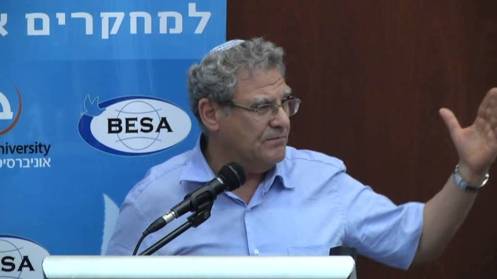
One research paper that particularly resonated for me was JISS’s Professor Ephraim Inbar’s recently published “The Future of Israel Looks Good”.
“Time,” wrote the professor, “is on Israel’s side.” His review of the balance of power between Israel and its foes; of the domestic features moulding Israel’s national power; and of Israel’s standing in the international community, “validates the assessment that Israel has the dominant hand for the foreseeable future.”
Inbar argues that Israel’s powerful military machine in overcoming numerous military challenges has enhanced its deterrence; and the decline in the intensity of the Arab-Israeli conflict is a direct result of its military superiority. The welcome beginnings of a peace process with several Arab states translates into a diminished likelihood of another large-scale conventional Arab-Israeli conflict.
Countering the endless threat of missiles on its civilian population, Israel deploys impressive anti-missile systems, which include the Iron Dome that in its encounters with Gazan terrorists, intercepted 88% of incoming projectiles. Inbar however warns that “these systems cannot provide a full defence in view of the numbers of missiles arrayed against Israel.”
The bad news – and there is always bad news – is a nuclear Iran which presents a grave national security challenge not only to Israel but to the region and beyond. This threat could start a nuclear arms race transforming a regional balance of power. While the emergence of a nuclear Iran is potentially catastrophic, Israel is believed capable of neutralising this existential threat.
But hey – what about the good, the better news? In 2010, recognition of Israel’s economic achievements opened the door to its becoming a member of the Organization for Economic Cooperation and Development (OECD), a brotherhood of the world’s 33 most developed countries that are committed to democracy and a market economy. Sound economic policies, an emphasis on market values, and a seamless adaptation to globalisation have resulted in Israel emerging as one of the most developed market economies, driven in large part by its science and technology sectors as well as its sophisticated manufacturing and agriculture areas.
While Israel has achieved so much in seven decades, I have taken a more sombre posture noting Israel’s position within the orbit of its international placing on the world stage.
What of Israel’s other stumbling blocks? What of the country’s social rifts? The Ashkenazi-Sephardic cleavage? The Palestinian citizens in the West Bank territories? Their accusations of apartheid and ethnic cleansing? The grim lives and the overcrowding in Gaza? And what future plans are there for that populace, many of whom want only an ordinary life, transport, freedom, movement, safety, education, health care?
Worth Thinking About
Think tanks work so long as those who people them, and those to whom their findings are conveyed, work simultaneously to secure their verification and their implementation. This demands leadership of the highest calibre with a commitment to pursue improved living standards rather than only planning for military crises.
And so, despite the odds and obstacles, Israel at almost 71 is a great success story. Its future will remain bright as long as it continues implementing prudent domestic and foreign policies and remains successful in transmitting a Zionist ethos to future generations. While peace with all its neighbours “is desirable,” says Prof. Inbar, “that eventuality is not a necessary condition for Israel’s survival or prosperity in the medium-to-long-term.”
Words of wisdom, words of comfort, words of reassurance.

By Rolene Marks
There is something that is quite phenomenal when women bond. Women can connect in a way that is unique and on a different level to their male counterparts. So, imagine the possibilities of what could happen when you bring together women from very divergent backgrounds!
One Man’s Vision
Israel is a country of simplicities and complexities and gorgeous diversity. This is a country that has gathered in exiles from over 80 different countries and has rich and diverse minority communities making up roughly 24% of the population and contrary to what many of her detractors would have you believe, they enjoy full and equal rights as citizens with representation in the Knesset (parliament).
But Israel, being a country filled with paradox, means that sometimes there are chasms between the cultures and creative ways to break down barriers is exactly what is needed.
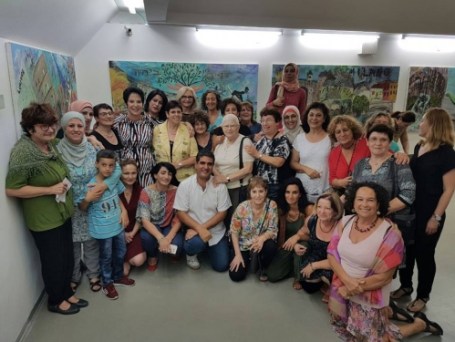
David Moatty, Director of WIZO (Women’s International Zionist Organisation) Afula Community Centre had a vision. What would happen if he brought together women from different cultural backgrounds to bond over something creative – painting?
The result was “The Olive Tree”.

The Olive tree has long been a symbol of peace. Its roots (pun very much intended!) stretch all the way to biblical times and are an iconic image for the Abrahamic religions. In Judaism, the olive tree and its oil, symbolises justice and mercy, and according to the Christian gospels, olives are symbols of sacrifice and love. In the Quran (the central religious text of Islam, which Muslims believe to be a revelation from God), it is written that the olive tree is the “world’s axis and the symbol of the universal humanity of the Prophet’.

Bonds of Friendship
They came from a variety of different backgrounds and ages with a common interest – to create art and perhaps make a friend or two. Women from all cultural and religious groups – Jewish, Muslim, Christian and Circassian and originally from places as exotic and diverse as Romania, Lithuania, Argentina, the Caucasian mountains and with a local flavour that included Nazareth, Umm-Al Fahad and Tiberius. Thirty-five women, aged between 17 and 80, painted glorious portraits of olive trees and weaved bonds of friendship that will last a lifetime.
The project is sponsored by a host of European WIZO Federations that include France, Switzerland, The Netherlands, Belgium, Austria, Germany and the United Kingdom.

Through their mutual love for art, the women have fostered an environment of tolerance and sharing. Olive trees make no distinction between cultures and art is a universal language and this is evident in the exquisite portraits painted by the women. Each picture tells a story and transports you through their personal journeys.
Mali Schneiderman from Kfar Saba was seriously wounded in a car accident ten years earlier. Painting has helped her to heal and regain both her physical and mental health.
Hana Rozenstein, a Holocaust survivor, has painted her “Tree of Peace” in gratitude to the beautiful country she calls home. Sharing her story with the Arab women in the group has brought her a tremendous sense of joy, and Shuzanna Abu-Masoud, the sixth child in a religious, Muslim family, dedicates her painting to her mother who adores the multicultural contact between Jews and Muslims.
Uniting Nations
It is not just the paintings and their talented artists that tell a story. This project with its roots firmly grounded in tolerance and altruism, has found itself warmly received all over the world – even in the halls of the United Nations, where it has been showcased both in Geneva and Vienna.
Mention of the UN is guaranteed to raise the blood pressure of every Israeli as the institution seems to have a disproportionate amount of focus on the Jewish State but the Olive Tree project is living proof that accusations of practices of Apartheid and trumped up resolutions are figments of the imagination. The real work is done on the ground between Israel’s citizens. This is where peace is negotiated.
The Olive Tree project has recently been renamed “Shutafot le Derech” and the journey that it has inspired has not just been a tour of the world – helping to tell Israel’s stories of diversity and tolerance that are so seldom heard but do exist – but also healing.

It is here amongst the women, amongst the unbreakable bonds of friendship, where the roots of peace are firmly planted.

The Israel Brief 20 January 2019: Israel Chad renew ties, Iron Dome intercepts Syrian rocket and Netta!
The Israel Brief 21 January 2019 : Martin Luther King, Iranian rockets and open Sudanese airspace and viewer
The Israel Brief 22 January 2019: Mali, strike casualties, Save a Child’s Heart and baby rhinos…
The Israel Brief 23 January 2019: Trump peace plan, IAF strike Hamas, Aya Masarawe
The Israel Brief 24 January 2019: Short and sweet! 16 year old charged manslaughter, more Iron Domes rolled out German antisemitism

By Rolene Marks
One of the world’s most famous human rights icons and uber-Zionist, Natan Sharansky, theorised that you can measure anti-Semitism through what he calls “the 3-d lens”. It is not a fabulous accessory for your eyes but rather a logical checklist to measure anti-Semitism.

The 3-d’s identified by Sharansky are – Demonization, Double-standards and De-legitimization.
The world seems to be suffering from an age-old disease for which there seems to be no cure – anti-Semitism. Often lying dormant until it can manifest in whatever trendy guise is part of the current zeitgeist, anti-Semitism has currently reared its ugly head as hatred against the Jewish state, Israel. The 3-d lens has helped define this ugly phenomenon a lot more clearly. It seems that lately that you cannot open a newspaper or scroll through your social media news feed without mention of an anti-Semitic incident somewhere in the world. The ominous site of the Nazi swastika is now common on university campuses across the USA and other parts of the world with its appalling message – Jews not welcome!

Recently, Jews around the world commemorated 80 years since the horrific events of Kristallnacht on the 9th of November 1938. Kristallnacht is a brutal reminder that the Holocaust did not start with gas chambers and Auschwitz. It started with words.
Many believed that after the atrocities of the Holocaust were made public, anti-Semitism would have ended. Today it is manifesting in new forms. In the past, anti-Semitism has revealed itself “traditionally” in ugly caricatures and stereotypes, the desecration of cemeteries and places of worship and discrimination against Jews. I remember a time in my life when sports clubs and organisations where what we called “JNA” – Jews not Allowed.

Today it is different – and no less malignant.
It has become a gross and dangerous global phenomenon – France reported a 69% growth in anti-Semitic attacks in 2018 and German Chancellor, Angela Merkel, has issued her own caution against growing levels, and in the United Kingdom, concern that it has been given a tailwind by Labour Party leader, Jeremy Corbyn has given rise to yet another manifestation – that of political anti-Semitism.
It is often said that when the world is in a time of chaos the first scapegoats to bear the brunt of peoples’ frustration and anger are the Jews. Images of the new ‘yellow vest’ phenomena in France with their virulent indictment against what they see as wealthy Jews responsible for their misfortune does not happen in a vacuum. It happens when we fail to examine anti-Semitism through the 3D lens.
It is not specific to the European continent either. This cancer is prevalent in the USA as well.
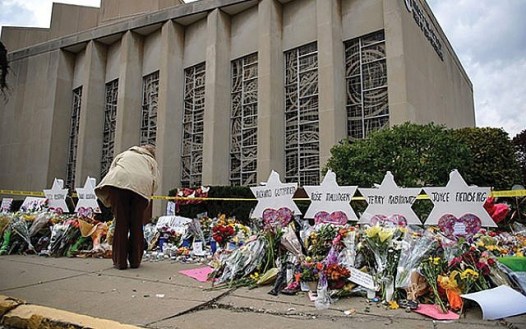
The horrific events in the Tree of Life Synagogue in Pittsburgh where 11 people, with an average age of 73, were slaughtered during Shabbat prayers simply because they were Jewish, has exposed startling levels of anti-Semitism in the United States. Their killer clearly stated on more than one occasion that “All Jews must die”. This horrific attack has been termed the worst anti-Semitic incident in US Jewish history.
Anti-Semitism is spreading its tentacles in a variety of forms. It is present in the far-right to far-left, from the lowest of the low KKK member to the upper echelons of the political establishment. It is also present in a new trend called Intersectionality – which can basically be defined as all suffering or oppression is linked. In other words, if you feel discriminated against as a woman or for your sexual orientation, you could immediately identify with oppressed Palestinians. Context and nuance be damned! This is impacting on the Jewish community as the message is simple – all are equal, all are welcome, except Zionists.

In a world where women’s rights and gender equality is growing in the collective global consciousness, spurred on by movements like the Women’s March, one would think that these seemingly progressive organizations would embrace diversity. And they do. Except if you are a Jewish woman who identifies as Zionist!
This is where intersectionality is finding a support base. The leaders of the Women’s March have come under increasing criticism for their support of arch anti-Semite, nation of Islam leader, Louis Farrakhan. Farrakhan meets all 3 of the d’s in Sharansky’s lens. He demonises – having referred to Jews as “termites” or “satanic” and “have infected the whole world with poison and deceit.” He questions Israel’s legitimacy (de-legitimization) by calling or the destruction of the Jewish state. At the end of a talk to students at the University of Tehran law school, Farrakhan led the chanting of the common Iranian refrains “Death to Israel” and “Death to America,” and was joined by members of the audience. Farrakhan also displays an appalling double standard when it comes to racism. An “advocate” for racism, he employs the grossest vitriol against Jews – “The Jews have been so bad at politics they lost half their population in the Holocaust. They thought they could trust in Hitler, and they helped him get the Third Reich on the road.”

This is a man that Tamika Mallory, one the leaders of the Woman’s march declared “GOAT- Greatest of all time” and that her colleagues Carmen Perez and Linda Sarsour proudly align themselves with. What could have been a revolutionary movement for women, has descended into a cesspit of hatred and discrimination that is resulting in chapter after chapter cancelling their solidarity marches because of accusations of Anti-Semitism.
Anti-Semitism has found fertile ground on the African continent as well. Once the economic powerhouse of the continent, South Africa and in particular its ruling ANC (African National Congress) party, have created an environment that is allowing the seeds of hatred to firmly take route. The ANC have cemented their relationship with international terror organization, Hamas. The irony of it all is that the Charters of these two organisations could not be more different but yet they have found common ground, signing a Memorandum of Agreement to increase co-operation and entrench their mutual solidarity against the State of Israel. Apart from the absurdity of this alliance, this has a knock-on effect and is evident in the increased vitriol on social media, support for BDS and amongst populist groups like Black Land First and the EFF (Economic Freedom Front). It is deeply worrying that the Rainbow Nation is forgetting the lessons of its past and descending into a cesspit of intolerance – especially since the rest of the continent is opening up to and warming ties with Israel.

Whenever the world seems to be in chaos, Jews are blamed for this and today anti-Semitism is embarking on a dangerous world tour. It can no longer be viewed as solely a Jewish issue or a left- or right-wing phenomenon. Eighty years after Kristallnacht, we are reminded that the Holocaust started with words and not gas chambers and if we treat all forms of racism as equal, then we all need to start looking at anti-Semitism through Sharansky’s 3-d lens.

It is often said that Jews are the proverbial canaries in a coalmine and that what starts with the Jews does not end with the Jews. In times of turbulence, Jews are often the first scapegoat but very rarely the last.
For anyone who deigns to deny that anti-Semitism is a growing international problem, perhaps they need to borrow Sharansky’s 3D glasses.

Except it was more ‘misery’ than ‘merry’ all thanks to Hamas
By David E. Kaplan
“Don’t celebrate and survive” was the 2018 Christmas greeting that Christians received in Gaza!
While across the world people wished Christians a MERRY Christmas; in Gaza they were threatened NOT to be merry.
The same Hamas that South Africa’s ANC government in November 2018 welcomed to Parliament in Cape Town, only a month later, allowed flyers to be widely circulated threatening Palestinian Christians not to celebrate Christmas – or else.

The terrifying flyer was penned by the Al-Nasser Salah al-Deen Brigades – a coalition of Islamist groups operating in Gaza – and it warned the 1,300 Christians living in Gaza, as well as Muslims looking to take part in the holiday festivities, that celebration of the Christian holiday is forbidden by Islam. The flyer included quotes from the Quran alongside a burning Christmas tree.
Needless to say, this shattering news did not appear in South Africa’s media or on BDS’s venomous website – it was too busy contriving nonsense like, “Santa will not be visiting Bethlehem,” because of Israeli activities.
Time for the Truth
While Israel promotes and welcome Christians to the Holy land – a total of 73% of Christians tourists said they would “certainly” or “probably” revisit Israel as revealed in a Ministry of Tourism report – Hamas has abandoned its Christian community.
The verse from the Quran quoted on the inside of the flyer was not only aimed at Christians but also at Muslims whom were warned “not to go the way of the Jews and the Christians, indeed God is not for the evil people.”
Can a message be clearer – Christians and Jews are “evil people.”
The flyer admonished that it is “absolutely forbidden” to celebrate the holiday in any capacity.

The Other Cheek
On the other hand, Israel welcomed over 150,000 Christians for the festive season, who celebrated at the many Holy Land sites such as Jerusalem, Bethlehem and Nazareth as well as other locations where the Christmas story unfolded over 2000 years earlier, over 600 years before the arrival of Islam. The most visited sites were the Church of the Holy Sepulcher in Jerusalem, followed by the city’s Jewish Quarter, the Western Wall the Via Dolorosa, Mount of Olives as well as Capernaum on the Sea of Galilee and the Basilica of the Annunciation in Nazareth.

Despite the tense situation and a number of Jews who had in recent weeks been murdered by Palestinian terrorists, Israel took special measures to assist Palestinian Christians in observing the holiday. A week before Christmas, the Coordinator for Government Activities in the Territories (COGAT) Maj. Gen. Kamil Abu Rukun met with various Palestinian leaders, including some residing in the Gaza Strip, presenting special measures such as more flexibility in granting permits for Christian Gazans to visit family members in the West Bank. Reports reveal that roughly 50 percent of all Christians living in Gaza received these special permits from Israel.
Enabling Christian to enjoy Christmas celebrations in Bethlehem, Israel’s Tourism Ministry, headed by Yaniv Levin, whose great-grandparents were South African from the Orange Free State, provided free transportation to and from Jerusalem from 2.00p.m. on Christmas Eve to 2 p.m. on Christmas Day.
Last Christmas, the Jerusalem municipality handed out complimentary “Christmas trees” to residents ahead of the holiday. During the distribution of the live, potted trees, Santa showed up and rode a camel, and mingled with children and others at the Old City’s Jaffa Gate.

President Reuven Rivlin extended his own Christmas greetings to those celebrating this year, wishing Christians around the world a holiday “full of peace, joy and love.”
Bearing False Witness
Israel’s spirit of celebrating Christmas stands in stark contrast to the toxic conduct towards Christians in Gaza. Dexter Van Zile, a Christian Media Analyst for the Committee for Accuracy in Middle East Reporting in America (CAMERA) writes that “It is time to evacuate the last remnants of Christianity from the Gaza Strip.” Referring to Gaza as having been turned “into an impoverished theocratic gulag by Hamas,” he writes that Christians who live there, “suffer from the threat of kidnappings and forced conversions at the hands of extremists.” These stories do not appear on news networks because, “Journalists who criticize Hamas are imprisoned and tortured.”
Van Zile expounds on the nature of this diabolical situation.
For Christians to remain in Gaza, “they and their benefactors in the West must conceal Hamas’s evil acts from scrutiny and condemnation.”
He cites the case of the 2007 kidnapping and forced conversion of Sana al-Sayegh, a professor at Palestine University that was “perpetrated by Hamas militiamen and that Prime Minister Ismail Haniyeh was deeply involved in.”
Why is the truth suppressed?
As Van Zile reveals, citizens of Gaza “operate under the thumb of Hamas and have to watch what they say about life in the Strip.” It is much easier, “to blame Israel for the suffering Palestinians endure.”
Living a lie is a resident’s passport to survival!
Telling false narratives that absolve Hamas and condemn Israel, is the price of Christian survival in Gaza. In order to survive, “Christians and their benefactors must bear false witness,” or “lie by omission the sins of Hamas.”
Because of this untenable situation, Van Zile sadly advocates:
“It’s time to evacuate every last Christian from Gaza.”
However it’s not just in Gaza! The Gaza Strip is a microcosm of the plight of Christians living under Muslim rule.
Only a few weeks earlier, the head of the Church of England, the Archbishop of Canterbury, Justin Welby, wrote in The Sunday Telegraph that millions of Middle East Christians are on the verge of “imminent extinction.”
He lamented that “In the birthplace of our faith, the community faces extinction,” calling it, “the worst situation since the Mongol invasions of the 13th century.”
In the early 20th century, Christians made up to 20% of the population in the Middle East. That figure has now dwindled to around 5%. Its easy to understand why and that Israel has nothing to do with this exodus.
Before the ‘Arab Spring’, Christians in Syria were businessmen, engineers, lawyers and pharmacists. Now they are leaving the country in their droves. In Iraq, 300,000 Christians have fled persecution since the downfall of Saddam Hussein and in Egypt, Christians face harassment leading them to emigrate in record numbers.
Nasty Along The Nile
Egypt’s Christians or Copts as they are known, are facing “unprecedented levels of persecution and suppression,” according to The Open Doors 2018 World Watch List Report.
In 2017, more than 200 Copts were driven out of their homes and 128 were killed because of their faith.

Numbering approximately nine million, the Copts represent 10 percent of Egypt’s population and roughly half of the Christians living in the Middle East. Since 2014 their persecution has increased with the World Watch List Report listing Egypt “as the 17th most dangerous place for Christians to live.”
On the CBS News’s December 2013, ‘60 Minutes’ programme, the plight of Copts was revealed as having “suffered one of their worst periods in nearly 2,000 years.” Following the overthrow of Egypt’s first Islamic president in a military coup in 2013, Christians were the target of revenge by Muslim mobs, and over 40 Christian churches all over Egypt were gutted by arson and looted. Some of these churches were over a thousand years old and filled with priceless relics. Since then, Copts have been murdered in ongoing sectarian violence. An example of such murders was this 2018 report in Open Doors:
“Two young masked men entered the pharmacy and dragged my father outside. They told him to kneel in the street. They put two guns at my father’s head and told him to convert to Islam. But he shook his head. Then they shot him.”

Pattern of Persecution
Leaving Egypt, a quick flip across the Middle East reveals a pattern of persecution of Christians.
In a heinous incident in 2016 in Syria, jihadists slit the throat of a Christian man in front of his wife, giving a vent to their odium for Christianity. They mocked the woman in a derogatory way saying, “Your Jesus did not come to save him from us.” This odious incident took place in Syria’ ancient town Maalula; which was invaded by militants a few days earlier during the Civil War.

Another Christian woman resident of Maalula related to the media that “They arrived in our town at dawn and shouted ‘We are from the Al-Nusra Front and have come to make lives miserable for the Crusaders.” The woman who was identified as Marie, further narrated that after their first advance against the town, Christians started fleeing.
This is the new trend.
In Turkey, Christians are facing oppression by their government and while Christians were once a majority in Lebanon, that is no longer the case. From the civil war which began in in the 1970s, to the Syrian occupation, to ISIS aggression, Lebanese Christians have suffered and fear becoming extinct in their own country, given the sheer number of young, educated men and women emigrating.
In Iraq, the situation is far worse. There, the Christian population has dramatically dwindled; while there were once 1.4 million Christians, there are now less than 200,000. In Syria, Christians and Yazidis faced a full-scale genocide at the hands of ISIS, and even then, the TV news networks were reluctant to use the “g-word.” Truth be told, TV networks are far more interested in anything the Pope might say on gay marriage or contraception than genocide.
Why have these networks failed to spotlight the plight of Christians suffering increasingly under Islam? Correspondents have long connected the dots, writing of the hundreds of thousands of Christians “on the run” from their homes, of the mass graves been discovered, and Christians have been made to “convert or die.”
While Israel’s enemies like to joke that, “Santa will not be visiting Bethlehem”, who can forget what took place in the city in 2002 when terrorists affiliated with then PLO leader Yasser Arafat infamously raided and trashed the birthplace of Jesus Christ – the Church of the Nativity – holding 200 monks hostage for 39 days.
After the departure of the terrorist-occupiers and their hostages released, booby-trapped explosive devices were discovered in the Church. To even think of booby-trapping one of the holiest sites in all Christendom, and then to add insult to injury, altars, religious objects, and furniture were discovered fouled by urine, cigarette butts and human excrement by Arafat’s henchman.
Is it any wonder – following systematic and constant abuse – the Christian population in Palestinian controlled areas is constantly decreasing. Last year, Christians were only 2% of the Palestinian population in the West Bank and the Gaza Strip, less than half their number a generation ago.
In 1950, 86% of the residents in Bethlehem were Christian. In 2017, they were only 12%.
Of all the countries in the Middle East, it is only in “evil” Israel that the Christian population has stayed stable, and in fact, has increased.
The world media should probe why in every Muslim country, the Christian community is dwindling – and in the words the Archbishop of Canterbury on the “verge of imminent extinction” – except in Israel where it is on the increase?
‘Turning the other cheek’ is a phrase in Christian doctrine from the Sermon on the Mount that refers to responding to injury without revenge and allowing more injury. This passage is variously interpreted as commanding non-resistance, Christian pacifism, or nonviolence on the part of the victim.
However, the way the trend is going, there will come a time when there will be no Christian cheeks in the Middle East – except in Israel – to turn!


While in December 2018, South Africa’s ANC government welcomed to Cape Town a Hamas delegation from Gaza committed to Israel’s destruction, a renovated community centre was being opened in Johannesburg. This community centre is sponsored by Israel.
This same Hamas who only weeks before fired some 500 missiles at Israel’s civilian population,in comparison to Israel – who opts for Construction rather than Hamas-style Destruction.“
By David E. Kaplan
While the news focused on Cape Town where a Hamas delegation in Parliament, signed a Memorandum of Understanding (MOU) that South Africa “will work towards the full boycott of ALL Israeli products and the support of the global Boycott, Divestment and Sanctions campaign (BDS) against Israel; and will ensure that ANC leaders and government officials do not visit Israel,” there was another event playing that was not making news.
A renovated community centre sponsored by the Israeli Embassy in South Africa, was unveiled in Soweto in early December 2018, despite pressure from the BDS movement to scrap the project.
The opening of the new community centre proceeded despite the tensions between the two countries. Last May, South Africa recalled its ambassador to Israel, who has since returned and in June, the mayor of Johannesburg suspended Mpho Phalatse, a council member in charge of health after she made a public declaration that the city was a “friend” of Israel.
This trajectory of antisemitism was further evidenced when during November 2018:
– Hamas co-founder Mahmoud al-Zahar called in the presence of ANC leaders in Nelson Mandela’s cell on Robben Island for a violent Jihad against Israel “to regain the land inch by inch”.
– the Johannesburg City Council voted to rename a major street in the city after Palestinian terrorist and hijacker Leila Khaled.
– following BDS pressure, Stellenbosch University disinvited to a conference, seven professors from three universities in Israel.
Despite all this, and throughout the year, Israel’s ambassador to Pretoria, Lior Keinan, has been promoting social projects involving the local population across the country. The unveiling of the community centre in a distressed neighbourhood in Soweto, follows a spate of projects by the Israeli embassy in the fields from agriculture, women’s empowerment to advancing gay rights. The Community Centre is just the latest, and proudly displays a plaque noting the contribution of the Israeli embassy. The unveiling took place in the presence of Ambassador Keinan and Israeli, Danny Adeno Abebe, who initiated the project.

From Dreamer to Doer
An Ethiopian who immigrated to Israel with his family as a young child, Abebe, is presently the shaliach (emissary from Israel) to the Jewish Zionist youth movement Habonim Dror, that was founded in South Africa in 1930 by Norman Lurie of Johannesburg. Lurie was more than a dreamer; he was a doer and so is this young emissary from Israel.
Inculcated with the values of Tikun Olam (“Correcting the world”) Abede initiated a programme called “Your Neighbors,” where through Habonim, they organized enriching monthly encounters between Jewish children in Johannesburg and children in the distressed area of Kliptown in Soweto. The activities at these meetings, ranged from doing homework together to the more social activities like dancing.
“However, “the community centre where we were meeting, lacked a roof and became difficult to conduct activities during rainy days,” said Abede. The makeshift roof became moldy, and “the musical equipment was destroyed by the water.”
Abebe invited Lior Keinan, Israel’s ambassador to South Africa, to visit the neighbourhood and meet with the local leadership, who requested help in repairing the roof.
No sooner had Keinan agreed to assist on behalf of the State of Israel, predictably the local BDS activists responded by putting pressure on the local leadership to halt the renovation plans.

True Colours
Rather than show concern for a community in need, in true BDS fashion, its leaders decried the community centre project as “a public relations stunt financed by the apartheid state in the Middle East.”
The residents of Soweto saw through the BDS façade of underlying hypocrisy and false pretense and accepted the Israeli aid since the project was designed to benefit the local population.
Abebe says, “the community centre plays an integral part in the lives of more than 400 children living in Soweto, where they can now spend their time doing homework without the dangers of getting drenched by rain.”
Abede who is presently at the annual Habonim summer camp in Onrus in the Western Cape, says “There is something about being an Israeli emissary that reinforces my profound love for my country. And the distance from family that my work demands, makes me long for it even more.”

Abede is no less a man of Africa than those he brings Habonim to engage with. He has the depth of understanding prejudice and deprivation from personal experience.
Arriving in Israel in 1984 as part of Operation Moses when Israel began a seven-week clandestine mission to bring more than 8000 Ethiopian Jews to Israel, Abeda’s saga is no less compelling than the biblical saga that transpired over 3000 years earlier.
Referencing the story of Passover when the Jews fled the slavery of Egypt and undertook the long and arduous journey to ‘The Promised Land’, he says “We understand the meaning of freedom, liberty and a long journey undertaken through the desert. Our family experienced the uncertainty throughout the journey, as well as the sense of helplessness, much like the wandering Jews must have experienced with Moses as they walked through the desert without truly knowing their destination or having hope.
When we read the Haggadah (text recited at the Seder on the first two nights of the Jewish Passover), we feel we are part of that same journey, part of the people who reluctantly followed Moses.
We, too, walked in the desert dressed in minimal clothing, thirsty for water and hungry for food. We too walked endlessly without knowing where our escape route from Ethiopia would lead us. Like those Children of Israel, we were refugees. We too, shed tears while burying our dead where there was no cemetery. We too, laid our dead to rest at the side of the path and continued our seemingly endless journey with the vague hope of reaching the land of Israel.”

Abede says “it is hard to shake off the comparison between our exhausting journey and that of the Children of Israel. We had the same purpose – getting to the land of Israel.
I still remember my father’s dark gaze and my mother falling ill in the desert. I remember my sick younger brother in the refugee camp in Sudan. I remember myself with a runny nose and a bleak look of hopelessness.”
He recalls, “the dead having been buried among the great stones, near a tree trunk or behind a small grove because they were Jews.”
Among them was his aunt, his father’s sister, so when “when we sit each year at the Passover table and tell the story of the Exodus from Egypt and of G-d’s miracle with the Children of Israel, I praise G-d the miracle in bringing us from Ethiopia to Israel.”
Love Thy Neighbour
Abede’s “Your Neighbour/Makwelwane” project was launched early in 2018 when the members from the youth movements of Habonim and Bnei Akiva as well as teachers and pupils from Johannesburg’s King David Schools engage with the youth in Kliptown, Soweto. Says Abede, “The goal is to enrich the education of pupils in Kliptown one Sunday every month. The Jewish youth will tutor them in maths, science, English and other skills needed to pass matric exams. In return, the Kliptown youth will teach their Jewish counterparts Zulu, tribal dance and their local culture.”
The idea behind the initiative is “to activate the idea of ‘Love thy Neighbour’ by closing the gap between cultures and sharing skills,” says Abede.
From the Community Centre in Kliptown, Soweto the message is to engage and prosper.
This message this writer heard from Ambassador Keinan when together with Akiva Tor, Head of the Bureau for World Jewish Affairs at an event on the 5th November 2018 at Café Riteve hosted by the South African Jewish Board of Deputies (SAJBD), United Jewish Fund and the SAZF (South African Zionist Federation).
Ambassador Keinan revealed that despite the efforts of BDS, progress is being made in so many areas not receiving the media attention it deserves and that the potential remains for Israel to assist and enrich South Africa in so many areas from hi-tech, agriculture, water management, cyber technology and health.
He reiterated much of what he had expressed in September to the SA Jewish Report that Israel’s relationships with countries in the Middle East have greatly improved, enjoying good relationships with the other countries in BRICS, like Russia, China, India, even Brazil. “We also have much improved friendships on this continent, and we are opening more embassies in Africa and African embassies in Israel. We have a record number of African leaders coming to visit Israel, so why should South Africa stand alone? There is no logic to this.”
From his experience of BDS, Keinan said the organisation has nailed its colours to the mast. “The fact that it stands with Hezbollah flags outside Israeli embassy events says everything. Hezbollah has nothing to do with Palestinians, and everything to do with Iran and the destruction of Israel. Whatever BDS says, this makes it clear it wants to see the total destruction of our country.”
The meaning of ‘Habonim’ in Hebrew is “the builders”. Projects and initiatives that bring people together in enriching engagement is about building not like BDS which is about destroying.
Moving away from ‘destructive’ to ‘constructive’ messages, the Community Centre in Soweto supported by the Israeli Embassy and the Jewish youth movements in South Africa stands as a beacon of hope and promise.

Feature picture credit: businesstech.co.za

Boycotts That Deserve To Backfire
Pressure from supporters of a boycott against Israel led organizers of an academic conference in December 2018 on “Recognition, Reparation, Reconciliation: The Light and Shadow of Historical Trauma” at South Africa’s Stellenbosch University to disinvite seven professors from three universities in Israel. One of the participants was a Palestinian, Mohammed Dajani, who founded ‘Wasatia’ which aims to bring both Israeli and Palestinian public opinion closer “to having more faith in negotiations and dialogue with each realising that the cake needs to be shared not trampled on.”
In an exclusive article for Lay Of The Land (LOTL), Prof. Mohammed Dajani explains his position why it was so important for him and the six Israelis to participate and how wrong the South African organisations were to oppose their participation.
South Africa has long been a global symbol of the possibility of emerging from a turbulent and conflict ridden past to a hopeful future built on the spirit of reconciliation between its peoples.

It has been the hope of many, including Palestinians and Israelis, to replicate the successful transition towards peace and democracy that South Africa did.
South Africa has always had the potential to play a meaningful role as a negotiator between Israelis and Palestinians. The iconic former President and anti-Apartheid activist, Nelson Mandela, was living proof that reconciliation between historical enemies was possible.
South Africa is a country that I was excited to visit in 2016 to promote peace. Peace is the solution that both Palestinians and Israelis yearn for but there are elements that will do anything to ensure that the normalization of ties between our two peoples never happens. It is not just the fundamentalist elements within both Israeli and Palestinian society that would rather peace not happen, but in the Rainbow nation as well.
The BDS (Boycott Divestment and Sanctions) movement, has found fertile ground in South Africa and is extremely vocal in their support in the breaking down of any constructive and productive dialogue between Israelis and Palestinians. In fact, one could go as far as to deem them anti-normalisation and anti-peace.
Peace will be built from the ground up and through Palestinians and Israelis engaging with each other. This is how we recover from historical traumas.
The reluctance of BDS and their allies to support peaceful endeavours was evident recently when I along with an Israeli colleague, was invited to participate in a conference titled Recognition, Reparation, Reconciliation: The Light and Shadow of Historical Trauma at the University of Stellenbosch. South Africa is always a favoured stop on my lecture circuit because of the historical symbolism of reconciliation and I thought that this conference was a fitting place for my message of peace.
My Israeli colleague and I were asked “not to participate” and were told that it was “a political matter of not allowing the normalisation of the Palestinian-Israeli conflict by means of discussions about reconciliation, empathy and forgiveness while Israel continues to attack Gaza and place it under siege, occupy the West Bank, kill and torture Palestinian activists, and deny human rights to people who have been dispossessed of their land”.
There was not attempt to hear the reality of the situation from people who live in the region or give my Israeli colleague and I an attempt to bring context and fact to discussion. This has also robbed participants of the opportunity to ask important questions and engage in meaningful dialogue and does not have the interests of the Palestinian people at heart.
I have endured my fair share of criticism as an academic but never have I had my credibility or identity as a Palestinian doubted before. To accuse me of not being a “genuine Palestinian” because I seek peace and engage with Israelis or Jewish communities around the world is extraordinarily myopic and one can see how preposterous it is for an organization that says it is concerned with human rights to be so set against dialogue and reconciliation.
The irony of not being allowed to speak at a conference which puts this discussion at the forefront of its agenda is such a lost opportunity to promote healing and understanding. It is also counter-productive to academia to not encourage diversity of opinions. It would appear that any contrary opinion to that expressed above is not welcome.
This is deeply troubling for a country that once prided itself in setting the benchmark for discourse.
If there is to be any solution and if South Africa intends to play a meaning ful role, then all voices need to be present at the table. This would not only be in the best interests of Israelis and Palestinians but also academia – after all, this is where future peace makers are shaped.

Professor Mohammed S. Dajani, an adjunct fellow at The Washington Institute, founded the Wasatia movement of moderate Islam and previously worked as a professor of political science at al-Quds University in Jerusalem.