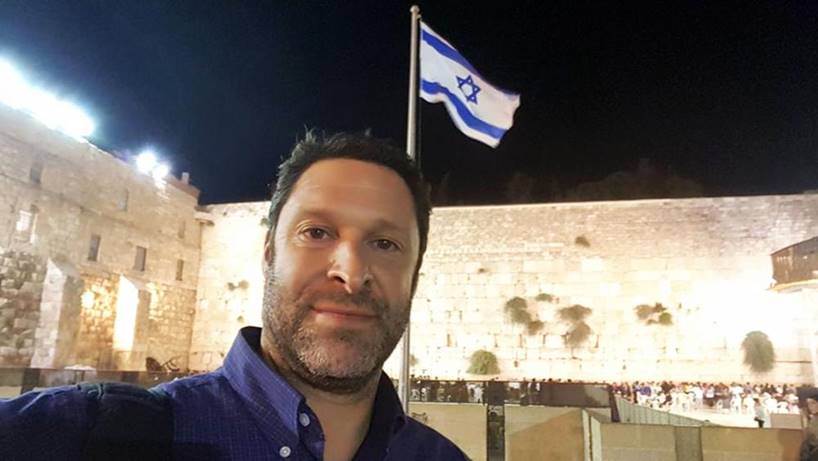
Without Israel, there would have been no university education in Palestinian Authority areas

By Charles Abelsohn

The Israel hating crowd in South Africa now desire to boycott Israel`s academic institutions and Israeli academicians  due to the “treatment” of Palestinian universities.

Let`s ask some questions. Are there universities in the West Bank and Gaza? If so, who established the universities and when. How are Palestinian universities ranked as compared with their Arab counterparts.

The Ottoman Empire, actually Turkey, a Moslem State, occupied Palestine from 1513 until 1917. Since Charles William Eliot, the president of Harvard University, who visited the country in 1867, and described the Galilee as a place of emptiness and misery and in his famous book “Innocents Abroad,” Mark Twain recalls not seeing a living soul throughout his journey, unsurprisingly, there were no Arab universities. The Jews, however, established the world famous Technion in Haifa in 1912.

The British controlled Palestine between 1917 and 1948. The Jews immediately established another university, the world famous Hebrew University of Jerusalem in 1918. The Arabs? Nothing, as in: no Arab university.

Jordan, an Arab country, illegally occupied Judea and Samaria between 1948 and 1967, renaming this area the West Bank.

During this period, the Jordanians were careful and shrewd enough to forbid and prevent the establishment of any university in the West Bank. Yes, in 1967, when Israel regained Judea and Samaria, there were no universities in the West Bank. NOT ONE! Did anyone academically criticize or boycott Jordan? Of course not. When it comes to Israel, double standards are the order of the day.

Israel recovered Judea and Samaria in 1967. In 1970, Deputy Israeli Premier Yigal Allon, who was then Minister of Education, announced that he had approved the establishment of the first university in Ramallah in principle when approached by West Bank Arab leaders, including Dr. Salem Nashef, Dean of the Tulkarem Agricultural School.

Paradoxically, it was the Arab Jordanians who still attempted to prevent the establishment of the first university on the West Bank. In April 1971, Sheikh Mohammad Ali Jaabari, the Mayor of Hebron, even needed to warn the Jordanian government not to interfere with plans by West Bank Arab leaders to establish an Arab university on the West Bank. Jaabari spoke in reply to a charge made by the Jordanian Education Minister in Amman that “all those who take part in planning the university are traitors and collaborators with the Israelis.” Eventually, under the Israeli administration, in 1971 the foundation of the Hebron University was laid and forty-three students joined from different parts of the West Bank and Gaza.

The universities in the West Bank enjoyed the cooperation of the Israeli universities without which they could not have been developed. In 1973, Dr. Nashef, as a guest of Tel Aviv University’s “Shiloah” Center for Middle Eastern and African Studies, reported that Arab education on the West Bank had expanded under the Israeli administration since 1967. According to Dr. Nashef, 90 percent of children between 6-15 were receiving an elementary education, a much higher percentage than under the Jordanian regime. He further said that by 1973 the number of matriculants under Israeli administration had risen from 3,500 to 14,500.

Stupid matriculants. Were they not aware that they were supposed to boycott Israeli administered education?

What exactly are the boycotters boycotting? Thanks only to Israel, a second university, Birzeit University, was established in 1975. Under Israeli guidance, by 1993, when the Oslo Agreement establishing the Palestinian Authority was signed, there were 14 universities, 18 colleges and 20 community colleges in the West Bank and Gaza.

Bir Zeit University
Bir Zeit University

Current Palestinian tertiary student enrolment is 214,000, of which roughly 54 per cent are women and 46 per cent are men. This compares favorably with Israel’s tertiary sector where from a larger population enrolment is approximately 307,000 and the gender balance among undergraduates is 56 per cent women and 44 per cent men. The remarkably high participation rate reflects both the commendable importance Palestinians attach to the universities (and formal education more generally) for strengthening both their economy and their national identity and, importantly in the context of the proposed “academic boycott”, the absence of any impediment by Israel. There is no legitimate reason for any “academic boycott” except hate for Israel.

Al Nagah entrance
Entrance to the campus of Al-Najah university

With Al-Najah National University of Nablus ranked in 20th place of the top 300 ranked Arab universities and Birzeit university of Ramallah in 27th place, it is clear that the Palestinian universities are among the best in the Arab world and do not suffer discrimination or oppression by Israel.

If the boycotters, like the Jordanians, had their way, there would today still not have been any academic institutions in the West Bank. Israel`s positive contribution to the Palestinians generally and Israel`s contribution to the establishment of higher education specifically continues to be ignored by the Israel haters, best described as the new obstructionist Jordanians, who themselves contribute nothing to the Palestinians.

Israel`s positive contribution to the Palestinian higher education may be compared to the “contribution” by UCT, Stellenbosch and other South African universities` professors and  students specifically and South Africa generally to the Palestinians – which is nothing. The anti-Israel noise by some South Africans may be emotionally satisfying to these few boycotters but the constructive support continues to be provided by Israel. By their actions, in attempting to prevent Israeli support of Palestinian institutions, these few boycotters may best be described as anti-Palestinian rather than anti-Israel, much like the Ottoman Empire (the Turks), British and Jordanians pre-1967.

Israel is now to be “punished” by a boycott for permitting the establishment of universities in the West Bank and Gaza, against the opposition of Arab governments such as Jordan. Until 1967 the world was silent which means the world at that time consented to the Arab opposition to universities in the West Bank. The criticism of Israel and its academics and the boycotting of Israeli academics is simply living proof that no good deed goes unpunished.

Kafka? Orwellian? I doubt whether these Israeli haters even know who these guys are.


image001 (16).jpgABOUT THE AUTHOR

Charles Abelsohn, a co-founder of Truth be Told, retired several years ago as the legal manager of one of the most well–known entities in Israel. He is a graduate of three universities (Cape Town, Stellenbosch and U. of South Africa) in South Africa in Law, Transportation Economics and Finance. His interests, even as a young student, were Judaism, Israel, Economics and Finance.


Feature picture credit: Yaser Wakid

A Week of Infamy

DARK DAY for South Africa as it rolls out RED CARPET for Hamas Murderers

By David E. Kaplan

What a difference a weekend makes!

On the Friday, the 30th November, a delegation of Hamas members of the Palestinian Legislative Council met and signed a Memorandum of Understanding (MOU) with the ANC caucus in Parliament, while on the Monday, a Hamas-controlled military court sentences six Palestinians to death for allegedly collaborating with Israel.

All that remains to be decided for the “hapless six” is whether they will be executed by hanging or firing squad!

image004
Parliament or Prison. Hamas parliamentary delegation meeting with heads of ANC bloc in SA parliament in Cape Town.

South Africans should know all about Hamas’ atrocious record when it comes to the rule of law as they may recall their compatriot, the South African jurist, Navi Pillay who during her tenure as the UN High Commissioner for Human Rights from 2008 to 2014, appealed to Hamas “to halt all executions because they are imposed without fair trial” and “must follow international human rights law when seeking to impose the death penalty.” She expressed concerns about allegations of “ill-treatment and torture during interrogations” of people who were sentenced to death.

The South African jurist’s appeal fell on deaf ears as Hamas’ sole aim is to bring down the state of Israel and will kill all who stand in its way. Now South Africa is complicit in murder.

Those who support murderers are guilty as accessories!

The same HAMAS with whom they were proudly signing a MOU that states South Africa “will work towards the full boycott of ALL Israeli products and the support of the global Boycott, Divestment and Sanctions campaign (BDS) against Israel; and will ensure that ANC leaders and government officials do not visit Israel,” only weeks earlier fired nearly 500 missiles into Israel in under 24 hours – one of which blew up a bus.

These missiles were fired not at military but civilian targets; one a direct hit on a home in Beersheba in which a mother and her three children had evacuated moments before to the home’s bomb shelter. Had they not, they would have been killed as many more innocents will likely be killed because of South Africa recklessly and shamefully providing blanket ‘legitimacy’ to terrorism and murder.

With South Africa having one of the highest incidences of rape in the world, its mollycoddling of Hamas is kin to supporting the rapist and punishing the victim!

How else do you explain the ANC’s deathly silence to Hamas’ deadly behavior, but plenty to say when it comes to Israel, as evident at its December 2017 Congress, when rather focusing on its country’s enormous challenges – called for a highly publicised downgrade of the South African embassy in Tel Aviv. This resolution too was included in the MOU signed by the ANC’s Chief Whip in Parliament, Jackson Mthembu, and Hamas’ cofounder Mahmoud Al-Zahar which promises that “the ANC Parliamentary Caucus will use the oversight powers of South Africa’s parliament to ensure that resolution to downgrade the South African embassy in Tel Aviv to a liaison office, is implemented by the South African government.”

Shaming Mandela

While on their one week visit to South Africa where they also met with the SACP (South African Communist Party), COSATU (Congress of South African Trade Unions), and the MRN (Media Review Network), these Hamas murderers committed the ultimate desecration when they were escorted by their ANC hosts to one of South Africa’s most iconic sites for commemorating the Apartheid era – the prison cell on Robben Island where Mandela spent 18 of his 27 years in prison.

How contrived to choreograph to a global audience of linking prisoners in Israeli jails for crimes of murder and attempted murder to one of the 20th century’s greatest icons, Nelson Mandela.

How foolish and debasing of the Mandela legacy for the ANC to be part of this diabolical charade!

South Africans of any moral standing should cringe at the desecration of hearing Hamas’ al-Zahar standing inside Mandela’s cell, saying of his fellow murders in Israeli jails:

 “Allah willing, you will get out of your prisons and rule the country, just like Mandela got out of prison and ruled this country.”

How much more frightening can it get when he declared that that this was his message “to every mujahid who wages jihad for the sake of his land and his country.”

image003 (7)
A Call To Arms. Hamas cofounder Mahmoud Al-Zahaar calls for Jihad from Nelson Mandela’s cell on Robben Island.

While Mandela supported a Palestinian state, he did so with the proviso that it was to be alongside a secure Jewish state. Hamas on the other hand, believes in destroying the Jewish state. It is about time South Africans and notably the ANC face the facts and read what Hamas leaders themselves say:

  • Ismail Haniyah and Khaled Meshaal, both of whom have in the past been welcomed in South Africa, have stated repeatedly that “Palestine – from the [Jordan] River to the [Mediterranean] Sea, from its north to its south – is our land, our right, and our homeland. There will be no relinquishing or forsaking even an inch or small part of it,” and that “we shall not relinquish the Islamic waqf on the land of Palestine, and Jerusalem shall not be divided into Western and Eastern Jerusalem. Jerusalem is a single united [city], and Palestine stretches from the Mediterranean Sea to the Jordan River, and from Naqoura [Rosh Ha-Nikra] to Umm Al-Rashrash [Eilat] in the south.”
  • And the very man with whom they signed the MOU, Mahmoud al-Zahar stated that any talk of the 1967 lines is “just a phase until Hamas has a chance to regain the land…even if we [Hamas] have to do so inch by inch.”

    image005 (9)
    Ominous Signs. Khaled Meshal stands during the singing of the National Anthem at a rally in his honor on October 21, 2015.

This is the same man who from Mandela’s cell has called for a violent Jihad “to regain the land inch by inch”.

This is the same week that the Johannesburg municipality has recommended renaming one of the city’s prominent roads, Sandton Drive, after the Palestinian airplane hijacker Leila Khaled sending shivers to South Africa’s Jewish community.

This will surely go down in South African history for Jews, as ‘A Week of Infamy’.


Feature picture credit: Afro-Palestine Newswire Service


‘Knee Jerk Reaction’

image001 (3).pngThe ‘taking a knee’ by two students at Herzlia Middle School Cape Town during the singing of “Hatikvah”  at a Grade 9 graduation ceremony has sparked controversy not only among the local Jewish community, but all over the country, even making the papers abroad.

Imitating African-American football players who protested against police brutality during US football matches,  the two students explained their ‘copycat’ was to  publicly profile Israel’s alleged human rights violations against the Palestinians.

What is at the core of this issue –  Freedom of expression, failure of  Zionist education at Jewish Day Schools, genuine concern for the Palestinians, disrespect to the State of Israel and the Jewish People, an urge for publicity?  A storm has  risen and is unlikely to  abate anytime soon as the community grapples with the issues.

Offering a portal to people closely connected to the issue and the school to express their positions, LOTL hereunder publishes two articles, one by a former student at Herzlia School, Jonathan Zausmer, who today lives in Kochav Yair in Israel, and Dovi  Goldberg, a 17-year-old student at a Jewish Day School in Johannesburg.

HaTikva2.gif

Perspectives from a 17 year old 

By Dovi Goldberg

Intro:

The events following  the controversial “taking of the knee” incident at Herzlia Middle School in Cape Town, has spurred a flurry of press coverage, including a discussion  on Johannesburg-based radio station, 702.

I finished my exam last Thursday and got into my mother’s car. She was listening to the Eusebius Mckaiser show on 702, a Johannesburg-based radio station. The segment on the show was about “focusing on whether schools are the appropriate place for political discussion”. This intrigued me as they were speaking about the two pupils from Herzlia Middle School in Cape Town who had taken a knee during Hatikvah as solidarity with the Palestinian people and a protest against the Israeli government.

When I was in the car, Eusebius brought Josh Broomberg on the radio to speak. Josh Broomberg is a former vice head-boy of a Jewish day school in Johannesburg. Broomberg has encountered a similar reaction to these two boys as he once wore a kaffiyeh to an international debating competition. There was mass outcry from the Jewish community. For me personally, I agree with neither Broomberg nor the two Herzlia boys.

Broomberg said a couple of times on air that he was going to be very careful of what he says but ultimately Mckaiser and Broomberg share the same pride in the braveness of these two boys.

I tried calling into the show over twenty times to express my opinion on the matter -the opinion of a Jew who is a proud Zionist and knows what Hatikvah truly means.

This is what I would have said if 702 and Eusebius Mkaiser would have answered my call.

Hi Eusebius,

I am a 17 year old pupil at a Jewish day school in Johannesburg.

I am proud Zionist and a proud Jew, I am also a person who believes in the freedom of speech and of expression, but there is also a time and a place for that.

I understand that these pupils took a knee during ‘Hatikvah’ the national anthem of Israel. They took a knee to protest the Israeli government as they say they cannot support it morally. But I don’t think these boys fully understand what Hatikvah is about because taking a knee during Hatikvah is not only disrespecting Israel, it is also disrespectful to  the six million Jews that perished during the Holocaust and to the Jews who had never given up their hope of eventually returning to Zion.

Hatikvah which in Hebrew means ‘the Hope’ was not written specifically as a national anthem.

The poem which was originally written by Naftali Herz Imber in 1877 portrays the two thousand year old hope of the Jews returning to their ancestral homeland, Israel.

It was adopted as the National anthem of the Zionist movement at the first Zionist conference in 1897

In 1944, 4 years before the establishment of the state of Israel, Czech Jews sung this song while they were beaten and marched into the gas chambers in Auschwitz-Birkenau. Disrespecting Hatikvah is disrespecting these people who died with the hope of Jews still having a chance to visit the holy land.

During liberation, the Jews of Bergen Belsen and Dachau concentration camps sang this song as they marched towards freedom. These Jews had lost everything, family, valuables and all necessities for daily life -but the one thing these people did not lose is their hope to return to Zion.

“As long as in the heart, within,

A Jewish soul still yearns,

And onward, towards the ends of the east,

an eye still gazes toward Zion”

These are the words of the opening verse of Hatikvah. A verse so powerful it sends shivers down my spine.

So I will reiterate my opinion – the freedom of speech and freedom of expression is definitely important, but as long as there is a Jewish soul, the heart will always yearn for Zion.

Be critical of Israel if you want to be, but do not ever disrespect Hatikvah.


++++++++++++++++++++++++++++


Kneecapped

By Jonathan Zausmer

A flurry of reactions has followed the uproar over two students from Herzlia Middle School in Cape Town, South Africa, who decided to “take a knee” as an act of protest during the singing of Hatikva, the Israel national anthem.

Establishment South African Jewish leadership was horrified. Condemnation has echoed throughout the S.A. Jewish community and abroad. South African Jewry was kneecapped and is crying out in pain. I will not condemn these students as some writers have hysterically done in these pages, calling them “tots” or “pawns” or “poster boys”. Let us be clear, their act was no frivolous attempt at destruction. Protesting in this way takes courage, conviction and involves consequences of which they clearly were aware. Yet within their protest, I detect confusion.

It is that confusion we need to examine.

In brief, we are talking about something called disruption. Establishments and institutions loathe it, because the comfort zone of same-same work, same-same thinking, same-same paradigms are thrown out of balance. One needs to gasp for air, rationalize your position, understand the fast-changing world, initiate, and create a culture of change and renewal.

Let me state, that as a graduate of Herzlia School, I feel the pain, the embarrassment and the immense challenges now confronting the management and staff of this prestigious institution. I am grateful for the education I received there and deeply respect the growth and development of a unique educational process that has taken place over the years. Within the constraints of a conservative Jewish South Africa, the leadership of this school now faces a challenge. By embracing that challenge, they now have an opportunity to open up some issues that go further afield than this specific incident.

In order to see the big picture, we need to take a step back and take an overview of something that has brought home some hard truths that have been conveniently ignored by the institutions of Diaspora Jewry and now is no better time to address them. And we need to address them because the very nature of Judaism and Jewish identity has shifted during the post WWII era from isolated and vulnerable small religious communities abroad, to large secular Jewish communities that are made up of worldly, high-achievement, sophisticated people who identify with Israel and see Israel as the heart and vibrant center of modern Judaism. The values that they carry with them from generations of learning and teaching are now challenged by an Israel that, while financially vibrant, is facing challenges of discrimination within it, gross violation of human rights, uncontrolled rampant colonialist ultra-nationalism bolstered by government policy, heading to a very possible scenario of a Jewish minority ruling over a Arab Muslim majority within one state.

At the core of this disruption, unease, ethical tension and conflict of identity – at the very core, is the Netanyahu government in its various forms. At the outset of his term as Prime Minister, Netanyahu affirmed the two-state solution, albeit with many provisos, caveats and cautions. But he affirmed the concept. Yet he and his government have done everything in their power to unhinge and impede such a policy. Rampant Israeli settlement in the very area destined for Palestine is proof. Scorn for U.S. agents of peace who have encouraged this policy since advocated by President Bush back in 2003 is proof. The government of Israel laughs and scorns U.S. peace initiators from Bush, Obama, Kerry, Trump, to Jared Kushner. Vast chunks of the Israeli budget, of U.S. grants, of military spending go into owning occupied territory by means of settlement and disowning the now millions of Palestinians who live there. West Bank and Gaza GDP per capita runs at approximately USD 3,500. Israeli GDP per capita runs at approximately USD 40,000.

Establishment Jewish communities around the world, especially in environments that host ugly anti-Semitic sentiments within it, such as in South Africa, have lapsed into the mode of blindly following Israel and its government whatever the circumstances. The “insurance policy” concept of a safe space for Jews in the world rises above all ethical, legal, moral, complex matters. On the shameful acts of corruption, abuse of power and national domination of another people, there is an eerie silence. This is a consequence of being humbled by the fact that those who do not face the gun, as we do here, should remain silent. To this I say no. It is incumbent, indeed the duty of Jews worldwide to speak up, whether in New York, Paris or Cape Town, South Africa.

First appeared in ‘Times of Israel’.

Jonathan Z.jpegABOUT THE AUTHOR

Originally from South Africa, Jonathan made aliya in the seventies, and lived and worked on a kibbutz for several years. He has a graduate degree in business from Boston University and is a managing partner of an Israeli based business. He was a co-founder of the Forum Tzora peace action group and participates in the Geneva Initiative workshops. He is the author of the book “Valley of Heaven and Earth”.


Feature picture bookmark the permalink


Like us? Now on Facebook !!

‏‏LOTL logo top.PNG

Like us? You can now follow us on Facebook.

Lay of the Land now has its own facebook page and you can share our articles and comment easily here:

https://www.facebook.com/LotLSite/?epa=SEARCH_B0X


LOTL logo bottom.PNG

At what price, war?

By Rolene Marks

Heavy is the head that wears the crown – or in this case makes the unenviable decision on behalf of a nation to go to war.

I don’t envy any leader or general who has to make this decision.

Over a period of two days, nearly 500 rockets and mortars were fired by terror factions from the Gaza strip into Southern Israel, sending hundreds of thousands of civilians scrambling for safety in their bomb shelters.

One person (a Palestinian from Hebron) was killed when a rocket hit his apartment in Ashkelon, a 19 year old soldier is fighting for his life, a beloved family pet was killed and 68 people have been treated for injuries as well as the horrific destruction of property.

At the moment there is an Egyptian-brokered a ceasefire in place and many have opined that we should “obliterate Gaza” “flatten it totally”. I am very perturbed and offended by this kind of rhetoric.

Please allow me a moment to rant. I share the frustration of many that we need to put an end to the terrorist actions of Iranian-backed Hamas and various other terror factions in the strip for once and for all. These terror groups hold both their own and the civilian population of Israel hostage with their thirst for bloodshed. Many have called for an all-out war with our Gazan neighbours and it is easy to be an armchair general from the safety of our homes, far away for the proverbial battlefield.  I am not a military expert and I cannot fathom, like many of you, the difficult decisions Israel’s government, security cabinet and Generals have to make. But I am a human being and holding on to my moral compass, my humanity is sacrosanct.

The decision to go to war or “boots on the ground” is profoundly difficult. War is not glamorous or an easy decision to make. For Israelis, this situation is profoundly painful and as much as we would like to deal a death blow to the likes of Hamas, we are well aware of the consequences.

at what price 4.jpg


War is fought on the backs of our sons and daughters, husbands and wives, brothers and sisters, lovers, friends and colleagues. Some of them don’t return. War is more violence inflicted on our civilian populations. War is experiencing PTSD (which by the way many of us, including me experience at the sound of sirens). War is going to funerals for those fallen and gone too soon. War is sleepless nights because we worry our loved ones in the battlefield have not contacted us. War is our heart stopping every time our phones ring or whatsapp beeps.

War is also suffering inflicted on the Palestinian civilian population who do not deserve to be punished because of the actions of their leaders. War is women, children, the disabled and vulnerable being used by Hamas as human shields. War is our diaspora communities under threat and more anti-Semitism because Jewish communities outside of Israel are seen as the de facto representatives of the state.

at what price 1.jpg

 I am proud and grateful for our armed forces and security establishment who abide by the strictest code of ethics and conduct. These brave men and women protect us 24/7 while retaining their humanity in the most extraordinary of circumstances. Who are we to behave in a way that is disrespectful to them and fellow innocents by baying for blood? I am proud of a country that takes our duty to be humanitarians even to civilians belonging to an enemy entity very seriously. This is why we continue to ensure that humanitarian aid is delivered to the beleaguered strip unabated.

I hope this offers an explanation. Some of you may disagree, and that is your right. All I am asking is that in a time of conflagration we do not lose our perspective – or humanity.

My gratitude to our brave men and women of the  IDF, IAF, and security services, police, first responders and firefighters for exemplifying the best of us and keeping us safe.

“Am Yisrael Chai !”

What’s the Score?

By David E. Kaplan

Israel takes on BDS in a cerebral brawl  at TbT’s 2018 debate at Beth Protea

“Words Words Words,” expressed the Great Barb in Hamlet.  They can bring joy or can cause anguish. They can convey truth, or they can tell lies. They can inspire a nation, or they can bring them down.

Words can be pearls of prose and poetry – but they can equally be POISON.

As Jews we have known this for over 2000 years, as Israelis we know it for seventy.”

So began the introduction by this writer and debate moderator at the start of Truth be Told (TbT) annual’s The Great Debate held on October 16 at Beth Protea in Herzliya in central Israel.

While disparaging words towards Jews may over the millennia change, not however the mendacious mindset spawning this noxious nomenclature. A new and popular addition arrived early in this 21st century – the 3-letter abbreviation BDS.

A few years ago, if writing about BDS, writers would pen in full  – ‘Boycott Divestment Sanctions’ – because too few of their readers would know what it stood for. Today the abbreviation is part of the everyday lexicon in the ‘War of Words’ against Israel and is weaponized no less than the Qassems, Katushas, Mortars or Grads – aimed at the Jewish state. While these missiles have a prescribed geographic outreach, words have no such strategic limitation.  Their target is not Ashdod, Sderot, Ashkelon or Tel Aviv but all of Israel – not just physical Israel but the very IDEA of Israel.

The members of the panel debating were Harvard graduate Dan Diker, Director of the programme to counter Political Warfare and BDS at the Jerusalem Center for Public Affairs (JCPA), Gilad Kabilo, the Public Affairs Director of StandWithUs who coordinates worldwide activist campaigns, and Paula Slier an international TV war correspondent.

image001 (11)
The Great Debate. The panelists (l-r) Paula Slier, Gilad Kabilo and Dan Diker.

With Israel’s situation with Gaza on a knife’s edge – within hours following the debate, a home in Beersheba was destroyed when it suffered a direct hit from a Palestinian rocket attack from Gaza – the opening question set the tone as it was timely.

“Why in any military conflict either with Hamas in Gaza or Hezbollah in Lebanon, it is always a case of Israel having to wrap up the war quickly before losing traction with a world audience? In other words, why are Israel’s strategic aims held hostage to the power of the media to demonize Israel in order mobilize global opposition to Israel rightfully defending itself?”

“The motto in the industry,” answered Paula, “is a sign on the wall of the TV network I first started working in and applies in any studio everywhere today: “If It Bleeds, It Leads”.  In other words, where the blood is, the cameras roll; and to Israel’s credit, its defenses are so effective that Palestinians bleed more than Israelis so where do you think the cameras are facing; and what do you think the audiences around the world are watching? Israel’s success in war translates in its failure to win the narrative.” It’s a conundrum!

To the question of whether Israel – far accustomed to quick physical wars – has the psychological stamina for a ‘War of Words that is open-ended, Gilad Kabido, who with StandWithUs is daily engaged on multiple fronts in the cerebral trenches particularly on university campuses around the world, gave an account of his organisation’s impressive successes in taking on Israel’s enemies.

And so, the debate raged on for nearly two hours covering such issues whether anti-Zionism = anti-Semitism; whether the difficulty of reaching a ‘Two State Solution” complicates Israel efforts in getting its narrative across; and the use of the word ‘Apartheid’ by BDS in stigmatizing Israel as South Africa once was. While Kabido declines to use the word Apartheid or even BDS as “it provides oxygen”, Diker, who has written a book “Unmasking BDS”, launched into an animated attack that the very use of the word Apartheid in describing Israel “is an INSULT” to the multi-millions who suffered under South Africa’s racist tyranny. “As an 11-year-old, I was exposed to the ugly South Africa when I visited that country as part of a junior tennis delegation from the USA.  I was in Africa and I asked, “Where are the Blacks my age?” “Why are they not playing with us?” Even for someone as young as me at the time, I was struck by the brutality of Apartheid and to even suggest that Israel is associated with the A-word, is an OUTRAGE. The purveyors of this modern-day libel seek to demonise and delegitimise the only Jewish state in the world.”

Rolene Marks, who was the evenings emcee, presented TbT’s Maurice Ostroff Award to Gilad Kabido representing StandWithUs.  Ostroff, who passed away in 2015, was a founding member of TbT that has as its standard: From truth denied to truth be told

image005 (7)
Fighting Back. Rolene Marks presenting the TbT Maurice Ostroff Award to Gilad Kabilo on behalf of StandWithUs.

Monumental Maurice

If in 1948, this South Africa Machal volunteer commandeered a strategically important mobile radar unit near the Weizmann Institute during Israel’s War of Independence, six decades later until his parting breath, Maurice Ostroff still had his antennae out. Operating from “my ops room” on the fifth floor of Beth Protea – the Southern African Retirement Home in Herzliya – he tracked the movements of Israel’s enemies with his overworked computer challenging the lies and distortions of journalists, jurists, academicians and politicians around the world. “Morrie” was unafraid to take on the mighty and prick their puffed-up libelous bubbles. Always respectful, never personal, but always hitting his target with pin-point verbal accuracy, this exceptional commentator on current affairs had the knack to marshal the English language and send it forth into battle on behalf of the Jewish State.

“Maurice would be so proud as I hand you this award,” said Marks presenting it to the 2018 recepient.

image007
Mighty Maurice. A warrior who died with his boots on, Maurice Ostroff manning a radar station during Israel’s War of Independence in 1948.

What’s Cooking in South Africa?

Following the presentation of the award, Marks welcomed to the podium from South Africa, Melissa Goldberg (New Relationship and development Director of the United Communal Fund) who was vising Israel with Bev Schneider representing the IUA (Israel United Appeal).

While the situation in South Africa for the Jewish community, was “unpredictable” citing the concern of the ANC government possibly downgrading its diplomatic relations with Israel, “Not all is doom and gloom,” said Goldberg. “We are resilient and fighting hard for the rights and protection of our community and our love of Israel.” She cited two case where the communal leadership had taken two high profile political leaders to the Constitution Court for antisemitism and won both cases. “It took us years, but we tenaciously persevered and it payed off.  The message is clear – if antisemitic leaders offend the Jewish community, we will respond.”

image001 (12)
The Future Is Not Ours To See. Director of the UCF, Melissa Goldberg addresses the audience of over 220 on the situation of the Jewish community in an unpredictable South Africa.

Music To Our Ears

Let’s get things in perspective!

The same week as the TbT debate, Israel’s financial daily, Globes  posted the headline:

“BDS has zero impact on Israeli businesses”.

A study of the impact of BDS on the Israeli economy estimated the damage at a paltry 0.004%, while some companies in fact benefited from the boycott. How so?

CEO of retailers in Europe with Israeli products on their shelves reported that consumers were buying out of support for Israel and registering their opposition to BDS.

This is music to our ears as was the music prior to the debate by the Etz Chaim Choir with cantor Barry Braun, a new South African immigrant and formally the cantor at the Milnerton synagogue near Cape Town.

A colourful addition to the event was the IDC Herzliya information booth. Manning it was an animated Storme Eberlin, a second-year economics student from Cape Town. Fascinated by the debate, she felt “more of our young South African students need to hear these issues. I found it riveting.”

image002 (6)
Tomorrow’s Leaders. Cape Town economics IDC Herzliya student Storme Eberlin manning the university’s booth at ‘The Great Debate’.

Adding to our armoury against BDS, Dan Diker announced the launch of the Israel South Africa Policy Forum (SAIP) with himself, Rolene Marks and the writer as founding members and invited members of the audience to support the Forum in pursuit of its mission.

“The SAIPF will research and analyze key issues of mutual concern and work towards improving an overall understanding of the historical record and current trends in South Africa and Israel,” said Diker adding that “With greater understanding, context, perspectives and truth, we can work for greater cooperation to the mutual benefit of both countries.”

Before the singing of Hatikva (Israel’s national anthem) led by the Etz Chaim Choir, the writer concluded that while the evening has been all about WORDS, “It was not words but sounds that most resonated for me as the most Zionistic message of 2018 and in Israel’s 70th year. It was the first cries I heard outside the delivery rooms of the maternity wards at Meir Hospital in December and then Tel Hashomer Hospital in May as my first two grandchildren, Ariel and Yali, came into the world.  Their cries were their grandparent’s joy and echoed the words of Israel’s illustrious Foreign Minister –Israel’s future will be longer than its past.”

image003 (5)
Food for Thought. Engaging in the post-debate party on the patio (l-r), Paul Hirschon, recently returned Israeli Ambassador to Senegal, Rolene Marks, Melissa Goldberg, Paula Slier, Bev Schneider and Wendi Kark

What’s With Wakanda & Zion?

By Benji Shulman

On 1st May 2018 the citizens of Addis Ababa received an unusual visitor.  Israeli president Reuven Rivlin touched down in Ethiopia becoming the first occupant of his office ever to make an official visit to the country. In his wake came a bevy of business people, NGO’s, government officials, and even Ethiopian-Israeli popstar Estrada. The event was just the latest in several Africa-Israel related initiatives over the last few years, including three trips to the continent by Prime Minister Benjamin Netanyahu. President Rivlin joked that he was “returning the visit of Queen Sheba to King Solomon” and much like the original biblical visit, key items on the agenda included trade, culture and security.

President Reuven Rivlin at the “Impact for Good” conference in Ethiopia
President Reuven Rivlin at the “Impact for Good” conference in Ethiopia (Copyright: GPO/Mark Neiman)

Some pundits have tended to view this diplomatic engagement as something new or unusual. However, relations between Zion and ‘Wakanda’ actually have a considerable pedigree and also extends to the African American community. As the process evolves it is worth knowing some of the history.

Although Africa- Israel relations go back to the bible, the story really picks up around the late 1890’s. At the time, both Africans and Jews were the wretched peoples of the earth, victims of anti-Semitism, slavery, colonialism, racism and dispersion. It is therefore unsurprising that solutions in the form of Zionism and African Nationalism evolved simultaneously. The founder of Zionism, journalist Theodor Herzl, wrote in his seminal book, Altneuland (1902), “Once I have witnessed the redemption of the Jews, my people, I wish to also assist in the redemption of the Africans”. In African intellectual circles, the idea of a national Jewish liberation was a popular one. For instance, the founder of Pan-Africanism Marcus Garvey, referenced the Jewish national experience when he asserted that “many white men have tried to uplift them, but the only way is for the Negroes to have a nation of their own is like the Jews, that will command the respect of the nations of the world with its achievements.”

Model for Africa

Thus, the idea of Jews having their own state was viewed with favour by early Pan-Africanists. Garvey championed what was known as “Black Zionism” and Liberian diplomat/journalist Edmon Wilmot Blyden referred to “that marvelous movement called Zionism” as a model for African emancipation.

The impact of this sentiment would find its way into the civil rights movement in America.  Hence the words of Martin Luther King Jr:  “When people criticize Zionists, they mean Jews You’re talking anti-Semitism”. The real impact of these ideas, however, were in Africa, where newly independent African states were being created in the 1960’s. History and ideology combined, becoming a compelling driver for co-operation and understanding between the two groups. Kwame Nkrumah President of Ghana expressed it best in 1961, when he said:

“We understand one another, Jews and Negroes. We were both oppressed for a long time and now we both have our own independent states.”

image003 (2)
Time for Ties. Israeli Deputy Prime Minister and Minister of Foreign Affairs Avigdor Lieberman (r) listens to a group of local farmers in Nairobi on September 6, 2009. Lieberman and a large business and military delegation began a five-nation Africa tour on September 2, 2009 stopping in Ethiopia, Kenya, Uganda, Ghana and Nigeria.

It was more than just commonalities between national ideologies, however, that drove the early Africa-Israel relationship.  At the beginning of the 1950s, the new-born Jewish state found itself with few friends.  The soon-to-be independent African states provided Israel with an opportunity to shore up its diplomatic defenses. Israel made an attractive diplomatic partner in Africa. As such, a small country, Israel, was in no position to be an agent of neo-colonialism. In fact, having recently overthrown the British, Israel was a good example of a successful liberation struggle.

Moreover, African state builders appreciated the Zionist institutions that had brought about the creation of the country, and they sought to adapt them for their own projects. The Pan-Africanist journalist George Padmore, for instance, believed that Africa’s development could be fostered using organised infusions of funding from the African-American Diaspora, along the same lines as the United Israel Appeal In the defense sphere, early Zionist military formations were the inspiration for the concept and structure of Umkhonto we Sizw (MK), the armed wing of the African National Congress (ANC).

image002 (5)
Israel’s Helping Hand. Israeli drip irrigation educational programme in South Africa. (Photo – Israeli MFA)

In planning MK, Nelson Mandela leaned on the experience of anti-apartheid activist Arthur Goldreich who had fought as a member of the Palmach, the elite military wing of the Haganah in Israel’s War of Independence. Goldreich, who escaped from a South African prison at the time of Mandela’s arrest, and settled in Israel, had drafted the military code for Umkhonto we Sizw. After he went underground in 1960, Mandela also credits “The Revolt” by Menachem Begin as being among the books he used in planning the ANC’s guerilla campaign against the Apartheid government.

When ANC leader Walter Sisulu visited Israel on his five-nation tour, he flew on Israel’s national carrier El Al. It was the only the airline in the world that would take the black South African passenger, since the Apartheid government had denied him a passport. Israel also contributed to building the defense infrastructure in many other African countries, especially training their military and police. The first pilots of the Kenyan and Tanzanian Air Forces were all trained by Israel; and it was Israel that built Ghana’s first naval academy.

Finally, African states and Israel shared many of the same developmental challenges. President Julius Nyerere observed in 1957 that, “Israel is a small country… but it can offer a lot to a country like mine. We can learn a great deal because the problems of Tanganika are similar to Israels.” This resulted in a vast array of joint projects across the continent including construction, agriculture, aquaculture, health care, hydrology, youth movements, regional planning, engineering, community services and many others. John Tettegah, Secretary General of Ghana’s Trade Union movement, said his visit to Israel had “given me more in eight days than I could obtain from a British university in two years”.   Some of the more interesting projects included giving assistance in building the parliament in Sierra Leone and the creation of Ghana’s Black Star line shipping company.

Health and Wealth of a Nation

To ensure the ongoing success of these initiatives, many Israelis came to live in Africa to assist with programmes, particularly in health care. Through these engagements, a specialist eye clinic was established in Sierra Leone and social work training provided in Machakos, Kenya. Many African citizens, in turn, went to Israel to study at its tertiary institutions, including the Weitzman Institute, the Hebrew University, and the Mount Carmel Centre which was dedicated to training women in the developing world.

Societal cohesion was also on the agenda. Kenya’s President Jomo Kenyatta argued that, “You have built a nation with Jews coming from all corners of the world; we want to build a unified Kenya of a multitude of tribes joined together through Harambee (working together)”.  By 1965, most major Africa leaders had visited Israel, coming from the Central African Republic, Chad, Dahomey (Benin), the Congo, Gabon, Gambia, Ivory Coast, Liberia, Madagascar, Uganda, Mali and Upper Volta (Burkina Faso).  Israel’s friends included President William Tubman’s, Liberia (who had voted for the establishment of the state in 1947 at the UN) and Emperor Haile Selassie’s Ethiopia.

image007 (1)
Forging Ties. Israeli Prime Minister Benjamin Netanyahu in Jerusalem with Kenyan President Uhuru Kenyatta. The Israeli and Kenyan leaders signed a joint statement that will foster cooperation on water and agriculture.

By 1973, Israel had established relations with 32 African states. Many opened embassies in Israel of which ten were based in Jerusalem, well before America had the idea. Included on this list were those of the Ivory Coast and Kenya. Israel also gained observer status on the Organisation of African Unity (OAU). It was the golden age of ‘Wakanda & Zion’.

(Wakanda is a fictional country located in Sub-Saharan Africa created by Marvel Comics and home to the superhero Black Panther.)

Not everyone, however, was delighted by the increased Africa-Israel co-operation. The power of the Arab states in international diplomacy was growing, and their official policy position on Israel was annihilation. Watching the growing African-Israel relationship with concern, they did what they could to impede it. Championed by Egypt, they attempted to ferment anti-Zionist rhetoric onto the agenda of multi-lateral bodies such as the OAU.

These were backed-up by punitive economic actions.  The first serious attacks in these forums were taken in the early 1960s but were strongly rebuffed by the African states. As Julius Nyerere, expressed, “We are not going to let our friends determine who our enemies are.” Besides the risk of losing their friendship with Israel, African leaders were apprehensive about Arab inference in their domestic affairs, and they had bitter memories of the sub-Saharan slave trade.

Agricultural training in Cameroon
Coming To Cameroon. Israel agricultural training in Cameroon.

Recalling the Slave Trade

At one point during a UN debate, a Saudi Arabian delegate accused the Ivory Coast of “selling out” to Israel, to which the Ivorian delegate responded, “The representative of Saudi Arabia may be used to buying Negroes, but he can never buy us.” So, despite Arab pressure, African delegations helped put Israeli representatives on boards of the World Health Organisation and UNICEF. In return Israel was a regular backer of anti-Apartheid resolutions at the UN, eventually having the most votes against Apartheid of any western nation.

Notwithstanding this success, however, all was not a bed of roses in the Israel-Africa relationship, and by the late 1960s, the relationship became strained. Much of this had to do with the familiar problems that bedeviled the field of international aid, including the lack of large-scale capital and effective technical transfer, solutions for long term sustainability and some focus shift by Israel to other continents such as South America.  This was added to a relentless Arab propaganda machine urging all countries to end ties with Israel. The situation began to take its toll and in the wake of the Six Day War, four countries cut ties.

Pouring Oil on Troubled Waters

The real change, however, started in October 1973 when Arab nations, led by Egypt, launched a surprise attack on Israel on the holiest day of the Jewish year, Yom Kippur. Although the attack would eventually fail, it introduced a new powerful weapon into the world of diplomacy: the global oil boycott.

The Arab states threatened any country which had relations with Israel with an oil embargo. They also promised aid to those African countries that broke ties with Israel. The strategy sent the oil price rocketing, leading to a global economic crisis, but proving strategically successful.

The combination of economic coercion and continuous propaganda added to the already strained Israel-Africa relationship. This was too much for African states to bear and they began abandoning Israel en masse. President Senghor of Senegal stated the situation plainly: “The Arabs have the numbers, space and oil. In the third world, they outweigh Israel.” By the end of 1973, Israel found itself with only four official friends in Africa. The golden age of ‘Wakanda & Zion’ was over.

image004 (12)
Turning A New Leaf. Growing lettuce in Senegal using Israeli drip-irrigation (Photo: MASHAV)

This situation remained as such until 1978 and the signing of the world’s first Arab-Israeli peace with Egypt. Although it took time, Africa-Israel relations began to slowly be restored. Israel now has as many as forty diplomatic relationships in Africa with growing security, development and trade ties. Israel is looking for friends in Africa and observer status at the OAU while the continent is looking to take advantage of Israeli technology in development and security. There remain threats to the relationship with countries like South Africa and Morocco in the vanguard against Israeli interests on the continent.

Despite this, a new chapter in the saga of ‘Wakanda & Zion’ is evolving, and if all goes well, perhaps we may be on our way to a new Golden Age.

Israeli aid to Cameroon
Seeing Eye To Eye. In 2012, the Israeli Embassy initiated a project involving free cataract operations for dozens of Cameroonian patients in Bamenda, as a result of which – their eyesight was restored. Likewise, plastic treatments were offered to patients who had suffered from disfiguring facial burns. The project involved eye specialists from the Hadassah hospital in Jerusalem, a donation of medical equipment from “Eye From Zion” NGO and support from the MFA’s MASHAV division.


headshot1 (1).jpgBenji Shulman, Executive Director  South Africa Israel Forum, is from Johannesburg, South Africa. He has a master’s degree in Geography and has worked in a range of fields in the Jewish community including education, advocacy, environment and outreach. He loves radio and has a hosted numerous shows on 101.9 ChaiFm in the last decade.


‏‏SAIF.PNG


Peace for the Middle East, Prosperity in Africa

By Ben Swartz, National Head of the South African Zionist Federation (SAZF)

The ‘Smart’ Way to Go

Shannon Ebrahim’s sympathies to BDS “activism” and their political agenda are well known by most. So, it may surprise this virulently anti-Israel freelance journalist to realise that her solicitude for the plight of the Palestinians is shared by most Israelis and this is borne out by the myriad of Israelis who demonstrate their concern in the most practical way imaginable: care of the sick (especially children), the elderly and women.”

Shannon EbrahimGroup Foreign Editor
Face of Fury. Venomous anti-Israel journalist Shannon Ebrahim.

This fact is not always realised by her when she targets Israel either by implication or overtly, and places that country in the cross-hairs of her ire. Strangely she chastises a democracy, which Israel is, and her opponents are not. *In her latest article, those that she champions as victims of “colonialism” in fact bear the trappings of colonial Middle Eastern oligarchies that hold their people hostage.  Libya, Syria, and Saudi are brutal dictatorships, far more than even those of Egypt or Jordan. “Parliaments” in Iran, Morocco, and on the West Bank are not freely democratic. In all of them, candidates for office are either screened, preselected, or coerced. Daily television and newspapers are subject to restrictions and censorship; “elected” leaders are not open to public audit and censure. Death, not voters, brings changes of rule in the Middle East.

Ebrahim talks of Mandela: does she know he encouraged peace and went to Israel himself and that Ramaphosa is on record supporting dialogue? She mentions the “progressive nations” taking a stand but does not name them. I am curious to know who they might be.

True freedom and democracy that the people of the Middle East do indeed deserve and from which the entire world would benefit – demands cultural tolerance, widespread literacy, and free markets, something few of them have with the notable exception of Israel.

Only in secular Israel can one find free speech and liberality of custom and religion, much more so, than say, in Saudi Arabia, Iran, or Palestine. Coexistence is found in Israel, very rarely so in the Arab world.

We see in Israel spirited debate, home-grown criticism and differing advocacy from Left and Right. Israeli newspapers and television reflect a diversity of views, from rabid Zionism to almost suicidal pacifism. There are Arab-Israeli legislators and plenty of Jewish intellectuals who openly write and broadcast in opposition to the government of the day – a freedom not available in Palestine.

Where The Truth Lies

It is patently obvious from hateful rhetoric daily fed to compliant populations that wars in the Middle East are not fought to return the West Bank or Gaza, but to finish off what Hitler could not.

Israel, its GNP, free society, and liberal press, is a wound to the psyche, not a physical threat to the Arab world. Israel did not murder the Kurds or Shiites. It does not butcher Islam’s children in Syria. Yet both the victims and the perpetrators of those horrendous crimes by Muslims against Muslims answer “Israel” when blame is sought!

Any honest assessment will show that the blame lies elsewhere. As has been demonstrated in many countries in Africa, Israel has the ability and a willingness to alleviate hunger, drought, disease and other social ills for the Palestinians and the people of Africa.

Instead of accepting the willingness of Israel to play a peaceful role in the region, Ebrahim defines herself as the saviour of the Palestinians. She cries out that she is against racism, colonialism, ethnic cleansing, police states and anti-Semitism but she advocates for those who do.

But the goal of the current Palestinian leadership is the colonial conquest of another people’s country. That country is the State of Israel, the homeland of the Jews legally, historically and emotionally.

Mahmoud Abbas has explicitly rejected Israel’s right to exist as a Jewish state. The Palestinian Authority indoctrinates its children to terrorism. The insignia and maps show that the land they demand for a state includes the whole of Israel.

image005 (4)
Telling The Truth. The very ‘idea’ of Israel is unacceptable.

Therefore, what the anti-racist, anti-colonialist, anti ethnic-cleansing, pro-democracy Ebrahim, the ANC, and the newspapers of the INL, players whose reputation rests on a proud record of balance and fairness, should condemn is this Palestinian agenda and not point fingers at the only constitutional democracy in the entire Middle East.

Palestinians should see in its policy toward Israel their future hope, rather than their present despair. Israel is based on true democracy that can evolve to the benefit of all those in the Middle East and bring deserved peace to everyone who lives there, rather than resort to race, religion or language that more often cannot. If the Palestinians really wish to become accepted as a participant in peace, then regular elections, a free press, an open and honest economy, and religious tolerance alone would do what suicide bombers and a duplicitous terror-supporting leader could not.

Ben Shwartz
Addressing the Issues. Article’s author and National Chairman of the South African Zionist Federation, Ben Swartz.

Ben Swartz is the National Chairman of the SAZF. He is also the Co-chairman of SAFI (South African Friends of Israel), a SAZF initiative.


*Refers to Shannon Ebrahims:UN failing those nations struggling for freedom

Cashing in on Terror

By Rolene Marks

A perverted “pay for slay” scheme sponsors environment of terror.

It takes a lot to fell a lion. Several weeks ago, a 17 year old terrorist felled one of Israel and the Jewish world’s most recognized activists, the Lion of Zion, Ari Fuld.  Ari Fuld, was 45 years old, a father of four, slain while he shopped in a nearby supermarket. Mortally wounded from the stab wound in his back that hit a major artery, Fuld managed to chase and shoot his murderer before succumbing to his wounds.

The Lion of Zion, who roared his support for Israel across social media and inspired legions of activists was no more.

image004 (3)
Lion of Zion. Ari Fuld at the Western Wall, Photo, FB

Teenage Terrorists

Teenage terrorists are sadly, not a new or unusual phenomenon. Over the last two years this has been a common occurrence. Motivated by a growing hatred that is indoctrinated into them from baby-hood, these killers have claimed many innocent lives.

It is not just the steady diet of hatred that is consumed but a whole industry has grown around terrorism. It even has a fancy name that rhymes – “pay for slay”. In a nutshell, there is a scale “of benefits” that determine how much of a monthly stipend the family of a terrorist receive.

If you kill a Jew AND get killed then  – jackpot – you get the most cash. If you stab a Jew and kill him/her but are merely wounded then second prize, a lot less money.

It is money for jam for aspiring terrorists – and this comes with an instructional “how to stab for maximum casualties” videos.

The “pay for slay” industry is growing so much that the Palestinian Authority even has a name for the millions of dollars in supposed aid that they have re-budgeted to pay their young terrorists – The Martyr’s Fund.

Death Dollars

Foreign aid that countries earnestly donate to the Palestinians with the hope that it will go towards improving the lives of Palestinians is re-routed to the Martyr’s Fund to support this “pay for slay” economy. This is a rough breakdown of how the economy of terror funds are allocated according to an expose published in the Washington Post:

The Washington Post’s analysis showed that in 2017, $160 million was paid to 13,000 beneficiaries of “prisoner payments” ($12,307 per person) and $183 million was paid to 33,700 families in about in “martyr payments” ($5,430 per family), of which:

  • $36 million is estimated to be paid to prisoners serving sentences of >20 years
  • $10 million is paid to former members of the security forces
  • $1 million is estimated to be paid to families of the 200 suicide bombers
  • $10 million is paid to the families of the Palestinians with life terms, lengthy sentences and in the security forces
image005 (2)
Pay to Slay. The PA paid almost $300,000 to Muslim terrorists behind the Sbarro restaurant massacre in Jerusalem with the family of Izz al-Din Al-Masri receiving $50,124 as a reward for his suicide bombing. The dead Israelis included seven children.

Economy of Death

Stipends are paid to families of both prisoners and Palestinians killed in political demonstrations that turn violent where protesters are killed by non-lethal riot control methods (such as being hit by a tear gas canister) and to individuals imprisoned for “common crimes”. The fund also pays $106 a month in “canteen money” to all imprisoned Palestinians, including those imprisoned for non-political crimes such as car theft and drug dealing, for prisoners to spend in the prison canteen. This must be where Marwan Barghouti got his money for his chocolate he was eating during his hunger strike…

Families of individuals killed by Israeli security forces are paid stipends of about $800 to $1,000 per month. The families of convicted Palestinians serving time in Israeli prisons receive $3,000 or higher per month.

Yossi Kuperwasser, an analyst with the Jerusalem Center for Public Affairs, estimated that in 2017 half of the $693 million that the Palestinian Authority receives as foreign aid, $345 million, was paid out as stipends to convicted terrorists and their families

How many schools, hospitals and other infrastructure that would be beneficial could be built with this money? Asking for a friend….

Instead, this money continues to fuel terror. Incitement to hate and kill Jews is manifesting itself in these ongoing spates of stabbings and shootings perpetrated by teenage terrorists.

Incitement of hatred that motivates children to become stealthy killers and not nation builders falls under the remit of child abuse and the international community is starting to take notice.  The United States has started to cut funding dramatically. On 23 March 2018, U.S. President, Donald Trump, signed the Taylor Force Act (named for victim of terror, Taylor Force) into law, which will cut about a third of US foreign aid payments to the Palestinian Authority. This is on the provision that the PA ceases making payment of stipends to terrorists and their surviving families and Australia has followed suit. In July 2018, Australia stopped the A$10M (US$7.5M) in funding that had been sent to the PA via the World Bank, and have decided to send it instead to the UN Humanitarian Fund for the Palestinian Territories. The reason given was that Australia did not want the PA to use the funds to assist Palestinians convicted of politically motivated violence. Other governments are starting to review their funding as well.

The Lion of Zion may have been silenced but in his memory and for those who have been slain our voices will not be. We say loud and clear the jig is up – perpetuating a cycle of violence and terror is no longer going to be profitable.

image002 (2)
It’s All About The Money. Palestinian contribution to the future – Pay to Slay


Feature picture credit: Yishai Fleisher


Israel and Apartheid in International Discourse

While Israel’s leadership takes pride in the state’s liberal policies, particularly in comparison to those of its non-democratic neighbors, international discourse appears to debate, if not question, Israel’s democratic character. In particular, it appears that Israel is increasingly compared to South Africa’s former Apartheid regime, a system of institutionalized racial segregation in which a white minority harshly oppressed a large black majority. While the adoption of the loaded term “Apartheid” is not uncommon in criticism relating to perceived institutionalized racism in additional liberal and democratic regimes, it is generally internally focused. In other words, it is unusual for states to accuse other states of practicing Apartheid-like measures, all the more so when such accusations are systemized and ongoing. The threat of Israel’s isolation in the international arena has penetrated the Israeli public debate and is well known. However, there are insufficient concrete findings and data regarding when and how Israel’s image as a non-democratic Apartheid state became rooted in international discourse; the extent to which it is overtly apparent; and its fluctuations over the years. The absence of such data enables decision makers, who are weary of allocating scarce resources to amorphous threats, to argue that channeling funds to deal with Israel’s international standing is less urgent than the need to address tangible and imminent threats. To this end, the current article strives to document the existence of international questioning regarding Israel’s democratic character and explore the perils that this trend encompasses by providing qualitative and quantitative findings relating to the Apartheid analogy.

The article begins by explaining the concept of Apartheid and providing background to the international struggle against the South African Apartheid with which Israel appears to be equated, as well as to the anti-Israel campaign. Following this is a section that verifies the existence of the Israel-Apartheid analogy through a quantitative and qualitative analysis of international English media items. This is followed by a section on the surfacing of the Israel-Apartheid analogy in the UN. The article concludes with policy recommendations in light of the central findings presented.

The International Struggle against South African Apartheid and the Global Anti-Israel Campaign: Milestones and Methods

The South African Case

South Africa’s international prestige began to erode in 1946 when its racial policies were debated in the first session of the United Nations. In 1948, the South African National Party won the general elections, and the elected Prime Minister, D. F. Malan, embarked on official efforts to separate South Africa’s small white minority from its large non-white majority. Laws enforcing Apartheid such as the Group Areas Act, the Lands Act and the Population Registration Act are clear examples of the institutionalization of the racial segregation upon which the South African Apartheid regime was based. Unlike other states that may have blatantly defied international norms in the same period, South Africa’s international standing suffered a severe blow because its racial repression appeared more extraordinary than other governments’ similar militarization, bureaucratic control, and use of torture. In the mid-1980s, alongside the transnational anti-Apartheid movement’s (AAM) efforts to equate support for South Africa as support for racism, the divide grew between Congress and the Reagan administration, which pursued the policy of “constructive engagement.” Anti-Apartheid activists began staging protests at the South African embassy in Washington, and thereafter at South African consulates elsewhere in the US. The visibility of such acts increased as demonstrations began to include prominent personalities and members of Congress. In 1985, bipartisan concessions on partial sanctions were reached in open opposition to the administration’s policy of constructive engagement. In 1986 international criticism of South Africa grew, and bipartisan efforts succeeded in overriding President Raegan’s veto of the Comprehensive Anti-Apartheid Act (CAAA), marking a dramatic shift in US policy. As such, and against President Reagan’s initial will, the United States began imposing restrictions on new investment in South Africa, including stronger restrictions on governmental loans, imports, trade assistance, and tourism promotion, and fewer preferred tax agreements with South Africa.

These steps significantly boosted the global momentum for sanctions, with Britain accepting multilateral demands to sanction South Africa because of the social costs of appearing to tolerate racism. This was also the case with the Commonwealth and Europe, which following the US lead, imposed economic sanctions on South Africa, and Japan, which adopted bilateral restrictions. The UN played an important role in monitoring these sanctions and the international community’s overall relations with South Africa. This was done through the establishment of an organizational platform for this purpose that included the UN Special Committee against Apartheid, composed of 19 states, and the Center against Apartheid – a UN office in the Department of Political and Security Council Affairs. The UN compiled an annual list of institutions giving indirect support to the South African Apartheid regime, based on the rationale that sensitizing the international community would pressure the South African government to amend its racist policies. Eight years later, in 1994, South Africa held its first democratic multi-racial elections, and the state’s Apartheid era came to an official end. Contrary to the South African case, the analogy to Apartheid in Israel hinges on opinion rather than fact. Moreover, the idea of separation between Israelis and Palestinians in the stretch of land between Jordan and the Mediterranean Sea is linked to security issues and was officially backed by the UN.

The Israeli Case

Israel defines itself as a Jewish democratic state. While the exact meaning of such a formula is widely disputed, Israel’s Jewishness is firmly recognized by many of the same scholars who hold diverging view on its democratic performance. Since 1947 the international community has envisaged partition, rather than a single state, as the solution to the Israeli-Palestinian conflict. United Nations General Assembly (UNGA) Resolution 181, supported by a two thirds majority on November 29, 1947, clearly stipulates the creation of an Arab state and a Jewish state in Palestine as the means to resolve competing national claims over the land by the Zionist and Palestinian national movements. This partition, which enabled the creation of a Jewish state in what was Mandatory Palestine, was not accepted by the Arab inhabitants of Palestine or the surrounding countries, and the two sides have been immersed in conflict ever since. In June 1967 Israel gained control over the Sinai Peninsula, the Golan Heights, the West Bank, the Gaza Strip, and East Jerusalem. Israel’s claims to these territories, along with the question of Palestinians living in the latter three areas, continue to pose a long term challenge to Israel’s diplomacy, notwithstanding many rounds of negotiations over the years in an attempt to reach a peaceful solution. In 1979 Israel signed a peace agreement with  Egypt, and a peace agreement with Jordan was signed in 1994. In June 2002, in a wave of ongoing terror attacks, the Israeli cabinet decided to erect a physical barrier separating Israel from most of the West Bank with the declared objective of regulating the entry of Palestinians from the West Bank into Israel; this separation barrier was soon dubbed by critics as the “Apartheid wall.” In 2005 Israel withdrew unilaterally from the Gaza Strip, a move that included the dismantling of Israeli settlements. To this day Israel’s borders (in the East and West) are not internationally recognized. Although popular sentiment may attribute the international questioning of Israel’s democracy to recent years, the genesis of the idea that the very establishment of Israel is based on racism dates back to the 1975 UN resolution defining Zionism as a form of racism. Despite the fact that the resolution was later rescinded; this very debate created a dent in Israel’s international image. The September 2001 UN World Conference against Racism, Racial Discrimination, Xenophobia and Related Intolerance was the next significant milestone in cultivating the idea that Israel is a racist, Apartheid state. This conference culminated with an anti-Israel declaration, endorsed by hundreds of civil society organizations in attendance, calling on the international community to isolate Israel “as an Apartheid state, as in the case of South Africa.” July 2005 can be noted as the following milestone, with the issuing of the Palestinian Civil Society Call for Boycott, Divestment and Sanctions against Israel, endorsed by over 170 Palestinian civil society organizations, forming the BDS movement (Boycott, Divestment, Sanctions). BDS advocates a full-fledged boycott of Israel until three stated goals are achieved: end of the occupation of all Arab lands and dismantlement of the “Wall”; recognition of the rights of the Arab-Palestinian citizens of Israel to full equality; and respect for the rights of Palestinian refugees to return to their homes, as stipulated in UN Resolution 194.21 The first goal referring to Israel’s occupation of Arab lands remains ambiguous, with BDS leaders stating their vision regarding a single Palestinian state, or in other words, the end of the Jewish state. Similar to AAM, BDS systematically works bottom-up to influence global public opinion against Israel, through vocal protests and lobbying of decision makers. Through activities reminiscent of anti-Apartheid activist protests, Israel is systematically equated with racism and Apartheid.

Nonetheless, the First World democratic establishment thus far appears to remain supportive of maintaining trade, diplomatic ties, and other cooperation with Israel. Israel’s thriving relations with the Western world are often cited by policy shapers as proof that anti-Israel activists have limited, if any, success; that anti-Israel sentiment is in fact a new form of old anti-Semitism that Jews will always face regardless of their state’s conduct; that Israel’s place in the international community of nations is secure; and that Israel’s Apartheid analogy is employed exclusively by radicals who are nothing more than a nuisance. In order to counter this argument and delineate the extent to which Israel’s democracy is sincerely questioned in the mainstream international arena – a trend that poses a dangerous threat to Israel’s security – the following sections illustrate the use of the Israel-Apartheid analogy in two central realms: the international press and the United Nations.

The Perception of Israel as an Apartheid State in the International Press

A search of the international media in English24 coupling the words “Israel” with “Apartheid state” yields 54 articles published between 1967 and 2000 (a period of 33 years). Between 2001 and 2015 (a period of 14 years), the search showed 1,741 articles referencing these terms. The turn of the century can clearly be pinpointed as a watershed for intensive international deliberation regarding the authenticity of Israel’s democracy. The mere abundance of articles, however, while pointing to inflated international interest in the linkage between Israel and Apartheid, does not indicate the manner in which the international media portrays Israel with respect to the analogy. In other words, the quantitative findings themselves are insufficient to determine if Israel is accused of being an Apartheid state or is defended against such a perception. In extracting English European (n=86)26 and American (n=51)27 articles from the large database of articles containing the terms “Israel” and “Apartheid state,” an analysis of 137 press items published over the course of fifteen years (2000-2014) was performed.28 Each item was assessed with respect to the context in which the analogy appears, i.e., positive: articles defending Israel against Apartheid accusations; negative: articles claiming that Israel is an Apartheid state; or neutral: items that report about protests against Israel as an Apartheid state, items that bring multiple perspectives, or items that warn that Israel could become an Apartheid state in the future.

גרף ממאמרה של מיכל רדושיצקי.PNG

As illustrated in figure 1, 16 percent of American articles and 10 percent of European articles defend Israel’s democratic character by arguing against its equation with Apartheid, while the vast majority of press items, 62 and 71 percent in Europe and America, respectively, do not take a stand on this comparison, noting its existence in public discourse or warning of the possibility that this situation will emerge in the absence of substantial policy change. Division of the data into two time periods, the previous decade (2000- 2009) and the last five years (2010-2014), indicates that there was a significant increase in coverage relating to the analogy over the past five years. More specifically, from 2000 to 2009 the number of press items in American publications referring to Israel and Apartheid was 27, whereas from 2010- 2014, 24 articles dealt with this analogy. In Europe, the previous decade saw the publication of 37 press items that related to the Israel-Apartheid analogy, whereas the number of articles relating to this analogy over the

past five years alone rose to 49 press items. These findings lead to two central conclusions: (a) only a minority of articles (10-16 percent in European and American newspapers, respectively) voice claims wholeheartedly defending Israel against its equation with Apartheid; and (b) in recent years the question of Israel’s democracy is drawing increasing international attention.

The Perception of Israel as an Apartheid State in the UN

In analyzing the analogy in the United Nations, a search for documents including the terms “Israel” and “Apartheid” between January 2000 and December 2014 yielded 158 documents.31 Of these, only seven items make the case for Israel and argue in defense of the state’s policies (i.e., 4 percent of documents). Of the UN documents mentioning the words “Israel” and “Apartheid” and not drafted by the State of Israel or by pro-Israeli NGOs (n=151), 56 percent (n=84 documents) refer to Israel as an Apartheid state (i.e., to Israel’s “Apartheid regime” or various “Apartheid” practices), and 32 percent of documents (n=48 documents) relate the word Apartheid to the separation barrier between Israel and the Palestinian territories (“the Apartheid wall”). The coining of the term “Apartheid wall,” clearly referencing the black South African struggle for self-determination, is a brilliant success of pro-Palestinian forces, particularly owing to the fact that no such barrier between whites and blacks ever existed under South African Apartheid. The Israeli security barrier was thus “recruited” by activists to sustain additional arguments that Israel is an Apartheid state, for example by basing a comparison to the “pass” system, a trademark of Apartheid South Africa (e.g., “Checkpoints serve to humiliate Palestinians …in this respect they resemble the ‘pass laws’ of Apartheid South Africa, which required black South Africans to demonstrate permission to travel or reside anywhere in South Africa). Another Israeli policy that significantly boosted criticism of Israel as an Apartheid state in the UN arena is the ongoing expansion of settlements and the construction of roads connecting settlements to each other and to Israel. These roads “were reserved for exclusive use by settlers, relegating Palestinians to second-class roads obstructed by checkpoints and roadblocks,” thus facilitating the creation of a new term in UN discussions and reports: “road Apartheid.” The expansion of settlements has also led to criticism of Israel regarding disproportionate allocation of natural resources between Palestinian and Jewish residents (settlers) in adjacent areas, coining additional new terms such as “water Apartheid.” In looking at bottom-up anti-Israel civil society efforts in the UN arena, 21 percent of documents relating to Israel and Apartheid were submitted to UN forums by pro-Palestinian NGOs (n=31 documents), as opposed to 1 percent of documents (n=2 documents, over the course of 15 years!) submitted by pro-Israeli NGOs. This finding clearly illustrates the centrality that NGOs and civil society activists play in nurturing the negative attention directed at Israel and fueling continued interest in its conduct vis-à-vis the Palestinians. In breaking the analysis into two time periods (i.e., 2000-2009, and 2010-2014) two trends emerge (table 1): (a) an increase (from 52 percent of all items in the first period to 62 percent of all items in the second period) of documents relating to Israel as an Apartheid state; and (b) an increase (18 percent of all items in the first period to 26 percent of all items in the second period) in the proportion of documents relating to “Israel” and “Apartheid” submitted to the UN on behalf of Palestinian civil society organizations.

גרף 2 ממאמרה של מיכל רדושיצקי.PNG

Findings of documents relating to Israel and Apartheid in the UN arena thus reinforce the central trend apparent in the international media of an intensifying debate regarding Israel’s non-democratic character in recent years, and of little, almost nonexistent, pro-Israel efforts both on the part of Israel and other nations, in defense of accusations relating to Israel’s democratic regime. UN documents further point to Israel’s settlement policy as a central factor in nurturing the anti-Israel sentiment in the UN and to the significant, and growing, role that pro-Palestinian civil society efforts play in cultivating the Israel-Apartheid analogy in UN discourse.

Conclusion and Policy Recommendations

The collective findings presented in this article assert that the Israel-Apartheid analogy is increasingly employed in the international press as well as in UN discussions, statements, and reports in order to puncture Israel’s democratic image in the international arena. The intensification of the debate regarding Israel’s Apartheid-like features can be dated to the beginning of the century and has increased in scope over the last five years; with only 10 and 16 percent of articles in the European and American press, respectively, defending Israel from Apartheid accusations. Findings also indicate that the UN arena is neglected by Israel, which at the best of times puts up a poor fight to counter Apartheid accusations, and that pro-Palestinian civil society organizations are increasingly involved in inserting the Israel Apartheid analogy into the UN public sphere. Furthermore, it appears that Israel’s policies vis-à-vis building and expanding settlements, and the ongoing occupation of the West Bank in general, are central catalysts in the perception of Israel as an Apartheid state. Both these policies cultivate the employment of extreme, charged terms such as “the Apartheid wall,” “water Apartheid,” and “road Apartheid.” While Israel’s positive relations with the official governments of Western democratic states are often cited as proof that anti-Israel activity has limited, if any, success, the quantitative and qualitative findings in this article place a large question mark on the indefinite period that the modern world’s official leadership can remain immune to much harsher anti-Israel public sentiment that the growing use of the Apartheid analogy may well produce. As illustrated in the South African case study, intensive and mechanized bottom-up civil society efforts played a crucial role in changing the attitudes of the superpowers toward South Africa and initiating sanctions against its Apartheid regime. Alongside much-needed, and much-absent, proactive pro-Israel efforts to counter the Israel-Apartheid analogy, a more effective and long-lasting antidote to factors that nurture international anti-Israel sentiment is Israel’s professed and active commitment to the two-state solution. The credibility of the claim that the State of Israel is liberal, democratic, and committed to the globally endorsed two-state solution requires Israel to follow up on such declarations with concrete actions. This will not only serve to significantly improve Israel’s deteriorating international standing – contributing to its legitimacy and securing its future as a Jewish state – but will also enable Israel to buy leverage and political space to attack Apartheid-related international perceptions.

Israel would do well to chart trends in the international arena regarding the Israeli-Palestinian conflict and the perception of Israel’s contribution to the deadlock; monitor indicators hinting at its deteriorating international position; and take significant, proactive strategic steps to rectify the situation.

More significant than contributing to the dissolution of the Israel-Apartheid analogy in the international arena, such an approach will contribute to Israel’s national and international security.

Michal Radoshizky.jpg

Michal Hatuel Radoshitzky

Neubauer Research Associate

Institute for National Security Studies (INSS)

Post Doctoral Research Fellow

University of Haifa

Reproduced with the courtesy of the author

Publication Series: Strategic Assessment, Volume 18, No. 3, October 2015


Feature picture credit: Garry Walsh/CC BY 2.0