Erasive Antisemitism — Naming a Subcategory of Antisemitism

By Ben M. Freeman

I would like to propose a new sub-categorisation of antisemitism:

“Erasive Antisemitism“.

It is connected to other categorisations of antisemitism, such as conspiracy fantasy which is why I offer it as a sub-categorisation as opposed to a distinct categorisation of its own.

It can take two forms:

1. The erasure of Jewish identity.

2. The erasure of Jews as victims of prejudice.

The Erasure of Jewish Identity

On the 18th of September 2020, the first night of Rosh Hashanah, Ruth Bader Ginsburg died.

RBG — as she is commonly and affectionately known — was the first Jewish woman to serve on the US Supreme Court. Importantly, her Jewishness is not a footnote in her story. It was one of her defining identities. It shaped her life, her work and her values. She herself stated:

    “I am a judge, born, raised and proud of being a Jew. The demand for justice, for peace and for enlightenment runs through the entirety of Jewish history and Jewish tradition.”

Yet, much of the non-Jewish outpouring of love and commiseration omitted her Jewishness other than to occasionally recognise that she died on Rosh Hashanah. This omission was not an accident, it is part of the wider trend of Erasive Antisemitism that aims to strip (or redefine) the Jewishness of individuals.

If RBG herself identified as a Jew and saw her Jewishness as a major source of her determination to serve as a Judge, who is it for a non-Jew to erase that fact? It was a defining feature of her life and identity and must be recognised and addressed to accurately and authentically represent her.

This specific form of Erasive Antisemitism seeks to diminish and erase the Jewish people, strip us of our achievements and the major contributions we have made to the wider world. Surely, when commenting on someone’s life, it would be impossible to ignore someone’s Jewishness, particularly when they themselves have spoken publicly about their pride in it?

Another form of Erasive Antisemitism is the erasure of authentic Jewish identity. This is specifically, when people, either non-Jews or Jews, seek to identify Jews as a solely religious group. It is well established that Jewish people are an ethnoreligious group. We are a People. However, due to the complicated history of assimilation that I explore in my upcoming book, Jewish Pride: Rebuilding a People, Jews began to define themselves as a religion.

The non-Jewish world coerced us to adopt a purely religious identity (while diminishing the nation aspect of Jewishness) with the promise of acceptance that never truly materialised. To align Jews with their concept of loyal citizens, the non-Jewish world identified Jews as a solely religious group, stripping us of 4000 years+ of history and in the process, our authentic identity. This resulted in many Jews and the vast majority of non-Jews seeing Jewishness solely through the lens of religion. Despite this, the majority of antisemitism today discriminates against an “inherent Jewish character”, not Judaism as a theology. This causes a multitude of issues in terms of perceptions of both Jewish identity and antisemitism.

In 2020 the House has approved a bill, sponsored by Rep. Virginia Foxx, R-N.C., to recommit the Equity and Inclusion Enforcement Act to include antisemitism. However, 164 Congress people voted against this bill, many of whom went on to issue gushing memorials for RBG whose life they inadvertently endangered by refusing to support this bill. Rep. Bobby Scott, Congressman for 3rd District of Virginia justified his vote by stating that it:

    “Wrongly added a form of religious discrimination to a bill intended to address racial and ethnic discrimination.”

Let me be clear, the inclusion of Jews in this Act is crucial. It would have made a statement recognising that the vast majority of antisemitism — even that which is aimed at religiously presenting Jews — is not rooted in the concept of Jews as a religious group. In the 21st Century, Jews are rarely attacked for our beliefs. We are attacked because of non-Jewish perceptions of what it means to be a Jew and what that Jewishness represents to the non-Jewish world, not what a Jew believes. Orthodox Jews are not attacked because their attackers disagree with their ideology. No they are attacked because of judgements made against their characters as a result of their Jewishness.

The inability of the non-Jewish world to properly identify Jews — or indeed allow us to define ourselves — is rooted in an arrogance that diminishes the agency of Jews to define ourselves and it is inherently antisemitic. It assigns Jews a passive role in our own destiny. It also actively misunderstands antisemitism, misidentifies Jews and as a result harms us and leaves Jews vulnerable to violence and prejudice.

The Erasure of Jews as Victims of Prejudice

The second main type of Erasive Antisemitism can take several forms such as Holocaust denial or the progressive labelling of light-skinned Jews as purely white (without the crucial nuance of “white-passing”) and therefore not victims of legitimate forms of prejudice. Though wildly different on the surface, both serve the same purpose.

Through its various forms, it seeks to diminish or erase antisemitism and frame Jews as powerful and privileged in an attempt to demonise Jewish people and explain world events.

Minute variations in Jewish ritual are now the object of national scrutiny. (Illustration by Mark Alan Stamaty)

In reference to modern expressions of Holocaust denial, the 2020 Claims Conference U.S. Millennial Holocaust Knowledge and Awareness Survey, the first-ever 50-state survey on Holocaust knowledge among Millennials and Gen Z found that a sizeable minority (11%) of young people believe the Jews caused the Holocaust. Holocaust denial — as a form of antisemitism — is well known, but understanding it through the wider lens of Erasive Antisemitism is helpful. While it seeks to distort a specific Jewish experience, namely the Shoah, it is part of a wider non-Jewish trend to erase the lived experience of Jewish people. Through their distortion and framing of Jews as responsible for the Shoah, the 11% erase the true experience of millions of Ashkenazi, Beta-Yisraeli, Mizrahi and Sephardic Jews targeted and murdered by the Nazis and their collaborators. Therefore, to the 11%, antisemitism is not real, and what’s more, Jews are a powerful conspiring cabal.

Holocaust-denial graffiti was spray-painted on one of Seattle’s largest synagogues, Temple De Hirsch Sinai.(Rabbi Daniel Weiner)

Linda Sarsour, American activist and former co-chair of the Women’s March, exemplified another version of the concept when stating:

    “I want to make the distinction that while anti-Semitism is something that impacts Jewish Americans, it’s different than anti-black racism or Islamophobia because it’s not systemic.”

This purposefully and deliberately diminishes and erases the systemic and institutional antisemitism faced by Jewish people, often through an incorrect, inaccurate and idiotic comparison with other forms of prejudice. This is often expressed as part of Antisemitic Economic Libel and Conspiracy Fantasy which frames Jewish people as super-powerful, greedy, not to be trusted, perverse and sneaky and therefore not victims of “real” prejudice. This rewriting of history and current affairs attempts to position Jews as the source of all power and the enemy of the people and ultimately diminishes the concept of “non-Jewish guilt” for their crimes of the Jewish people.

While it is a sub-categorisation as opposed to a full categorisation of antisemitism, it is crucial to identify this specific aspect of anti-Jewish racism. Erasure is used in a nefarious and sinister way to diminish both the historical and current Jewish experience. It impacts individual Jews and gaslights them into believing and internalising antisemitism tropes about Jewish power and ‘privilege’. It seeks to purposefully reframe the Jewish experience, erasing the millennia-long horror show that Jews have been forced to endure by the non-Jewish world.

This specific form of antisemitism has been harming and targeting Jews for many years and I don’t intend to suggest it as a ‘modern phenomenon’, it is clearly not. Saying that however, it seems to have become much more commonplace and more importantly, mainstream in recent years and in light of the results of the Claims Conference poll and Ruth Bader Ginsburg’s death, it is crucial we name this specific problem so we can understand it, guard against it and ultimately combat it.


About the writer:

Ben M. Freeman is a Jewish leader, a Jewish thinker and a Jewish educator.  Born in Scotland, Ben is a gay Jewish author and internationally renowned educator focussing on Jewish identity, combatting antisemitism and raising awareness of the Holocaust. His first book, Jewish Pride: Rebuilding a People, was released in 2021 to great international acclaim. Currently based in Hong Kong, Ben now heads up the Humanities Team at an American International School and lectures on antisemitism at Hong Kong universities. Through his work, he aims to educate, inspire and empower both Jewish and non-Jewish people from all over the world. Follow his work across all social media accounts through @BenMFreeman. 

Ben Freeman’s new book, Jewish Pride: Rebuilding a People, is available for preorder now! 

While the mission of Lay of the Land (LotL) is to provide a wide and diverse perspective of affairs in Israel, the Middle East and the Jewish world, the opinions, beliefs and viewpoints expressed by its various writers are not necessarily ones of the owners and management of LOTL but of the writers themselves.  LotL endeavours to the best of its ability to credit the use of all known photographs to the photographer and/or owner of such photographs (0&EO)

From Ben to Charlie

A saga of ships and the men who ‘sailed’ into modern day Israeli history

By David E. Kaplan

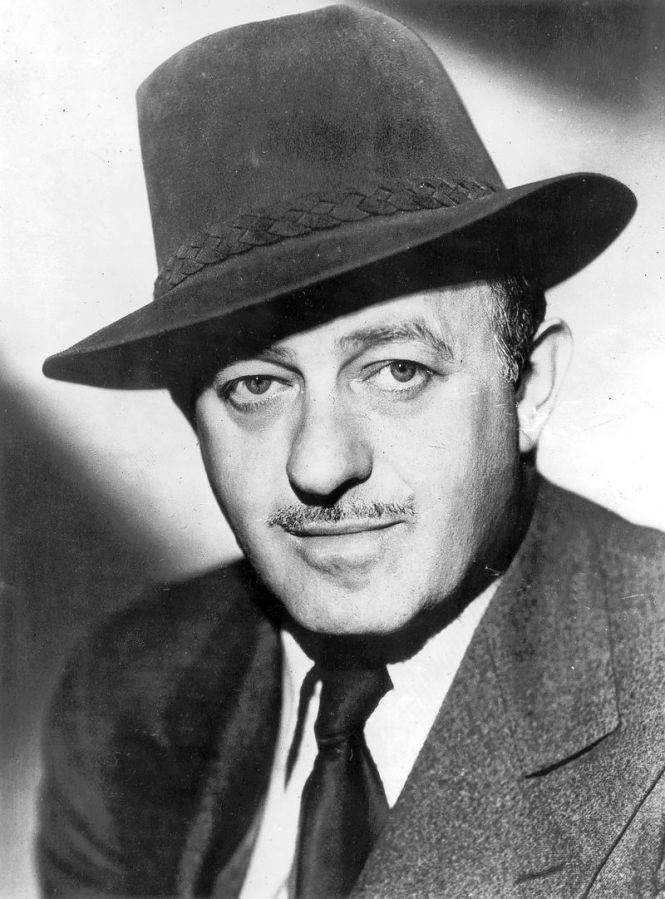
I sat enthralled listening to a recent webinar on the globally popular “Lockdown University” – born out of the Covid-19 pandemic  – on Ben Hecht, the famed Jewish American screenwriter, director, producer, playwright, journalist, and novelist.

Ben Hecht. The American screenwriter, director, producer, playwright, journalist and novelist who went on to write 35 books and some of the most entertaining screenplays and plays in America.

It was interesting to learn that his indifference to Jewish issues changed when he met Hillel Kook, also known as Peter Bergson, who was drumming up American assistance for the Zionist group, Irgun. Hecht wrote in his book, Perfidy, that he used to be a scriptwriter until his meeting with Bergson, when “I accidentally bumped into history” – that is, the burning need to do anything possible to save the doomed Jews of Europe.

Golden Boy. Ben Hecht was a master of cinema’s golden age as well a writer on the world’s blackest age  penning articles and plays about the plight of European Jews, such as ‘We Will Never Die’  and ‘A Flag is Born’.

He did!

When our superb lecturer Trudy Gold mentioned that following Hecht’s support for a Jewish State through his writing, noting that the proceeds of his successful play  “A Flag is Born”  – dealing with the subject of illegal immigration and the fight against the British – were used to help purchase a ship to support that cause and was named the S.S. Ben Hecht, I suddenly recollected a South African connection.

The Stage is Set. Bringing the cause of the Jewish state to the hearts and minds of Americans. New York City opening of Ben Hecht’s A Flag is Born at the Alvin Playhouse

Back in 1996, I interviewed a former South African in Israel who served on that vessel during Israel’s 1948 War of Independence. His name was Charlie Mandelstam.

On deck of the SS Ben Hecht was a world away both geographically and atmospherically from Charlie’s small agricultural hometown of Standerton on the Vaal River, east of Johannesburg. He came from neither a Zionist nor a religious background, but Charlie too was about to “bump into history” when “my older brother and I started reading in the press about the Jewish struggle in Palestine – it fascinated us. We both felt that the creation of a State of Israel was vital and that our family should be represented in the struggle. We had both served in WWII, me in the navy but this was now personal. Only one of us could go as someone had to stay with our widowed mother and run the family furniture business. At that time, all I was interested in was golf and girls and I certainly didn’t want the responsibility of running a business, so I volunteered.”

A young Charlie Mandelstam serving on the convoys off the east coast of Africa during WWII.

If Charlie had seen little action  on his convoy runs between Mombasa, Madagascar and the Seychelles during WWII, that would not be the case in his next war. It was the end of June 1948, and Charlie had only been in Israel for ten days when below deck on his first ship – the Eilat –  an ex-American ice-breaker that had been converted to bring across illegal immigrants – Holocaust survivors from Europe –  and then turned into a patrol boat, he suddenly heard the rat-a-tat-tat of gunfire above as three Egyptian spitfires staffed the upper deck and the bridge.

“Here I was, my first day in the Israeli navy, and a fellow shipmate lay dead on the deck!”

A short while later, Charlie was transferred to a sub-chaser – the S.S. Ben Hecht. “It was only called a subchaser because it was the only ship with radar” explained Charlie, “but it didn’t have any anti-submarine equipment.”

Ready for War.  A new ‘chapter’ for the Ben Hecht now recommissioned to patrol Israel’s coastline.

It has an interesting and intriguing history before Charlie graced its deck.

Built originally as a private yacht by the German firm Krupp, it changed hands and was used, at one time, to smuggle the gold of the Republican Government from Spain to Mexico, shortly before its fall in the Spanish Civil War.  Later, it was acquired by the US Navy and used as a coastal patrol vessel until 1946 when it was purchased by a company serving as a façade for the “American League for a Free Palestine”, an organization that was connected to the Revisionist Movement. It was then that the ship was re-named for the author and screenwriter Ben Hecht who was active in Revisionist circles and financed  the purchase of the ship from the proceeds  of “A Flag is Born”.

The March to Independence. Ben Hecht’s ‘A Flag is Born’  advocated the creation of a homeland for the Jewish people in the ancient Land of Israel.

Ben Hecht vs Emir Farouk

On March 1st, 1948, the Ben Hecht sailed from Port de Bouc, France, carrying 626 Ma’apilim (Jews who illegally immigrated to British controlled Palestine in the 1930s and 1940s – known as Aliyah Bet)·. The crew of 18 was made up – for the most part – of American volunteers and when the vessel was close to Palestine, it was intercepted by two British destroyers, towed to Haifa, and the Ma’apilim transferred to an internment camp in Cyprus.

Bound for Palestine. Two child refugees aboard the SS Ben Hecht that will be intercepted by the British and its passengers interned in Cyprus. ( Courtesy the Institute for Mediterranean Affairs).

The crew was imprisoned by the British authorities in Acre Prison, and assisted in the preparations for the famous Acre Prison break.

The S.S. Ben Hecht would know greater success in the next chapter of its history with the young South African on board although Charlie relates the famed incident that followed with humour in keeping with his colourful personality.

“An American friend of mine aboard the ship got the address of some girls from Ma’agan Michael who were stationed in Rehovot. We got to know them and they used to tease us, “You guys came all the way from the States and South Africa to have a good time sailing between Haifa and Gaza! Why don’t you join a fighting unit?” Soon after there was the famous incident where four speedboats, three of them homemade kamikaze torpedo boats, were launched from our ship – the Ben Hecht. When they got close to the Emir Farouk the Egyptian flagship and an accompanying minesweeper anchored outside Tel Aviv harbor trying to prevent Israel from rearming by sea, our guys jumped safely into the water, and the torpedo boats exploded on impact, sinking both enemy ships. Although the sinking of the Farouk was Israel’s most dramatic naval victory in the War of Independence, all I really saw of the whole thing was the explosion in the distance from on board our ship. However we couldn’t rush fast enough to tell the girls of how we sank the enemy ships. Well, how they laughed at us. It turned out that the guys who had actually been on the torpedo speedboats were friends of theirs from their Kibbutz – Ma’agan Michael.”

Israel Strikes at Sea. The Emir Farouk, the flagship of the Egyptian navy before Israel’s attack off the coast of Tel Aviv.

Charlie would find his “girl” after the war on moshav Habonim where many his shipmates and other South Africans had settled.  “I used to work in the fields and brought feed for the dairy. Lucy used to milk the cows early in the morning. She wore shorts and I couldn’t help notice her legs. They were beautiful; they still are,” he said chuckling. Charlie married Lucy and eventually left the Moshav in 1960 and taking a job as the coach of the newly opened Caesarea golf course, despite his mother’s reservations:

 ‘Fun golf ken men machen a leben ?’ (From golf can you make a living?”)

Charlie remained there for the next 35 years.

Life after War. Looking ever so debonair,  Charlie Mandelstam at home on Moshav Habonim.

Over those years, many of the golfers, Charlie rubbed shoulders with either on the course or on the ‘19th hole’  included Danny Kaye, Kirk Douglas, Frank Sinatra, Sean Connery, Micky Rooney, Peter Lawford and Zubin Mehta. Charlie related  a game he played with US diplomats, Asst. Secretary of State Joseph J. Sisco,  whose career in the State Department spanned five presidential administrations and who played a major role in Secretary of State Henry Kissinger‘s shuttle diplomacy in the Middle East and Alfred Atherton, who helped in the negotiations that led to the 1978 Camp David peace accords between Israel and Egypt.

Astute diplomats, they could plot the course of the political destiny of nations but on a golf course, Charlie was frank:

 “they were poor golfers!”

The night following the game, “I got a phone call from Ted Lurie the then editor of The Jerusalem Post asking what the scores were. I politely skirted the question. That Sunday, the paper ran a piece about Sisco and Atherton playing the local pro, Charlie Mandelstam who wouldn’t divulge the scores. On Monday, I received a call from Joseph Sisco telling me he had just called Abba Eban suggesting he recruit me into the diplomatic corps.”

Down to a ‘Tee’. (L-r) At a 1963 exhibition round at Caesarea – Rex Moss, club champion, Isabel Blumberg, two times South African woman’s champion and club champion; Herman Barra, most famous Jewish golfer and world senior champion and Charlie Mandelstam, club pro.
 

Charlie Mandelstam from Standerton, South Africa came to patrol Israel’s shores, but stayed captivated  by the land and its people, and of course, “a fine pair of legs!”


While the mission of Lay of the Land (LotL) is to provide a wide and diverse perspective of affairs in Israel, the Middle East and the Jewish world, the opinions, beliefs and viewpoints expressed by its various writers are not necessarily ones of the owners and management of LOTL but of the writers themselves.  LotL endeavours to the best of its ability to credit the use of all known photographs to the photographer and/or owner of such photographs (0&EO)

Surviving the Shoah

Every year on the 27th of January, the world commemorates International Holocaust Remembrance Day. Of the six million Jews murdered in the Shoah (Holocaust) – one and a half million were children!

By David E. Kaplan

Entering  the Children’s Memorial at Jerusalem’s Yad Vashem  – World Holocaust Remembrance Center – one is engulfed by darkness until one turns a corner and then suddenly overwhelmed by tiny flames from candles – a Jewish tradition to remember the dead –  that appear to reach out into eternity. Apparently, it might be one candle and through skillful mirror positioning, a single flame becomes many emerging endless. This is the point of the Memorial – that if the murder of ONE child is unbearable to bear then the innumerable flames help try apply the mind to the UNTHINKABLE – one and a half million children snuffed out in cold blood!

Lives Lost. Each flame signifying a young Jewish child murdered in the Shoah at the Children’s Memorial at Yad Vashem  in Jerusalem.

The names of murdered children, their ages and countries of origin can be solemnly heard in the background – a roll call of the dead.

Visitors are left speechless; their only response – tears running down cheeks!

One child that survived that horror – though not her parents  –  was Roni Wolf from the city of Ra’anana in Israel. Her story of survival was revealed this month in an emotionally-charged global Zoom meeting together with her fellow survivors who had found themselves at an orphanage outside Brussels in Belgium during World War II. They had not seen each other since they were all young children together – in that  fateful orphanage where death stalked them!

The Zoom reunion on January 17, 2021, came about because of the research of a Jewish Dutch 24-year-old law student, Reinier Heinsman. While studying, Heinsman opted to volunteer at the Kazerne Dossin – a Memorial, Museum and Documentation Centre on Holocaust and Human Rights established within the former Mechelen transit camp from which in German-occupied Belgium, arrested Jews and Roma and sent them to concentration camps.

There, Heinsman became fascinated with the amazing rescue of some 60 orphaned Jewish children having been captured by the Nazis to be transported to Auschwitz on October 30th,1942. From photographs of the children he found at the Museum, he set about in tracing any surviving orphans. Over a period of eight months starting his research in May 2020, the intrepid investigator  reveals “I located five children in the photo who are still alive. The other six who participated in the Zoom reunion were from this orphanage but do not appear in the photo.”

All had been snatched at the eleventh hour from certain death.

The last ‘child’ he found was Reizel Warman, today Roni Wolf from Ra’anana, the only one living in Israel.

Dinner Time. Roni is bowing her head on the left during meal time at the orphanage.

On Sunday night, the 17th of January, the young law student welcomed the eleven Holocaust survivors on Zoom who last saw each other over seven decades earlier. Most of them today are living in the USA. Each of the former ‘children’ re-introduced themselves as ‘adults’ and told their life’s story. Each were truly indebted to Reinier who reveals he is unsure what drove him to tackle with such passion such a deep study of this magnitude that will soon appear in his soon to be published book, Jewish Orphans from Belgium in the Holocaust-Testimonies. Born to a Jewish mother and Christian father, Heinsman has never even visited Israel.

When Roni’s parents were herded onto the train for Auschwitz, they departed not from Antwerp but Brussels, where they had been  in hiding on Rue des Fleuristes. They had shortly before moved to the Belgium capital, “because it had a smaller Jewish population and they thought they could blend in and escape attention,” explains Roni. This proved to be true only temporary. Soon the roundups began in Brussels, and only days before the German’s came, Roni’s parents  Zalman and Malka, took their two baby daughters to their non-Jewish neighbours. Roni would later learn that her mother was murdered on the first day she arrived in Auschwitz; her father would succumb later from illness. “We only spent a few days with this family, who were terrified of the danger we placed them in. They then took us to Wezembeek, an orphanage for abandoned children outside Brussels.”

For a while, the children were safe.  

Wezembeek Children. Roni is in the front row second from the left with the white hood.

Explains Roni:

“The orphanage was protected property as part of an understanding reached when Belgium capitulated in 1940, that the Nation’s children would not be harmed. This was insisted upon by the Queen. The Nazis adhered to this policy until one day in 1942, the trains bound for Auschwitz fell short of their quota. Precise by nature, the Germans would not countenance empty coaches. And if they could not meet their quota with adults, they knew where to find last minute substitutes – the children at Wezembeek.”

Roni, who was 2-years-old at the time and her older sister Regina were amongst those herded onto the trucks and driven to the station. Luckily, the orphanage was run by a cool head in Madame Marie Blum!

The Wezembeek Orphanage where Roni and her older sister Regina Warman spent four years following their parents deportation to Auschwitz.

Marie had been assigned the post of manager of the Wezembeek Home when she was only 26 years old. On Friday afternoon the 30th of October 1942  – less than two months after Roni and Regina arrived at the home – the SS raided Wezembeek. As related by Marie later, the SS headed by a Dr. Holm, burst in with their firearms in their hands screaming and shouting orders. “Their aim was to frighten all into immediate obedience.” The men rushed into Madame Marie office and started ripping up the wires to the phone, breaking all telephonic contact with the outside world. Two staff members, Julia and Livine Kumps, were washing the corridor at the time.

The Wezembeek staff and boarders.

Dr Holm barked at Marie, “Are these two women Jewish?”

“No,” replied Madame Marie, “they are outsiders employed on an hourly basis.”

“Pay and get rid of them,” ordered an impatient Holm.

The Germans wanted little interference with what they were doing. After all, they were reneging on the deal with the Belgian royalty not to harm the country’s children!

All this was going through the mind of Dame Marie, who while drawing the money from a drawer in her desk, also managed to write something down on the two pieces of paper in which she wrapped the wages. The clock was ticking, and all she had time to quickly scribble was one word “PREVENT” and a phone number.  She hoped at least one of the messages would find its way to the Queen of Belgium and be understood.

It was not only a long shot  but the only shot!

For the plan to have any chance of success, Dame Marie also needed to buy time – to cause as much delay as she could.

This would prove tricky and dangerous.

She guided  Holm to the infirmary room where she said there were two boys with “contagious diphtheria” germs. Unfortunately when 13-year old Michel Goldberg and 7-year-old Jacob Gebotzreiber were asked by Holm if they were indeed ill, they truthfully answered:

“No, we are not sick.”

An irritated, impatient and much angered Holm then proceeded to move all of the children out towards the large canvas covered truck. Holm was meticulous in going through the entire home so as to be certain that everyone was accounted for.

Seven of the staff members were forced to board the truck together with the children. At that moment, a staff member – a Mrs. Gold – fainted which gave Marie time to run back for water, clothing and medical supplies for the journey.

Valuable time was bought.

Marie sat in front with the driver and Roni on her lap. She struck a conversation with the driver who looked at Roni and said:

 “I have a daughter of the same age.”

Tedious conversation passed the time away and helped eased the tension.

The truck arrived in the Mechelen town centre where the children were offloaded into a large courtyard in front of the Dossin military barracks where many other deportees were gathered awaiting deportation to Auschwitz.

Again, Marie needed to play for more time and pulled the same stunt she had failed earlier with Holm. She convince the Commander of the Barracks, an officer Steckman, that there were two children that were taken from an infirmary having contagious diseases. Steckman ordered the boys to be separated from the rest of the children and began phoning awaiting further instructions.

Finally after all the delays, Steckman was ordered by his superiors to release the children, which he did  that included Dame Marie and the orphanage staff.

The drive back to the orphanage was harrowing, afraid that they would be stopped at any moment and sent back to the deportations.

They returned safely back to the orphanage and survived the Shoah!

Marie would later discover that Julia Dehaes, the cleaner, had taken her scribbled note and had run to the hardware store in the village, where a telephone was available and called the number that Marie had written on her paper. One thing led to another and a message got through quickly to Queen Elizabeth of Belgium who contacted the military governor of Belgium, General Alexander Von Falkenhausen. He complied with her pleading and ordered the return of the children to Wezembeek. That order came through while the children were disembarking from the trucks and being marched towards the train.

A short while later the train left for Auschwitz with a few empty carriages, while the truck returned to the orphanage full –  with the children!

Close Encounter. Roni (Reizel Warman) soon after her narrow escape of being deported on a transportation to Auschwitz.

In 1992 Madame Marie Blum was honoured by the US Senate for being “a true heroine”.

When the war ended, only Roni and Regina of the Warman family in Belgium had survived but so had her aunt Rachel, who was living in London.

When Rachel was given the names in 1945 of all the deportees in Belgium she noticed that her brother’s children Regina and Rosa (Roni) were not listed. “It meant they had survived,” thought Rachel. She had lost in the Shoah her parents, two brothers, a sister, a sister-in-law, aunts, uncles and cousins, “but I had two nieces and we were going to find them.”

The Marvelous Madame Marie. Roni with the ‘children’s saviour’ Madame Marie Blum (left) at Wezembeek orphanage.

“After months of investigation, we learnt that one was living with a devout Catholic family and the other in a Jewish children’s home.” Rachel travelled to Brussels, brought them back to England where she and her husband Jack adopted them.

Surviving to Thriving. A jovial Roni (left)  and her friend Pearl during basic training in the Israeli Defence Force.

At the age of eighteen, Roni left for Israel on a year’s educational programme. Instead of returning to the UK after the year, she joined the army where she met her future husband, South African Ivor Wolf.

Young Country, Young Lovers. From surviving the Holocaust and brought up in London, Roni meets Ivor Wolf from South Africa to forge a life together in the young State of Israel.

Epilogue

On Yom Hashoah in 2009, Yediot Achronot ran an article on the Holocaust with an appeal from a woman working at Yad Vashem to identify any of the children in the six photographs she had randomly selected from some 130,000.  The caption read:

‘Lost Youth’

Shortly before midnight, one young reader of the Hebrew paper was about to retire to bed when she glanced at one of the photos. The next thing she did was call her parents in Ra’anana and said:

 “Don’t go to bed, I’m coming over right now.”

Roni and Teddy. A picture of innocence removed from the horror gripping all of Europe.

A short while later, Yaella arrived, finding her parents, Ivor and Roni Wolf anxiously drinking coffee. She dropped the newspaper on the kitchen table and pointed to a photo of a little girl clutching her teddy bear.

 “Mommy, it’s you, it’s you,” she tearfully repeated.

The following day Roni contacted Yad Vashem. The photo was taken when Roni had been staying at Wezembeek, the orphanage outside Brussels.

Horrors from the Holocaust. A 2009 article in Yediot Achranot of Roni Wolf pointing to herself in the paper’s earlier article with a photograph of herself holding a teddy bear taken at Wezembeek Orphanage.

Now twelve years later, Roni has again reunited with the past, meeting on Zoom all those fellow children who narrowly escaped death at the hands of the Nazis.

“Living in our Jewish state with my husband, children, grandchildren and great grandchild instills in me hope for a brighter future” says Roni.


Survivors Reunite. The young Dutch law student Reinier Heinsman who tracked down Jewish Holocaust survivors from a Belgium orphanage and brought them together for a Zoom reunion.


While the mission of Lay of the Land (LotL) is to provide a wide and diverse perspective of affairs in Israel, the Middle East and the Jewish world, the opinions, beliefs and viewpoints expressed by its various writers are not necessarily ones of the owners and management of LOTL but of the writers themselves.  LotL endeavours to the best of its ability to credit the use of all known photographs to the photographer and/or owner of such photographs (0&EO)

Time to Tell the Truth

Lithuania is adept as passing over its nefarious past

By David E. Kaplan

There was a certain irony here!

Last year being the 300th anniversary of the Vilna Gaon’s birth, the Lithuanian Parliament dedicated 2020 the year to commemorate this world famous commentator of Torah and Talmud and the country’s 700-year-old Jewish history. Yet was it not Elijah ben Solomon Zalman, commonly known as the Vilna Gaon, who said, “The goal of the redemption is the redemption of TRUTH.”

Sketchy Holocaust Past. Charcoal sketch of the Vilna Gaon who was recently honoured by the Lithuanian government designating 2020 the Year of the Vilna Gaon and the History of the Jews of Lithuania.

Where is that “redemption” for Lithuania if it does not honestly confront the TRUTH  and reveal the role it played as perpetrators  in the Holocaust?

In an article in The Jerusalem Post “The Elephant in the room – The false narrative of the Holocaust promoted by the Lithuanian government” (published January 15, 2021), chief Nazi-hunter of the Simon Wiesenthal Center, Efraim Zuroff, takes issue with those celebrating the “contemporary relations between Israel and Lithuania” when the task should really be to unmask Lithuania’s murder of its Jews during the Holocaust.

Zuroff writes:

“The horrific fate of Lithuanian Jewry during the Holocaust is no secret. Nor is the highly significant role played in the murders by local collaborators from all strata of Lithuanian society. Of the approximately 220,000 Jews living under the Nazi occupation, 212,000 were murdered.” That translates into 96.4%, representing the highest percentage of victims among the large European Jewish communities.

And this is what is most astonishing, revelatory, sobering and horrifying!

“Some 90% of them,” reveals Zuroff, “were shot near their homes in Lithuania, in many cases by their neighbors.”

Shot in the ‘Dark’. A group of Jews before being executed in the forests Siauliai, Lithuania, 26-29.06.1941.

Hidden Holocaust

Zuroff has done extensive research and in 2020 published with Rūta Vanagaité, a descendent of Lithuanian perpetrators an expose of Lithuanian complicity in “Our People – Discovering Lithuania’s Hidden Holocaust”. The book is a journey of a descendent of the victims of the Holocaust and a descendent of its perpetrators who team up to unravel the truth of who murdered the Jews of Lithuania.

Guardians of Death. Members of the Lithuanian Militia in civilian clothing, leading Jews to the Seventh Fort in Kovno, Lithuania, June 25, 1941.

Their research reveals as Zuroff writes:

“If we add the more than 5,000 German, Austrian and French Jews murdered in Lithuania, and the approximately 20,000 Jews murdered in 1941-1942 by the 12th Lithuanian Auxiliary Police Battalion sent to Belarus in October 1941, the figure of victims is staggering for such a small country. What is virtually unknown, however, is that there were less than 1,000 Germans stationed in Lithuania during the Nazi occupation. Given the fact that all of these victims had to be murdered individually by shooting, and buried in some 250 mass graves, primarily in Lithuania (234 mass graves), but also in Belarus, one begins to grasp the incredibly critical role played by Lithuanian collaborators.”

Digging before Death. Jews digging a trench in which they were later buried after being shot in Ponary outside Vilna in Lithuania.

Zuroff feels that Lithuania does not yet deserve Israel’s “friendship and cooperation” because “instead of boldly and honestly confronting the tragedy of its Jewish population, Lithuania became a leader of the post-Communist Eastern European initiatives to distort the narrative of the Holocaust”.

Zuroff sets out the four ways Lithuania did so:

– “It grossly minimized the crimes of local collaborators (none of whom have ever been punished in Lithuanian courts)”.

– “It inflated the small number of Lithuanian Righteous”

– “It has brazenly promoted the canard of equivalency between Nazi and Communist crimes, and vigorously lobbied for the observance of memorial day for all the victims of totalitarian  crimes, which would make International Holocaust Memorial Day superfluous”

– “It has glorified anti-Soviet fighters, even if they committed Holocaust crimes which, in theory, should have disqualified from being turned into national heroes.”

Nazi hunter Efraim Zuroff, (right) and Lithuanian journalist Ruta Vanagaite in Jerusalem who teamed up to investigate Holocaust crimes perpetrated by Lithuanians. (Courtesy)
 

Rather than confront the past, Lithuania prefers to suppress it. Following the publication of Zuroff’s and Rūta Vanagaité book,the father of Lithuanian independence, Vytautas Landsbergis wrote an op-ed in the country’s most influential and popular website,  basically telling Rūta, a celebrated writer in Lithuania, that now that she has “betrayed her country”, she “should commit suicide.”  That was sufficient to convince her  at the time to leave Lithuania  and seek refuge in Israel. Adding insult to injury, her publisher severed relations with her, removed all her books  from bookstores, and taunted her that they “were going to turn her books into toilet paper.”

So much for honouring the legacy of the Jews of Lithuania!

Suppressing Truth. President of Lithuania from 1990 to 1992 and Chairman of the Lithuanian Parliament from 1992 to 1996 Vytautas Landsbergis.

How further ironic, that the Vilna Gaon, whose 300th anniversary was so honoured in 2020, would not only have been murdered had he lived in Vilna during the Holocaust, but more than likely  – as the statistics show:

He would have been shot not by a German Nazi but by a Lithuanian civilian!


While the mission of Lay of the Land (LotL) is to provide a wide and diverse perspective of affairs in Israel, the Middle East and the Jewish world, the opinions, beliefs and viewpoints expressed by its various writers are not necessarily ones of the owners and management of LOTL but of the writers themselves.  LotL endeavours to the best of its ability to credit the use of all known photographs to the photographer and/or owner of such photographs (0&EO)

Scoring Hanukkah Goals

Follow in the ancient footsteps that gave birth to the Jewish “Festival of Lights” to this Hanukkah’s surprise at Jerusalem’s premium football club

By David E. Kaplan

Celebrating the start of Hanukkah today, I am watching my two grandchildren, Ariel and Yali enjoying their sufganiot (doughnuts). They may not know the history or understand the significance of this “festival of lights”  but these two and three year-olds  are enjoying the fun of Hanukkah roaring with laughter as they play with their spinning tops, known as dreidels (‘sevivon’ in Hebrew). One legend had it that during the time of the Hanukkah story,  Jews would grab a dreidel and start to play if Syrian soldiers entered the house while ‘illegally’ praying or studying Torah study. In the Diaspora, the four-sided dreidel displayed  four Hebrew letters –  ‘nun’, ‘gimel’, ‘hey’ and ‘shin’ representing the words ‘ne’s ‘gadol’ ‘hayah’and ‘sham’, meaning “a great miracle happened there.”

In Israel, the last letter is changed to a ‘peh’, representing the word ‘po’, “here,” with the resulting declaration:

 “a great miracle happened here.”

And it sure has as modern day Israel – the Start-Up Nation testifies too. So what happened back then?

In around 168 BCE, Antiochus Epiphanes IV, the Hellenistic King of the Seleucid Empire stepped up his campaign to quash Judaism, so that they would share the same culture and worship the same gods.

Marching into Jerusalem, he vandalized the Temple and decreed that studying Torah , observing the Sabbath, and circumcising Jewish boys were punishable by death. To ensure his policies were carried out, he sent Syrian overseers and soldiers to villages throughout Judea to viciously enforce his edicts.

Entrance to Hasmonain Village.

When these soldiers reached Modiin, northwest of the capital, they demanded that the local leader, Mattathias the Kohein (a member of the priestly class), be an example to his people by sacrificing a pig on a portable pagan altar. He refused killing the King’s representative and with the rallying cry “Whoever is for God, follow me”, Mattathias and his five sons (Jonathan, Simon, Judah, Eleazar, and Yohanan) fled to the hills and caves of the wooded Judean wilderness and founded the Hasmonean dynasty, which ruled from 164 BCE to 63 BCE. They reasserted the Jewish religion and reduced the influence of Hellenism on the indigenous Jewish population.

It is to this beautiful area I visited during a Hanukkah before Corona in the center of Israel. It lies amidst historical heritage sites and the national forest of Ben Shemen, all home to the ancient Maccabees and present day Israelis mostly living in the modern day city of Modi’in, halfway between Tel Aviv and Jerusalem. Past and present merge in a colourful kaleidoscope  of nature and history.

Welcome back to the Past. The brainchild of Zohar Baram and his late wife Naomi, Zohar explains Hasmonian Village as a reconstruction of life in ancient times. (photo D.E. Kaplan)

Genesis

To get a taste of “authentic Israel” where the ancient Maccabees once lived and worked, I visited the reconstructed Hasmonian Village in Shilat and met its founder and Director, Zohar Baram.

He explains how it came about.

“After a tough day of fighting in the Sinai  during the Yom Kipur War in 1973, we were sitting around our tanks and armoured cars and turned on the radio when we heard the famous British actor, Peter Ustinov say that it had been “a mistake to create the State of Israel” and that “the Jews have no historical connection to the land – it’s a myth!” I was shocked.”

Voice in the Wilderness. The English actor, Peter Ustinov, whose tirade against Israel heard in the Sinai, spurned Hasmonain Village.

Only the year before he met and got to know the British actor when Ustinov stayed in Eilat for the filming in the Negev desert of a British-Israel film Big Truck and Sister Clare. Baram was taken on as Ustinov’s official guide, ‘So you can imagine we spent a lot of time together and we got to know each other quite well”.

Well, not quite!

A tank commander and fearless in battle, Zohar was brought to tears. “Hearing his tirade in that unmistakable voice, I made an instant decision. It was not enough to defend the land; I needed to defend our history. I realized in the sand dunes of Sinai, where Moses received the Ten Commandments that I had to dedicate my life to the education of future generations of the historical connection of Jews to the Land of Israel.”

The result of this ‘revelation’ is today Hasmonaim Village which Zohar Baram established with his late wife, Naomi. “I love working with the youth and it is so important to show and explain to Israeli children who live in apartments what the homes of their ancestors over 2000 years ago looked like. How did they dress; what furniture they had; what decorated their walls and how they made a living.” The village which has a main road and homes on either side “is typical of the size of a village at the time.”

Back to the Grind. Zohar Baram showing the writer how people during the period of the Maccabe ground
 wheat with an ancient stone grinder. (photo D.E. Kaplan)
 

He passed me some wheat, placed it in an ancient stone grinder and then left it to me to produce grain that I placed in a plastic bag to take home. We then walked to the village mint, where Zohar hammered three coins “for your children” with motifs from ancient Judea. “The children love this and get the feel what life was like here two thousand years ago,” said Zohar.

Home Truths. At the time of the Hanukkah story, a sense of inside a home showing the furnishings and clothing worn at the time.

Leaving the village, I noticed the words taken from the Bible and inscribed in Hebrew, which translated reads:

“When you see it, your heart will be happy”.

I left the village with a ‘happy heart’ and could well understand why filmmakers – mainly American – use it as a location for movies and documentaries. The most celebrated filmmaker that Zohar has worked with is the American Ken Burns noted for such documentaries as The Civil War and The Roosevelts. “When I work with such celebrated artists, I too enjoy a “happy heart’ when thinking back to that British actor in 1973 whose venomous words directed me on my life’s mission.”

Coining it. Activities include minting coins the ancient way. Zohar Baram passes me a newly minted ‘ancient’ coin. (photo D.E.Kaplan)

Field of Dreams

No visit to this area is complete without a visit to the Biblical Nature Reserve called Neot Kedumim, which in Hebrew means “pleasant pastures (or habitations) of old.” Covering an area of 2,500 dunams (2.5 km2; 0.97 sq mi), Neot Kedumim is a recreation of a biblical landscape.

A Visual Visit of the Bible. The Biblical landscape of Neot Kedumim near Modi’in, midway between Jerusalem and Tel Aviv.

In 1964, land was allocated for the project with the help of Prime Minister David Ben-Gurion and today comprises: the ‘Forest of Milk and Honey’, the ‘Dale of the Song of Songs’, ‘Isaiah‘s Vineyard’ and the ‘Fields of the Seven Species’. Signs are posted throughout the garden quoting relevant Jewish texts in Hebrew and English.

On arrival, my tour guide explained that when Ephraim and Hannah Hareuveni immigrated to Palestine in the 1920s, they dreamed of developing a biblical landscape reserve that “embodied the panorama and power of the landscapes that both shaped the values of the Bible and provided a rich vocabulary for expressing them.”

Their son, Nogah Hareuveni, a physicist, dedicated his life to implementing his parents’ dream. To build the park, thousands of tons of soil were trucked in, reservoirs were built to catch runoff rain water, ancient terraces, wine presses and ritual baths were restored, and hundreds of varieties of plants were cultivated.

“It started in 1964 with Nogah and we teach,” continued the guide, “what he taught us. Working with the Bible in one hand and a spade in the other – he made the connection between the scriptures and nature.”

Noting how Jewish festivities have to do with a certain time of the year and a particular type of fruit, “he planted only those trees and plants that were indigenous in biblical times. He wanted visitors to understand the text of the Bible better by using their senses – seeing, smelling, touching, hearing and tasting.”

He reasoned that because the Bible conveys abstract ideas through parables using images from everyday life thousands of years ago, it had less traction in the 20th century, where people are more attuned to the imagery of consumerism. The idea of Neot Kedumim is to ‘experience’ the Bible in the context of an authentic Biblical landscape.  Nogah wanted Neot Kedumim “To be the photo album of the bible.”

Tapping into the Past. Extracting water the ancient way at Neot Kedumim. (Photo by Reut Shai Dror)

It was not surprising that in 1994, Neot Kedumim and Nogah Hareuveni, were joint recipients of the ‘Israel Prize’ – Israel’s most prestigious civilian award.

“I always tell my groups that while Israel today is known for its innovative start-up companies, it emanates from our past. To survive in this harsh land one had to come up with ideas; so, the tour will stop at the cistern and see how water was stored; different types of oil lamps and how someone had to think of the idea that one could extract oil from the olive to fuel the lamp, and the type of plant that provided the wick. Here at Neot Kedumim we see how ideas were nurtured in nature and how the ancient Israelites survived and thrived. Here is the beginning of Israel’s status as the Start-Up Nation.”

Seeing the Light. A guide explaining how the sage was the inspiration for the Menorah

Walking along the path feasting my eyes on the exquisite scenery, my guide suddenly raises his hand to stop a tractor coming towards us. Its driver Zachariah Ben Moshe stops, climbs off with a jump and introduces himself as being in charge of tree planting.  Explaining that I will be writing an article, he quickly points to the branches on a sage tree.

Holy Moses! Is this what Moses saw? The image of the Menorah is unmistakable in this flowering sage. (photo by Noga HaReuveny)

“What does this remind you of?” he asks.

It stared at me in the face – it was so obvious.

“The Menorah,” I answered. Described in the Bible as the seven-lamp ancient Hebrew lampstand made of pure gold, the Menorah was used in the portable sanctuary set up by Moses in the wilderness and later in the Temple in Jerusalem. Fresh olive oil was burned daily to light its lamps.

“Exactly,” replies Ben Moshe. “The Menorah was taken from the sage. We read how God instructed Moses on how to build a Menorah who said: “Go out to the mountain and see its image.” Clearly, it was the sage he saw and as we say , the rest is history.”

Scoring a Goal for Normalisation

After endless enmity and divisions on the land, “history” was surely made before this Hanukkah with the announcement that the UAE royal family bought half of a top-tier Israeli soccer team –  but not just any team. It was Beitar Jerusalem Football Club – an Israeli soccer team with an anti-Arab reputation amongst its fan-base!

Cowers for an Enlightened Future. Sheikh Hamad bin Khalifa al-Nahyan, a member of the Abu Dhabi ruling family (left) and Beitar Jerusalem F.C. owner Moshe Hovav pose for a photo in Dubai.

This barrier-shattering deal is among the fruits of Israel’s nearly three-month-old normalisation agreement with the Emirates and  sends a strong symbolic message – that “winds of change” are blowing across the Middle East. The deal puts a Muslim Sheikh at the helm of Beitar Jerusalem, the only Israeli team that has never fielded an Arab player.  

So no Arab player, but now an Arab co-owner.

Times are changing – the will and optimism is there.

Says Beitar Jerusalem’s owner, Moshe Hogeg about the deal:

“On the eve of Hanukkah, Beitar’s menorah is lit in a new and exciting light. Together, we will march the club to new days of coexistence, achievements, and brotherhood for the sake of our club,  community and Israeli sports.”

With the belief of influencing hearts and minds, UAE’s Sheikh Bin Khalifa, a first cousin of the de facto Emirati ruler, Crown Prince Mohammed bin Zayed, proudly asserted that his investment represented:

 “the fruits of peace and brotherhood between the nations”.

When asked in a live video-linked interview about the reputation of the fan-base of the club he had invested, Sheikh Bin Khalifa replied in the spirit of Hanukkah:

“They are mostly young, in their twenties. We should extend them the hand and show them the light.”

Setting New Goals. Israeli Arab midfielder Diaa Sabia (right) with a club official during his presentation at Dubai’s Al-Nasr club.

The new Emirati co-owner added that the Israeli soccer club was open to recruiting Arab players. Already an Israeli Arab midfielder, Diaa Sabia has signed for a Dubai club.

There is this Hanukkah, a movement, momentum and message in ‘play’ – shining  LIGHT on a path ahead towards greater understanding and outreach.


While the mission of Lay of the Land (LotL) is to provide a wide and diverse perspective of affairs in Israel, the Middle East and the Jewish world, the opinions, beliefs and viewpoints expressed by its various writers are not necessarily ones of the owners and management of LOTL but of the writers themselves.  LotL endeavours to the best of its ability to credit the use of all known photographs to the photographer and/or owner of such photographs (O&EO).

The Story Seldom Told

By  Rolene Marks

This week, two momentous dates in history were remembered. Not with much fanfare but with the odd tweet or posting on social media platforms; but these were dates and events that altered the course of history and the profound effects are felt to this day. The first was the partition vote at the United Nations in 1947 that would pave the way for the creation of the Jewish State, the other was the commemoration of the expulsion of Jews from Middle Eastern and North African countries.

On the 29th of November 1947, the United Nations voted to divide what was then British Mandate Palestine into two – land for the Jews and for the Arabs. The Jews accepted, and the modern state of Israel was on its way to being born. The Arabs refused and would soon declare war on the fledgling Jewish State. The State of Israel would be formally declared by David Ben Gurion, the first Prime Minister, on the 14th of May 1948. The Arab response would take place on the night of 14-15 May, when the forces of Jordan, Egypt, Syria and Lebanon invaded. The Egyptian Foreign Minister informed the United Nations Security Council that “Egyptian armed forces have started to enter Palestine to establish law and order” (his cable to the Security Council, S/743, 15 May 1948). Arab leaders at the time encouraged their citizens to leave until they had “driven the Jews into the sea”.  Israel would mobilise as many of its able citizens as possible and the Haganah and Palmach (part of Haganah) forces would combine to form the Israel Defense Forces. By the end of the war, Israel was victorious and had made significant territorial gains. Many of the Arab citizens declined to return, despite the invitation by Ben Gurion in the Declaration of Independence to be equal citizens and help build the new state.

2014

What is a seldom discussed story (at least until recent years) has been the experience of Jews living in MENA (Middle Eastern and North African) countries during this time. For centuries and even millennia in some, Jews thrived in these countries. At the time of the Muslim conquests of the 7th century, ancient Jewish communities had existed in many parts of the Middle East and North Africa. Jews under Islamic rule were given the status of dhimmi (second-class citizenship), often subjected to a special dhimmi tax, along with certain other pre-Islamic religious groups. These groups were accorded certain rights as “People of the Book”. In medieval times, many Jews found refuge in Muslim lands; but there were other times when Jews fled persecution in Muslim lands and found refuge in Christian lands. Jews expelled from the Iberian Peninsula were invited to settle in various parts of the Ottoman Empire, where they would often form a prosperous model minority of merchants acting as intermediaries for their Muslim rulers.

Jews would live there for centuries, speaking the same language and observing many of the same customs and integrating well with their fellow citizens. This would change dramatically in 1948.

By 1948 Jewish communities in MENA countries, were flourishing in their numbers. In Morocco the community numbered 265 000, Iran 100 000, Algeria 140 000, Egypt 75 000 and in substantial numbers in other countries.

With the birth of the State of Israel, the reaction from the Arab world was hostile. Some Jews started to leave these countries but were forced to leave their belongings behind; for the majority, their fate was more terrifying.  Here are some accounts of what happened to these communities:

Iraq:

In Iraq, where a large community of Jews lived for 2,600 years, violent riots known as the Farhud erupted in June 1941. These riots targeted the Jewish population, mainly in Baghdad.  Soldiers who attempted a failed coup took advantage of the power vacuum left by a lack of leadership; and swarmed into Jewish communities together with a bloodthirsty mob, killing 179 innocent people, injuring more than 2,100, and leaving 242 children orphans. This act of violence was celebrated across the Arab world and in Nazi Germany.

Death to Jews. On 1 June 1941, a Nazi-inspired pogrom erupted in Baghdad, bringing to an end more than two millennia of peaceful existence for the city’s Jewish minority.

In 1948, as a response to UNGA Resolution 181 (“the Partition Plan”) and Israel’s independence, laws were passed making Zionism a criminal and even a capital offense, allowing the police to raid and search thousands of Jewish homes for any evidence of Zionism. Between May 1950 and August 1951, the Jewish Agency and the Israeli government succeeded in airlifting approximately 110,000 Jews to Israel in Operations Ezra and Nehemiah. At the same time, 20,000 Jews were smuggled out of Iraq through Iran. A year later, the property of Jews who emigrated from Iraq was frozen, and economic restrictions were placed on Jews who remained in the country.

Morocco

Prior to World War II, the Jewish population of Morocco was approximately 265,000, and though they were not deported by the Nazis, they still suffered great humiliation under the Vichy French government. Following the war, the situation deteriorated.

In June 1948, bloody riots in Oujda and Djerada killed 44 Jews and wounded many more. That same year, an unofficial economic boycott was instigated and by 1959, Zionist activities were declared illegal. In 1963, at least 100,000 Moroccan Jews were forced out from their homes and approximately  150,000 Jews sought refuge in Israel, France and the Americas.

Last Man Standing. Most the Jews in Morocco today are dead and buried. In this 2018 photograph, Joseph Sebag is the last Jewish man in the seaside Moroccan town of Essaouira.

In 1965, Moroccan writer Said Ghallab described the attitude of Moroccan Muslims toward their Jewish neighbours:

“The worst insult that a Moroccan could possibly offer was to treat someone as a Jew. The massacres of the Jews by Hitler are exalted ecstatically. It is even credited that Hitler is not dead, but alive and well, and his arrival is awaited to deliver the Arabs from Israel.”

Egypt

In the 1940s, hostility against the Egyptian Jewish community, which numbered around 80,000, increased. Laws were passed limiting the employment of Egyptians of Jewish descent, as well as requiring majority shareholders of companies to be Egyptian nationals. Since Jews were denied citizenship as a rule, many Jews lost their jobs and businesses.

During the 1948 War of Independence, thousands of Egyptian Jews were put into internment camps, forced out of their jobs, and arrested for supposed collaboration with an enemy state. Synagogues, homes, and businesses were bombed, and many Jews were killed and wounded. More than 14,000 Jews immigrated to Israel during this time seeking safety. Between 1948 and 1958, more than 35,000 Jews fled Egypt. 

End of an Era. Jews forced to leave, a former Jewish school, Abbasyia, Cairo.

Between 1956 and 1968 another 38,000 Jews fled Egypt, many to Israel, to escape systematic persecution such as government expropriation of their homes and businesses and arbitrary arrests.

Yemen

The Yemeni Jews endured some of the worst persecution. At the end of November 1947, the Arab population of Aden held a 3-day strike in protest against UNGA Resolution 181 (the Partition Plan). The protest quickly turned violent. Over 80 Yemeni Jews were slaughtered, more than 100 Jewish-owned businesses were looted, and homes, schools, and synagogues were burnt to the ground. This was one of the most violent attacks on any Jewish population in the Arab world.

Fleeing for their Lives. A Yemenite family walking through the desert to a reception rescue camp near Aden.

The Israeli government embarked on a unique plan to save the persecuted Yemeni Jews. From 1949 to 1950, “Operation Magic Carpet” (known in Hebrew as “On the Wings of Eagles”) went into effect. US and British aircraft were used, flying o Aden and airlifting the Jews from Yemen and bringing them to Israel. By the end of the operation, over 47,000 Yemeni Jews were rescued.

 Libya

 Jews lived and thrived in Libya for more than 2,300 years, with a population of over 37,000. During World War II, the Libyan government implemented their own Nazi-inspired policies; and more than  2,000 Jews were transported to desert concentration camps where hundreds died. In post-war Libya, Arab nationalism grew in popularity, resulting in violent attacks against the Jewish community.

Thriving Jewish Life. City Jews of Tripoli, Libya, 1925. (Photo by G. Casserly/Royal Geographical Society via Getty Images)

In 1945, in the city of Tripoli, more than 140 Jews were killed in a violent antisemitic riot, and a few years later in 1948, violent attacks resulted in 12 dead and the destruction of over 280 Jewish homes. In the three years between 1948 and 1951, 30,972 Jews fled to Israel due to hostile government policies.

Inside Story. Interior of a former Jewish Home in Libya. Jews had lived in Libya for over two millennia.

Syria

By 1943, the Jewish community of Syria numbered approximately 30,000.  After Syrian independence from France, the new Arab government prohibited Jewish immigration to Palestine, severely restricted the teaching of Hebrew in Jewish schools and called for boycotts against Jewish businesses. Attacks against Jews escalated with no intervention. In 1945, in an attempt to thwart international efforts to establish a Jewish homeland in Palestine, the Syrian government fully restricted Jewish emigration, burned, looted and confiscated Jewish property, and froze Jewish bank accounts.

When the UN partition was declared in 1947, Arab mobs in Aleppo devastated the 2,500-year-old Jewish community and left it in ruins. Many Jews were killed, and more than 200 homes, shops and synagogues were destroyed. Thousands of Jews illegally fled as refugees, 10,000 going to the United States and 5,000 to Israel. Their remaining property was taken by the local Muslims.

Road from Damascus. A Jewish family in Aleppo, Syria, circa 1910.(Library of Congress)

Syrian Jews that remained were in effect hostages of a hostile regime as the government intensified its persecution. Jews were stripped of their citizenship and experienced employment discrimination. Assets were frozen and property confiscated. The community lived under constant surveillance by the secret police and the freedom of movement was also severely restricted. Any Jew who attempted to flee faced either the death penalty or imprisonment at hard labour camps. Jews could not acquire telephones or driver’s licenses and were barred from buying property.  The road to the airport was constructed over the Jewish cemetery in Damascus and schools were closed and handed over to Muslims.

The story of the Jews from MENA countries is a very important part of modern history that has gained traction in recent years. Concerted efforts have been made by the government to remember and commemorate this and the 30th of November has been declared an official day of commemoration of Jewish Refugees.

Today, the majority of Israelis are descendants from those who had to flee MENA countries with an estimated 1 million who can trace their roots back to Morocco.  It is incumbent on us to bear witness and tell their stories.

Theirs cannot be the story seldom told.


While the mission of Lay of the Land (LotL) is to provide a wide and diverse perspective of affairs in Israel, the Middle East and the Jewish world, the opinions, beliefs and viewpoints expressed by its various writers are not necessarily ones of the owners and management of LOTL but of the writers themselves.  LotL endeavours to the best of its ability to credit the use of all known photographs to the photographer and/or owner of such photographs

Beauty and the Beach

An architectural masterpiece  on Tel Aviv’s coastline canvas will enhance the city among the leading cultural capitals of the world

By David E. Kaplan

It is said that the 21st century is destined to be the century of cities rather than countries. This forecast is evident in the vocabulary of today’s tourists –  at least before Corona –  of visiting Paris, Barcelona, St. Petersburg or Shanghai rather than mentioning the countries in which they are situated – France, Spain, Russia or China!

Down by the Riverside. On the banks of the Yarkon River and a few steps from the sea, Tel Aviv’s future World’s Jewish Museum.

More than half the world’s population has already moved to cities and this is expected to rise to 80% by the middle of this century. With so many cities vying for center stage, Tel Aviv is now going beyond its branding of being the “Bauhaus Capital of the World” – reflecting early 20th century clean, utilitarian architecture – to an uncertain and exciting future of flirtations and fluctuations. This has given rise to one of the most poignant descriptions of Tel Aviv as a city “waking up each morning and deciding what it’s going to be.” The  new spectacular sculptures ascending to the heavens across the Tel Aviv landscape,  attest to this branding and in a few short years’ time, there will be a major addition that encapsulates the city’s essence and affirms its rising global status. That addition will be the new  World’s Jewish Museum designed by the legendary award-winning Canadian-born American architect – Frank Gehry, whose masterpieces have disrupted the very meaning of design within architecture. These “disruptions”  are powerfully projected in such monumental works as the La Fondation Louis Vuitton in Paris, the Walt Disney Concert Hall in Los Angeles and the Guggenheim Museum Bilbao.

It was hoped before the Corona pandemic that this world-scale museum, cultural and entertainment center would have been completed before May 2023, in time for the 75th anniversary of Israel’s independence. However, when completed, the World’s Jewish Museum on the 22-dunam (5.5-acre) site overlooking the Mediterranean along the bank of the Yarkon River at the northwestern edge of Hayarkon Park and steps from the Namal ( Port of Tel Aviv), will be the hub of cultural and recreational activity and the heart of the city’s vibrant waterfront.

Marvel on the Med. Adjacent to the Medetrrnean and the Hayarkon Park that attracts over 15 million visitors a year,  a model of Tel Aviv’s  World’s Jewish Museum.

While engendering great excitement, there are however, those that remind us that society cries out with so many pressing needs from education and health to socio-economic inequalities and criticize the need for such expansive and expensive adventures.

There is however a strong counter argument.

Look to Bilbao in Spain and what Gehry achieved for the status of that city and just as important – the benefit for Bilbao’s citizens!  

From Bilbao to Tel Aviv

Architects and city developers talk about the “Bilbao Effect” referring to the “WOW factor” that followed the opening in 1997 of the Guggenheim Museum Bilbao in northern Spain. From being a lack-luster industrial city totally off the tourist’s map, Bilbao emerged virtually overnight as one of the most popular destinations in Europe. Frank Gehry’s stunning monumental structure hailed as “one of the most admired works of contemporary architecture” and which the late esteemed architect, Philip Johnson, called “the greatest building of our time”, rapidly reversed the city’s fortunes which had fallen victim to an industrialization that had either aged or moved elsewhere. Within the first year, the museum with its distinctive titanium curves and soaring glass atrium attracted over 1,300,000 visitors exceeding all expectations and infusing $160 million into the local economy. In its first five years, the Museum generated more than a billion US dollars for the Basque country, more than ten times the museum’s cost. Whatever the staggering costs of financing alluring cultural magnets, the returns far exceeded the outlay. Widely credited in putting Bilbao on the map, Gehry’s masterpiece has subsequently inspired other iconic structures around the world, which will soon be joined by the World’s Jewish Museum in Tel Aviv.

Maestra and Masterpiece. Famed architect Frank Gehry with a model of the future World’s Jewish Museum in his office.

Back to the Roots

It may at first seem strange that Gehry, who doesn’t identify as Jewish, took on a uniquely Jewish project in the Jewish homeland?

His explanation is a long journey – nearly as complex as his architectural designs, but it includes this admission:

 “There’s a curiosity built into the Jewish culture. I grew up under that. My grandfather read Talmud to me. That’s one of the Jewish things I hang on to probably— that philosophy from that religion. Which is separate from God. It’s more ephemeral. I was brought up with that curiosity. I call it a healthy curiosity. Maybe it is something that the religion has produced. I don’t know. It’s certainly a positive thing.”

What intrigues the architect  – who was born Frank Goldberg – is that “The Talmud starts with the word ‘WHY’.”

So little surprise that on the model of the museum sitting in Gehry’s offices, the word Lamah (“why” in Hebrew) is carved into one of the buildings, although the architect remains usure whether it will be included in the final construction.  

 Reframing the Jewish Narrative and Showcasing Achievement. Gail Asper holding a World’s Jewish Museum folder in the Frank Gehry-designed Galleria Italia at the Art Gallery of Ontario in Toronto in March, 2018. (Photo by Etye Sarner).

Fellow Canadian Gail Asper of the Asper Foundation – the visionary behind the museum – explains that “The site will have the greatest story that’s never been told about the Jewish people. It will celebrate the joys not the oys. The museum is more about how Jewish values have transformed and improved the world.” 

For Asper, having Gehry bring her vision to fruition “is like hearing angels sing,” she says. “Frank immediately loved the vision. I know that beautiful architecture inspires the soul and Frank designs incredibly breathtaking, inspiring buildings. I love Bilbao. I love the Disney Concert Hall. I love what he does. And for all the countries in the world to not have some extraordinary breathtaking Frank Gehry building, Israel absolutely deserves that. And Israelis deserve that. They put up with an awful lot living in Israel. They pay high taxes. They’re dodging rockets, even in Tel Aviv.” 

Inside Story. An artist’s impression of the inside of the World’s Jewish Museum Tel Aviv.

The Museum will provide a cutting-edge, educational and inspirational experience that explores the contributions that Judaism, the Jewish people and Israel have made to civilization in numerous fields over the past 3,500 years, from the Bible to enterprise, science, education, culture and social justice. Says Gehry:

“Most of the buildings until this point to represent Jewish causes and issues have included the Holocaust  because that was such a searing, burning, terrible issue in our lives. This museum will really be about celebrating the achievements of this culture over time, and some of it is extraordinary, and a lot of it has not been told as it will be in this museum.”

Shape of things to Come

Gehry is passionate about restoring art back into architecture. He laments that “a lot of the world no longer considers architects as artists. So I think what’s needed is architects who are artists.” Historically, he asserts, “architecture was considered an art”, but that changed following WWII when “it got mixed up with other issues like commercial developers.” In the aftermath, a debate has persisted over whether architecture is an art or just the creation of a solid structure for the benefit of society.  For Gehry it is both as we will one day see and be bedazzled by the allure of his first building in Israel, Tel Aviv’s World’s Jewish Museum. Israelis and tourists from abroad will visit the museum to see the building  as much as its exhibits within. The packaging will be no less fascinating than its contents. This was the case of Bilbao.

Taste of Tel Aviv to Be. Gail Asper with Tel Aviv Mayor Ron Huldai, center, and Moe Levy, executive director of the Asper Foundation in Winnipeg. (Courtesy)

Alluring Architecture

Since the Bilbao success –  a deliberate choice in using contemporary high-profile architecture as a tourist draw card – the term, ‘Architourism’ has gained currency. There is no doubting the seductive value of these highly photogenic and iconic buildings  to lure visitors. Apart from Gehry’s Guggenheim Museum in Bilbao, one has only to think of Frank Lloyd Wright’s Guggenheim Museum in New York, Danish architect, Jørn Utzon’s Opera House in Sydney, the Burj Khalifa in Dubai and Cesar Pelli’s Petronas Twin Towers in Kuala Lumpur that has featured in movies and TV productions, most notably the film Entrapment, where the building ‘starred’ alongside the late Sean Connery and Catherine Zeta Jones.

The building was no less the star of the show!

There is no denying the power of man-made marvels capturing people’s imagination. From ionic structures in ancient times such as the Acropolis and Colosseum to the more  modern examples such as the Eiffel Tower, Big Ben or Empire State Building, all achieved celebrity status as powerful visual metaphors of their cities. Imaginative architecture brands a city to lure visitors and commerce.

Success of Structure. Hardly any other city has benefited from a museum as much as Bilbao. The Guggenheim Museum has made Bilbao so alluring that it attracts millions of tourists annually  from all over the world.

In a few years, adding to this illustrious list of iconic global edifices, will be Frank Gehry’s World’s Jewish Museum that will further lift Tel Aviv to new prominence in the world of contemporary design.

I marveled at this thought when last Friday morning, I stared at the vacant sight where construction has yet to begin and with the model of the museum in my mind, thought  of Tel Aviv’s exciting tomorrows.


World’s Jewish Museum architect and visionary Frank Gehry discusses his vision for the design of the building.


While the mission of Lay of the Land (LotL) is to provide a wide and diverse perspective of affairs in Israel, the Middle East and the Jewish world, the opinions, beliefs and viewpoints expressed by its various writers are not necessarily ones of the owners and management of LOTL but of the writers themselves.  LotL endeavours to the best of its ability to credit the use of all known photographs to the photographer and/or owner of such photographs

Jokes Aside

Jewish Humour – an antidote for all seasons

By David E. Kaplan

With US president, Donald Trump looking to be dragged off the global stage – electorally and not on trumped-up charges has led some to lament:

“What are we going to do for humour?

Whether you love or loathe Trump, he did provide endless comedic material to the nightly TV show hosts like Trevor Noah, Stephen Colbert, Seth Meyers, Jimmy Fallon and Jimmy Kimmel. His daily tweets were the stuff of ready-made-material. While intolerant to humour directed against himself- although he does crack a smile when it’s against others – reminded me of Jewish humour which in its DNA is self-deprecating.

Taking on Trump. Popular South African comedian and host of The Daily Show, the American satirical news program on Comedy Central.

Jews laugh and make fun of themselves.

When asked, “What makes a star?” the iconic epic actor Charlton Heston revealed the best advice came at a dinner party from the screen and stage legend Sir. Lawrence Olivier who said, “The ability to make fun of oneself.”

In order not to fall into the trap of believing in one’s own mythology, “Rather play on your vulnerabilities; you become more likable,” counseled Olivier.

By Olivier’s definition, Jews are “stars”. They never hesitate to poke fun of themselves, their religion and their culture. No matter how dire the situation, humour has served throughout the ages as the best prescription – alongside Torah (Hebrew Bible) – in coping with adversity.

Star Material

Groucho Marx’s wisecrack that “I wouldn’t join a club that would have me as a member,” says as much about Jewish humour as it does about himself. While Muslims around the world would go on a rampage over a few cartoons that appeared in an obscure newspaper in distant Denmark, Jews would have no qualms about ‘shtoching’ (taking a jab at) their deity. What would be blasphemy in one religion is acceptable humour to Jews.

Master of Quick Wit. The bushy-browed, cigar-smoking wise-cracker with the painted-on moustache and stooped walk, Grouche Marx considered one of America’s greatest comedians

Contrast the 2005 global protests to the cartoons of the Prophet Mohammad with the cartoon in the ‘Big Book of Jewish Humour’ edited and annotated by William Novak and Moshe Waldocks, of a perplexed Moses standing on the top of Mount Sinai holding up the newly acquired tablets of the Ten Commandments and facing the awesome power of God ensconced behind clouds and forked lighting. Asks Moses:

“They were wondering if this is the order of importance?”

The cartoonist here is poking fun at nothing less then the Almighty’s ‘non-negotiables’, literally cast in stone! “We relish in satirizing religious personalities, as well rituals and dogma,” Waldocks – an American raconteur, humourist, rabbi and interfaith leader – told the writer some years ago when reviewing his book.

Got it Covered. The cover of Novak and Waldoks’ collection of Jewish and Jewish-inspired humor with contributions from Woody Allen and Lenny Bruce to the Talmud.

Food for Thought or Laughs

Woody Allen’s classic one-liner on Judaism: “They tried to kill us, they lost, now let’s eat” amounts to reducing the entire Bible as an excuse to binge out on food. For Allan, essing (eating) is at the core of Judaism, reminding us of Rashi’s one-liner: “all else is commentary.” [Rashi is the acronym forthe French medieval rabbi, Shlomo Yitzhaki]

The great American novelist and 1997 Pulitzer Prize winner, Philip Roth pokes poignant fun at the Kosher Laws in his celebrated book, ‘Portnoy’s Complaint’. In this satirical writing he describes the ‘goyim (non-Jews) in America sinking “their teeth into whatever lowly creature crawls and grunts across the face of the dirty earth. ….. they know how to go into the woods with a gun, these geniuses, and kill innocent wild deer; deer who themselves nosh quietly on berries and go their way bothering no one. Reeking of beer and empty of ammunition, home you head, a dead animal strapped to each fender, so all motorists along the way can see how manly and strong you are….

Thus saith the kosher laws to the child I was and who am I to argue that they were wrong.”

He ends his comical understanding of Kashrut (Jewish dietary laws) with a clear admission of ambivalence, an astute insight on the Jewish predicament:

“If Alex Portnoy thought the taste of pork is the taste of compassionateless, murderous, unthinking, un-Jewish immorality, that’s just fine with me. I think I’m ready to move on to even more heinous, violent, and disgusting crimes unbefitting my nature as a mensch – I want lobster!”

Witty Woody. American director, writer, actor, and comedian Woody Allen has made a career of poking fun of himself, neuroses and the demasculinized Jewish man. 

Nothing Sacrosanct

The religious establishment and rabbis have always been easy targets for ridicule.

One Yom Kippur, in a synagogue in New York, the rabbi stops in the middle of the service, prostrates himself beside the bima, and cries out, “O God. Before You, I am nothing!”
The chazen is so moved by this demonstration of piety that he immediately follows suit, throwing himself to the floor beside the rabbi and crying, ‘O God!  Before you, I am nothing!”
In the ensuing silence, a shuffling is heard in the back row. Saul Blumenthal jumps from his seat, prostrates himself in the isle and cries, “O God! Before You, I am nothing!”
Seeing this, the chazen nudges the rabbi and whispers, “So look who thinks he’s nothing?”

And another on self-importance:

A Hasid comes to the rabbi: “Rabbi, I have had a dream in which I am the leader of 300 Hasidim.”

The Rabbi replies: “Come back when 300 Hasidim have a dream that you are their leader.”

Sharing a Laugh. The great postwar world Jewish American novelist Philip Roth and then US president Barack Obama at the White House in March 2011. (Jim Watson/AFP/Getty Images)

On Fundraising…

With many of the concerns in the Jewish world being addressed by the need to raise massive contributions, “it was understandable,” said Waldocks that in the 20th century, “jabs at fundraisers replaced stories of schnorrers. (A person who makes a living sponging off others)”

A rabbi in Golders Green answers his phone.
“Hello?”
“Hello, is this Rabbi Rabinovitz?”
“It is.”
“This is the Inland Revenue. Can you help us?”
“I’ll try.”
“Do you know Sam Cohen?”
“I do.”
“Is he a member of your congregation?”
“He is.”
“Did he donate £10,000 to the synagogue rebuilding fund last year?”
“He will!”

On Business and Cheating…

In his ‘Two Jews on a Train’, (Published by Dvir in Hebrew, 1995) the acclaimed Israeli animator and satirist Danni Kerman, brought to pictorial delight the humour of Alter Druyanov, who is chiefly remembered today for his three-volume anthology of Jewish humour. Druyanov, who immigrated to Palestine in 1921, captured 19th century Jewish life from the shtetl to the rich and culture in the cities of Europe.

On page 79:

Two wealthy investors in the Romanian bourse were walking along the river on Shabbat (Saturday). One of them noticed that a kid was trying to steal the handkerchief of the other one and warned him about it.

“It’s ok, let him do it, we also started small…”

And on page 27:

The local Christian constabulary raided a public place where it was forbidden to play cards. Coming across a Russian, a Pole and a Jew with cards about to be dealt on the table, all three denied guilt.

“Swear to me you were not about to play cards,” demanded the Chief constable, to which the Pole swore and was excused.

Similarly, the Russian swore, and he too was excused.

“What about you Jew?” demanded the constable.

“Why do I need to swear if the others have sworn? Do you honestly think I could play cards by myself?”

On Being Smart….

Having survived for thousands of years against all odds when mighty empires have crumbled, it has naturally been assumed that ‘Jews are smart.’ The writer a few years back interviewed an MBA student at Tel Aviv University – not Jewish –  and asked:

 “Why choose to study in Israel?”

He replied:

 “Jews are few in number and leaders in every field. I saw what was being achieved in business and hi-tech in this small country and wanted to find out how they do it?”

Here is how:

Three men – a Frenchman, an Italian and a Jew – were condemned to be executed. Their captors told them that they had the right to a final meal of their choice. The Frenchman asked for “French wine and French bread,” which they gave him and was executed. Next it was the Italian’s turn. “Give me a big plate of pasta,” he asked. So they brought it to him and was then executed. Now it was the Jews turn.

“I want a big bowl of strawberries.”

“Strawberries! It’s September. Strawberries aren’t in season for months!” exclaimed his captors.

“So…I’ll wait.”

On a similar theme, but more contemporary in the wake of the UN resolutions against Israel:

A Texan, a Frenchman and an Israeli are on a plane flying over the Pacific Ocean when the engines stop functioning. The plane crash lands on a Pacific Island and the three are immediately captured by a tribe of cannibals whose Chief tells them that before they are eaten, they will be granted one final wish.

After the Texan and the Frenchman have their wishes fulfilled by receiving their favorite cuisine, they are placed into the pot.

The Chief turns to the Israeli and asks, “And what is your wish?”
The Israeli looks the Chief squarely in the eyes and replies: “I want you to kick me in the behind as hard as you can.” 

The Chief is bewildered and asks the Israeli again, only to receive the same reply. “I want you to kick me in the behind as hard as you can.”  The Chief shrugs his shoulders, asks the Israeli to turn around, and kicks him as hard as he can.  With that the Israeli pulls out a gun and kills the Chief and all of the other cannibals.

The Texan and the Frenchman get out of the pot, look at the Israeli and say: “If you had that gun why didn’t you do anything sooner?”

“What? And risk being condemned by the UN, EU and the State Department for ‘overreacting’ to insufficient provocation?”

Old Jews Telling Jokes

Of Mice and Men

Of major concern today in the Diaspora is the issue of young Jews turning away from organised religion. The organisations and federations spend vast amounts of money to address this situation. This problem is encapsulated in this simple joke:

Three rabbis were talking.

“Oy! We have such a problem with mice at our shul,” said the first rabbi, “The shamos set some traps but no good.”

The second rabbi admitted the same problem. “We’ve spent all kinds of gelt on exterminators, but the problem still persists.”
The third rabbi looked at them and said: “Schlemiels! I baited our mice with cheese and while they were feasting, I Barmitzvaed all of them. They’ve never been back!”

Schisms in Judaism

The split in Israeli society between ultra-Orthodox and secular is widening – particularly during Corona. There is also the impact it is having on Israel’s relationship with America’s Jewish community. This joke captures the situation:

One day, the special golden phone on the desk of the Orthodox

Israeli Chief Rabbi rings for the first time. Amazed, the Chief Rabbi

picks up the phone and asks in a halting voice, “Who is there?”

 “This is God speaking. I have two very important messages to give

You. Would you like the good news or the bad news first?”

 The Rabbi, after a quick blessing, responds, “O Holy One, if it

pleases you, please give me the good news first.”

God continues, “The good news is that all Jews will finally agree on

One form of Judaism, and they will unite in peace, harmony, and

mutual goodwill for ever and ever.”

 The Rabbi answers, “Baruch Hashem (Blessed is God), this is the

Most wonderful news in Jewish History! What could possibly be the

Bad news?”

 God says, “I’m calling from Kol Hadash Humanistic Congregation.”

Political Correctness

Living in an age of ‘political correctness’ and at the same time the heightened fear of global terrorism, this joke covers both:

In Philadelphia, the following sign was in the window of a business:  “We would rather do business with 1000 terrorists than with a single Jew.”  Ordinarily this might be cause to ignite the anti-hate groups but perhaps in these stressful times one might be tempted to let the proprietors, ‘Goldstein’s Funeral Home’, simply make their statement. 

Easy Access

“I remember a time when the best Jewish humour was heard at men’s urinals at Brith Milahs, Bar Mitzvahs and weddings,” jokes Waldoks. “Today they are passed quickly from friend to friend over the Internet. This has become the major conduit of Jewish humour. Hardly a day goes by that people who are working on the computer are not accessing jokes. And the source of this humour? Who knows? They are rarely identifiable.”

But what we do know says Waldock, is that a sense of humour “helps one look over the unattractive, tolerate the unpleasant, cope with the unexpected and smile through the unbearable.”

In this respect has anything changed since one of the earliest jokes was recorded in the Bible. The Jews were following Moses out of Egypt only to find themselves pegged between the pursuing Egyptian army and the sea?

“What’s the matter, Moshe, you schlepped us here for vot? Weren’t there enough graves for us in Egypt?”

Against All Odds

In an age of ‘roadmaps’ that often lead nowhere, Jewish humour, is often the best guide to the future.

Enslaved by the Egyptians, slaughtered by the Philistines, exiled by the Babylonians, dispersed by the Romans, and butchered and chased from land to land in Europe and finally nearly entirely exterminated there, Jews have survived against all odds.

Upside Down. Bringing smiles on Tel Aviv’s beach is Israel’s first Prime Minister and one of its greatest leaders, David Ben Gurion in a tiny bathing costume doing a handstand.

And so to the question of “Who is a Jew?” – an issue that does not cease to confound – Israel’s first Prime Minister, David Ben Gurion said it best in jest:

“Anyone meshugge (crazy) enough to call himself a Jew, is a Jew.”

Israel, unlike elsewhere in the world, does not erect statues of its great leaders and warriors. One of the few there is only there as a joke – it is of Ben Gurion doing a handstand in a bathing costume on Tel Aviv beach.

It articulates much about Israel, Jews and their humour as an instrument of survival.

With well over four thousand years of ‘survival’ under our belt,   “Who’s having the last laugh?”


“Funny Was a Way of Survival”: Understanding Jewish Comedy


While the mission of Lay of the Land (LotL) is to provide a wide and diverse perspective of affairs in Israel, the Middle East and the Jewish world, the opinions, beliefs and viewpoints expressed by its various writers are not necessarily ones of the owners and management of LOTL but of the writers themselves.  LotL endeavours to the best of its ability to credit the use of all known photographs to the photographer and/or owner of such photographs

Remembering Rabbi Sacks – Giant of the Jewish World

Global Jewry mourns one of its greatest.

By Rolene Marks

“Acts of kindness never die. They linger in the memory, giving life to other acts in return.” – Rabbi Lord Jonathan Sacks.

The Great Communicator. Towering intellectual giant and warm endearing personality, Lord Rabbi Jonathan Sacks.

This past weekend, on Shabbat, the Jewish world lost one of its greatest. Rabbi Lord Jonathan Sacks z”l, passed away at the age of 72 after a battle with cancer. As tributes pour in from around the world, from people of all faiths and backgrounds, we too, add ours to the growing international chorus wishing to show our deep appreciation for a true gentleman whose work impacted many and transcended boundaries.

A titan of the Jewish world, with a towering intellect, whose voice could at once stir and soothe, Rabbi Jonathan Sacks was more than just the former Chief Rabbi of the United Kingdom and Commonwealth; he was seen by many as the Jewish people’s Ambassador to the world.

Ambassador for Faith and Morality. Former prime minister Tony Blair (right) presents Lord Rabbi Jonathan Sacks (left) with a Lifetime Achievement award at the Jewish News’ Night of Heroes (photo credit: BLAKE EZRA PHOTOGRAPHY)
 

Known in equal parts for his majestic intellect, unwavering faith as well as his commitment to interfaith dialogue, Rabbi Sacks was a noted bridge builder and humanitarian whose wisdom and dulcet toned voice appealed to the religious and the secular, Jewish and non-Jew alike.

For many, regardless of faith, his gentle wisdom delivered in his unique soothing timbre would make any challenge seem surmountable, any conflict, resolvable.

Hope and Courage. Facing the future, Lord Rabbi Jonathan Sack’s TED Talk #174 was on “Navigate the corona pandemic with hope and courage”.

Renowned for his exceptional intellect, Rabbi Sacks penned many articles, books and other notable writings and would parlay this into a successful career as a speaker and media personality.  He was a sought after speaker on issues such as war and peace, religious fundamentalism, ethics, and the relationship between science and religion, among other topics. Sacks wrote more than 20 books and was lauded by many for making Judaism accessible to all.

Rabbi Sacks served as Chief Rabbi of the United Kingdom and Commonwealth from 1991 to 2013 and was knighted by her Majesty, Queen Elizabeth II in 2005; he was awarded a life peerage four years later in the House of Lords.

Rabbi Sacks made no secret of his great love for the State of Israel – or his concern for growing antisemitism and the threat it posed to world Jewry. He was a fierce advocate for the Jewish State and often her most vocal supporters in times of strife.  Rabbi Sacks was passionate about engagement with the youth, encouraging them to feel proud to be both Jewish and Zionist. He raised the alarm on rising antisemitism in a recent address to the UK parliament, warning that there were no longer any countries in Europe where Jews feels safe. He also courageously took a stand against former UK Labour Party leader, Jeremy Corbyn who was emblematic of rising antisemitism in the UK.

The Prince and the Rabbi. Chief Rabbi Lord Sacks in conversation with Prince Charles (left) at the Chief Rabbi Sacks royal tribute dinner.

Rabbi Sacks was the consummate English gentleman. Perhaps it is HRH Prince Charles who said it best in his moving tribute when he said that Rabbi Sacks would be missed more than words can say.

We may never see the likes of this great scholar and humanitarian again. His passing poignantly reminds us of what we so sorely miss – and need.  Our deepest condolences to his family.

May his memory be eternally blessed.


While the mission of Lay of the Land (LotL) is to provide a wide and diverse perspective of affairs in Israel, the Middle East and the Jewish world, the opinions, beliefs and viewpoints expressed by its various writers are not necessarily ones of the owners and management of LOTL but of the writers themselves.  LotL endeavours to the best of its ability to credit the use of all known photographs to the photographer and/or owner of such photographs

To my Breslov and Balfour Brothers and Sisters

….And to all brethren who prioritize acting upon their beliefs and desires at the risk of spreading COVID-19 by flouting the regulations

(Courtesy of the Times of Israel blog)

By Richard Shavei-Tzion

I feel your pain!

Having to desist from the sacred acts which you have been performing zealously for decades and which define your lives, seems intolerable.

Passion is a potent component of the human experience. Without it, there would be no oomph to life. It is the catalyst for great love and joy, spirituality and depth, but it can drive hatred and war, destruction and death. None of us have the monopoly on fervour. We do not share Muslim and Christian beliefs, but we can agree that their adherents are as ardent as us in their devotion. Yet this year St. Paul’s Square, the Catholic Holy of Holies, stood empty through Easter as the Pope conducted virtual video services. The Hajj in Mecca was performed by 1,000 symbolic pilgrims rather than the regular two million worshipers.

My Breslov brothers, we have something in common. For many years, we have met at the airport as I too set out annually to far off lands for the High Holidays, to sing the melodies and invoke the magnificent liturgy which has become wrapped around my soul. I will sorely miss this pilgrimage of sorts, made all the more painful by our local rabbi’s judicious decision to strip our services of much of its sublime poetry. While I cannot comprehend the spiritual value of the Rabbi Nachman experience, ordinarily I would defend your right to participate in this ritual as long as it did not impinge on the freedom and safety of others.

Ultra-Orthodox Jewish men pray close to the tomb of Rabbi Nachman of Breslov in the Ukrainian city of Uman. (File photo: Reuters/Konstantin Chernichkin)

As for my brothers and sisters who gather en mass every Saturday night outside the Prime Minister’s house in Jerusalem’s Balfour Street, I admire your commitment. While I am not a great proponent of taking to the streets, I do support your fundamental democratic right to protest and commend your efforts in pursuit of your political principles.

However there are times when we are faced with the competing right to personal freedom and the societal need for order and control. We must all sacrifice one for the other to a degree. Without balances, we can have no liberty to pursue our dreams, mutual and personal.  There are times when matters of life and death, tilt the scales, when sacrosanct individual privilege is outweighed by the right to personal safety, to the protection of life itself. It is our communal misfortune to be living in such times, when the gathering of multitudes has become the seed of suffering and death.

Israelis protest against Prime Minister Benjamin Netanyahu outside his official residence in Jerusalem, June 27, 2020. (Yonatan Sindel/Flash90)

While there are those who claimed at the beginning of the pandemic that they had the “Ear of God” who said that “He would protect the pious”, it turns out that God’s word got lost in the translation. Finally, now that many of the pious of all religions have been stricken by the plague, we must accept what Paul Simon has known for decades. “God only knows, God makes his plan. The information’s unavailable to the mortal man.” (Slip Slidin’ Away.)

As for our Balfourites, you will agree that actualizing your license to protest thereby exposing thousands of heavy breathers to contact with one another has not managed to tilt the balance of power an iota. In addition, perhaps gathering outdoors reduces risk but it does not eliminate it.

So many people have sacrificed so much in compliance with the harsh decrees imposed upon us. If there is great disappointment in being deprived of a seminal once-a-week or annual event, consider the anguish young couples have experienced as their once-in-a-lifetime wedding dreams have been shattered. (That is of course unless you are related to the Belz Rebbe or an insider in the celeb scene in Tel Aviv or family of an important hamula.) Think of the heartache of parents, siblings and offspring who this year on Remembrance Day, with great, silent forbearance, forfeited their holy right to visit the graves of their loved ones who have fallen in the defense of our nation, in order to protect us all.

For the first time since Israel’s founding, military cemeteries on Israel’s 2020 Memorial Day to the country’s war dead were blocked off due to Covid-19 with people asked to pay their respects in private. Seen here  was the normally busy market in Jerusalem during the sound of the siren.

Representatives of both your camps point fingers at each other, reminding us of the other side’s transgressions. Please understand, not only do two wrongs not make a right, they also make fertile ground for disease and hardship.  This is not the time to assert one’s claims to freedom of individual expression based on the other’s wrongdoing. This is the moment for cooperation and compromise in a cause that unites us all.

“One Voice” A Gift to Israel. A first-of-its-kind video 15 Choirs from around the world sing “Oseh Shalom” in honor of the State of Israel’s 70th Anniversary. Music: Roman Grinberg. Concept and production: Richard Shavei-Tzion

Imagine the impact you Breslovers would make by declaring that you were ceding your holy experience, just this once, in favor of the safety of the House of Israel. Consider the Kiddush Hashem, Pikuach Nefesh and Or Lagoyim, three of the loftiest Jewish principles achieved by one act of Loving Kindness.

I believe Rabbi Nachman would agree.  

Think of the material support you would accrue for your heartfelt cause if you Balfourites announced that henceforth your protests would be implemented through social media rather than on the streets, in order to ensure the wellbeing of the thousands of attendees and by extension, every citizen in the country.

What a great paradigm of leadership and unity you would all display. How many healthy souls and hearts could you win over to your great causes?

Gratitude in the Corona Age. 60 People share their gratitude for special moments and to special people

Our decrepit leaders have raised the “Divide and Rule” maxim to a new level. Defy them.

Think bigger than the confines of your communes to our greater commonality and we will all be blessed.

[The author has been traveling for many years to serve communities in the Diaspora over the High Holidays]


You’ll Never Walk Alone. The Ramatayim Men’s Choir, Jerusalem sends a blessing in this time of Carona


ABOUT THE AUTHOR:

Richard Shavei-Tzion is a widely published poet and is the author of “Poetry in the Parasha” and the Prayer for the Preservation of the Environment. His occasional articles on human and Jewish topics have been published around the Jewish world and his photographic images have been displayed in solo and group exhibitions Richard is the director of the Ramatayim Men’s Choir. He manages commercial property and a medical center in Jerusalem.


While the mission of Lay of the Land (LotL) is to provide a wide and diverse perspective of affairs in Israel, the Middle East and the Jewish world, the opinions, beliefs and viewpoints expressed by its various writers are not necessarily ones of the owners and management of LOTL but of the writers themselves.  LotL endeavours to the best of its ability to credit the use of all known photographs to the photographer and/or owner of such photographs