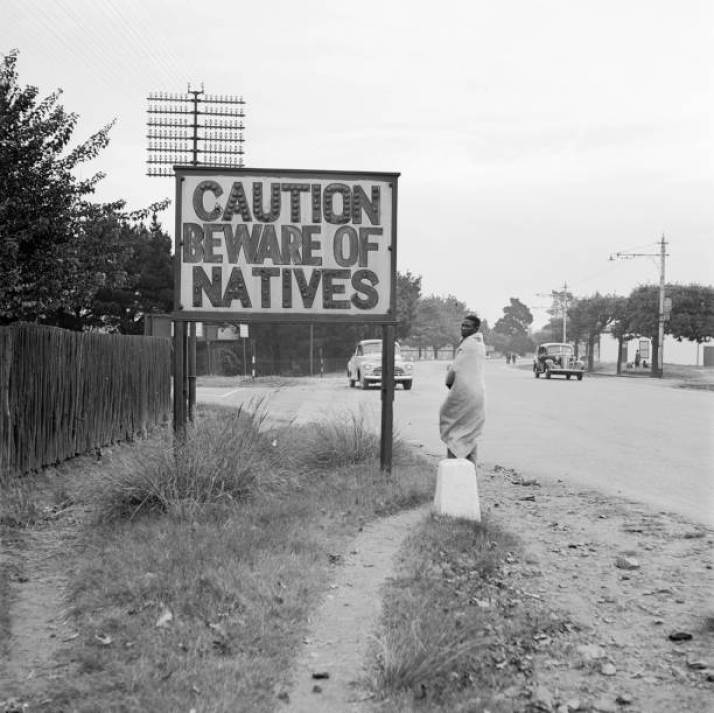
If Africa is inept at solving problems on its doorsteps, how does that make it adept at solving the problems of others a continent away? Go figure!
By Kenneth Mokgatlhe
It has become clearer to me over the years that governments from my African continent display little respect for the lives of their fellow black people. In many of these mismanaged failing states, vast populations across the African continent live in extreme poverty, remain unprotected from diseases, have little to no access to adequate health services as well as hygienic water sources and seem cursed in having uncaring leaderships as defenseless citizens are slaughtered like chickens.
While sickening, it has struck me as particularly strange how some of these incompetent governments would go and meddle in the Israel-Palestine conflict while neglecting the welfare of their own people.
South Africa, which dragged the State of Israel, into the UN’s International Court of Justice (ICJ) is the most unequal country in the world. Around 75 to 85 people are violently murdered daily and most victims are black. South Africa has the highest unemployment rate of 33% in the world, and most of those young people are black. According to the World Bank in 2020, 50.5% of the population lived in poverty while 25 percent (almost 14 million people) was experiencing food poverty.
South Africa has major domestic problems that pose internal national security threats. This is a ticking time-bomb that could explode at any moment. It should be a given that the newly elected incoming government should prioritise the plight of its destitute black people in South Africa before interfering in affairs a continent away that are of no strategic benefit to the larger population of the country.
A country’s foreign policy should be an assertion of its national self-interest to the benefit of its domestic situation. A sober person should ask how many millions the ICJ case cost the South African government, how it served the nation domestically, and what effect the exercise had on bringing an end to the war between Israel and Hamas.
State of Hunger in DCR. Democratic Republic of Congo (DRC) is Africa’s second largest country, with great mineral and natural resources, yet for decades, the country has suffered constant conflict, epidemics, undernutrition, and food insecurity. One in four people in DRC are experiencing a food crisis.
To make matters worse, we have a continental body, the African Union (AU), headquartered in Ethiopia, which has no regard for Africa and its people. We have a bloody war in the Democratic Republic of Congo (DRC), which according to the Council on Foreign Relations has claimed the lives of over six million black people since 1996. Daily, black people continue to kill each other in the eastern DRC, but the AU appears unwilling to make a clarion call to end the bloodshed.
No Peace, No Security.31 African heads of state attended the founding conference of the OAU in May 1963. Sixty years later, its successor organization, the African Union (AU), has repeatedly come under fire for failing to achieve that objective. (Photo: picture-alliance/dpa).
The 2020-2023 war between Eritrea and Ethiopia claimed more than 700,000 lives, and has resulted in continued war crimes in the North of Ethiopia. Here again, the AU (and the UN) has not taken action. Maybe this is because this war did not trend in the mainstream media. The AU should be the ‘voice of the powerless’ on the continent but has emerged as a ‘paper tiger’ and seek to speak on their behalf – however it is becoming irrelevant to many Africans because it does not advance their interests.
‘Famous’ for Failure. Human rights Mozambican activist and chairman of his country’s Center for Democracy and Development, Adriano Nuvunga, expresses his disappointed with the AU for failing to fulfill its chief objective of ensuring peace and security on the continent. (Photo: Sitói Lutxeque/DW)
In the words of Mozambican Human rights activist Adriano Nuvunga:
“Today, the African Union is an organization that primarily represents the interests of the powerful. It is toothless and ineffective, and it repeatedly proves itself incapable of ensuring prosperity, security, and peace for all Africans.”
I am dragging the toothless AU into this discussion because the Chairperson of the AU Commission, former Chad prime minister, Moussa Faki Mahamat, constantly uses all available platforms to condemn Israel.
My question:
When is he going to prioritise the welfare of black people on his own continent?
Mismanagement and Misdirection. Rather that seriously dealing with conflicts in Africa, AU prefers to focus on the conflict between Israel and Gaza following the massacre in Israel on October 7.
However, if he is so passionate about international human rights, why does Mahamat ignore what his horrifying playing out in Haiti where fellow black people (descendants of Africa sharing our heritage) are slaughtering each other? Why is he so obsessed about Israel when many black people are dying in their thousands in the Caribbean? What is extra special about Israel that diverts his attention from any concern to the lives of the descendants of Africa?
Mr. Moussa Faki Mahamat, are African lives so cheap to you?
According to media reports, about 15,000 Sudanese who are also African have been killed while more than 30,000 have been badly injured since the start of the civil war in 2023, but there is absolutely nothing that the AU has done to quell the volatile situation in Sudan. The World Food Programme (WFP) has recently alerted the world that Sudan is now facing unprecedented levels of starvation. We should be asking if “starvation has been used as a weapon of war?”
Struggling to Survive. Sadio Abdi Rahman Ahmed, 50, stands with three of her six children near their tent at a camp in Baidoa, Somalia. (Lynsey Addario/National Geographic)
Africa needs to defend and protect the lives of Africans in the continent. We have enough problems in the mother continent that should be preoccupying our minds rather than finding ourselves trapped in conflicts elsewhere in the world. African countries need to unite and cooperate in combating wars, violent murders, terrorism, poverty, inequalities, water insecurity, human and drug trafficking, and unemployment among the youth and women.
I am reminded of the spirit of awakening across Africa in the early 1960’s, captured in the words of Ghana’s first president, Kwame Nkrumah at the Organization of African Unity founding on May 25, 1963:
“We must now unite or perish”
There is little evidence by the policies presently pursued that we are adhering to that spirit.
About the writer:
Kenneth Mokgatlhe is pursuing a Master of Arts in African Studies, African Sustainable Communities program, at Ben Gurion University of the Negev. He is a political writer, analyst, and researcher.
While the mission of Lay of the Land (LotL) is to provide a wide and diverse perspective of affairs in Israel, the Middle East and the Jewish world, the opinions, beliefs and viewpoints expressed by its various writers are not necessarily ones of the owners and management of LOTL but of the writers themselves. LotL endeavours to the best of its ability to credit the use of all known photographs to the photographer and/or owner of such photographs (0&EO).
From a curse to a blessing – have Argentina and Israel turned a tide in diplomatic relations?
By Jonathan Feldstein
Jerusalem’s Kiryat Hayovel neighborhood has a distinct international flavor. Streets are named Bolivia, Brazil, Costa Rica, Guatemala, Uruguay and more, recognizing Latin American countries that voted to establish a Jewish state in the Land of Israel in 1947. Notably missing from the top of the list is Argentina which abstained during the 1947 UN vote.
A Street Named ‘Guatemala’. With a number of streets in Jerusalem named after South American countries, conspicuous by its absence is Argentina that did not join fellow Latin American states that voted at the UN in 1947 to support the establishment of a Jewish state.
Recently, Argentinian President Javier Milei arrived in Israel to show solidarity at this time of war, and to turn the tide between the stained past of his country’s relationship with Israel. Milei’s visit was significant and historic on many levels. He arrived shortly after being elected in November, signifying the significance he places on Israel and his country’s relationship with Israel, which was a foundation of his campaign. Indeed, it was Milei’s first state visit overseas. Milei’s arrival also made him the first head of state to visit Israel from South America since the inhuman Hamas attack on Israel and massacre, the beginning of a war that’s now well into its fourth month.
Big Move. Announcing plans to move the embassy to Jerusalem, Argentina’s President Javier Milei is seen here on 6 February 2024 praying and in tears at the Western Wall in Jerusalem’s Old City. (photo: Western Wall Heritage Foundation)
As many foreign dignitaries have done, Milei visited communities next to the Gaza border that were overrun by Hamas terrorists, among which some 1200 people were massacred by the terrorists, and from which hundreds were take hostage. Indeed, the significance of President Milei’s visit was amplified by him being accompanied to Israel’s Gaza border by Israel’s President Isaac Herzog.
Presidents Milei and Herzog were accompanied by former hostage Ofelia Roitman, a woman originally from Argentina, who moved to Israel in 1985. This was her first visit back to the farming community from which she was kidnapped.
Walk in the Shadow of Death. Exposed to the massacre that took place on October 7, President Isaac Herzog (left) and Argentinian President Javier Milei visit the destroyed homes on Kibbutz Nir Oz on February 8, 2024. (Maayan Toaf/GPO)
Milei gave unconditional backing to Israel, calling Hamas, the Palestinian Arab Islamists, a “terrorist group” who had committed “a crime against humanity.”Mieli noted:
“The free world can’t remain indifferent in this case, as we see clear examples of terrorism and anti-Semitism and what I would describe as 21st century Nazism. When we hear about the methods that were used this time, it reminds us of the atrocities of the Holocaust.”
Hearing the Horror. During the visit to devastated kibbutz Nir Oz, Argentinian President Javier Milei (left) was joined by former Argentinian, Ofelia Roitman (right) who had been taken hostage and released from Gaza, and was returning to her home for the first time since the massacre. Israeli President Issac Herzog (right) look on.
Milei’s visit was also noteworthy in that he prayed at the Western Wall, danced with Israeli worshippers, and affirmed his intention to move Argentina’s embassy to Jerusalem.
During his visit, some of my Argentinian friends went out of their way to express their pride and joy in seeing their president turning the tide on relations with Israel that have been marred by a history that’s less than positive, and previous leaders whose positions who have been decidedly hostile to Israel, or ambivalent at best. Following the Holocaust, Argentina welcomed and gave refuge to Nazi leaders and war criminals. Then in the 1990s, two massive Islamist terrorist attacks took place in Buenos Aries, targeting in 1992 the Israeli embassy, followed by the Jewish Community Center in1994. Investigations into these and the culpability of its leaders at the time also lead to the mysterious death of a Jewish prosecutor, Alberto Nisman, on the eve of a trial that would have made much of this public.
President Milei’s visit made me think of my friend Diego Freytes and his profound and personal essay in “Israel the Miracle,” published by the Genesis 123 Foundation, featuring 75 essays by Christian leaders from around the world about why Israel is significant to them. Diego not only refers to Argentina’s bitter past in blocking Jewish immigration in the 1930s, harboring Nazi war criminals and terrorists, and covering up its compliance as a base for Iranian terror. He does a deep dive into the meaning of the promise God made to Abraham in verse Genesis 12:3:
“I will bless those who bless you, And I. will curse him who curses you; And in you, all the families of the earth shall be blessed.”
Israel the Miracle. Diego and Carolina Freytes.
More than just a cursory repetition of the Biblical verse, he looks at the root of the Hebrew words and what they mean, noting not just that its an imperative to bless Israel. Diego writes that the root of the word “to bless” is the same as the root of the word “knee”. He explained that it’s not just a concept, but an active duty, as in to bend a knee. Literally, to stand in solidarity. President Milei’s visit clearly did that.
The corollary to actively blessing Israel is cursing Israel. Despising Israel. A simple English or Spanish translation does not reveal the depth of the verse in the original Hebrew. The consequence for cursing, or “looking down on someone” is not simply a non-descript curse. Diego notes the Hebrew for the second part come from the word that means “to destroy completely.”
Reflecting on Argentina’s past, Diego notes the consequence of its actions that have been a curse to Israel, and how that has been a scar on Argentina for decades, leading to multiple examples of a country that once had a glorious past, spiraling downward to near utter destruction in the 80 years since it began cursing Israel. He writes before Milei’s election, as a reflection and seeking forgiveness for Argentina’s past, and as a prayer for its future. “What happened to my nation? Argentina is in a deep economic, political, and social crisis that has lasted more than 80 years. Inflation grows at over 100 percent per year. There is only a memory of that dazzling nation.”
This week, Diego Freyets’ words and President Milei’s visit came together as the beginning of a hint of turning the tide. In the early hours of February 12, the IDF conducted a seamless and bold military operation in the southern Gaza city, Rafah, rescuing two hostages. Rafah remains the last stronghold of Hamas to where its terrorist leaders have fled, and where they have brought the remaining hostages held since October 7.
Of 136 hostages held, it could have been any hostages found and brought home. However, the two rescued were born in Argentina. When President Milei visited the Gaza border area, he knew these Argentines were still in captivity just miles away. Is this a coincidence, or a divine wink that the tide is turning in the right direction, that the blessing is beginning? Only God knows. May He continue to work through President Milei to heal the decades long rift, and may all the remaining hostages be rescued and come home soon.
About the writer:
Jonathan Feldstein - President of the US based non-profit Genesis123 Foundation whose mission is to build bridges between Jews and Christians – is a freelance writer whose articles appear in The Jerusalem Post, Times of Israel, Townhall, NorthJersey.com, Algemeiner Jornal, The Jewish Press, major Christian websites and more.
While the mission of Lay of the Land (LotL) is to provide a wide and diverse perspective of affairs in Israel, the Middle East and the Jewish world, the opinions, beliefs and viewpoints expressed by its various writers are not necessarily ones of the owners and management of LOTL but of the writers themselves. LotL endeavours to the best of its ability to credit the use of all known photographs to the photographer and/or owner of such photographs (0&EO).
By Raymond Wacks Emeritus Professor of Law and Legal Theory
I am driving along a well-remembered highway in Randburg. It is 2005 – the last time I visited South Africa (where I was born and, as they say, bred). Randburg is an anonymous conurbation on the outskirts of Johannesburg. As a student, I had a holiday job here as a cashier in a supermarket.
But is this really Randburg? Formerly a whites-only area, I see only black faces. My supermarket has disappeared. The shopping mall is unrecognisable. I must have taken a wrong turn. Peering at the road sign, I am reassured. This is indeed Hendrik Verwoerd Drive.
Former Prime Minister Hendrik Verwoerd? In post-apartheid South Africa? Surely this architect of evil cannot still be celebrated 15 years after the demise of what he called ‘separate development’? While many towns and public places have been accorded new (or pre-existing) African names, several roads have been reborn to conform to the new ideology. Nelson Mandela features prominently, of course, but there are also streets dedicated to the memory of Che Guevara, Joe Slovo, and other revolutionary heroes.
Perhaps, I thought, policy had simply failed to catch up with principle. Nevertheless, it struck me as astonishing that Verwoerd should continue to be venerated. It was he who famously declared that his government’s role was ‘the preservation of the white man and his state’. Under his premiership, from 1958 until his assassination in 1966, apartheid was not only consolidated, but clothed in philosophical, cultural, and theological validation that drew on the seductive power of Afrikaner nationalism. He had, in fact, presided over the country’s break with Britain and the establishment of a republic. And, under his steely, cerebral leadership, the African National Congress was banned, and Nelson Mandela was sentenced to life imprisonment.
South Africa Out of Step. Under apartheid, blacks were separated by law from whites – including separate stairways.
WHAT IS ‘APARTHEID’?
Apartheid, it is frequently forgotten – or conveniently overlooked – was not merely racial segregation. It was an elaborate, intricate project, sustained by a doctrinaire philosophy applied by an authoritarian regime buttressed by draconian legislation. It relied on an unaccountable security force with sweeping powers, a largely enthusiastic legislature and a mostly pliant judiciary. The legal system was the creation of a white minority; the political system disenfranchised every ‘non-white’ person, and the law discriminated against them in almost every facet of social and economic life: employment, land, housing, education, sex and freedom of movement.
Deaths in detention and torture were systemic. ‘He slipped in the shower’ or ‘he jumped from the interrogation room window’ were the stock explanations offered by the security branch. Surveillance, intimidation, and police brutality were routine. Apartheid South Africa was the archetypal modern police state. The Broederbond, a secret, Calvinist, all-male society fostered Afrikaner interests. Jan Smuts described it as a ‘dangerous, cunning, political fascist organisation’.
The neo-Nazi nature of this totalitarian order was one of its fundamental components. I remember the day that Verwoerd’s successor, John Vorster, was elected. We university students greeted each other with mock Nazi salutes. He was detained in 1942 as a result of his membership of the pro-Nazi Ossewabrandwag, which supported Germany during the Second World War.
RESISTING INJUSTICE
There was, of course, a small minority of whites, including Afrikaners, who opposed the injustice of apartheid. A conspicuous example was the lawyer, Bram Fischer. Despite his impeccable Afrikaner antecedents (his father was judge president of the Orange Free State; his grandfather, a member of the cabinet) he championed the rights of the oppressed, defending Mandela in the notorious Rivonia trial of 1963-4. Enduring considerable personal suffering and sacrifice, he went underground to wage war against the iniquity of apartheid.
In 1966, he was convicted of furthering the aims of communism – a catch-all charge, since communism was defined to include ‘bringing about any political, industrial, social, or economic change… by the promotion of disturbance or disorder’ or ‘encouraging feelings of hostility between the European and the non-European races… the consequences of which are calculated to further… disorder’. The statute empowered the minister of justice to brand as a communist any person he decided fitted the description.
The writer (left) seen here with Nelson Mandela in 1991.
Fischer was sentenced to life imprisonment, during which he developed cancer. As a result of a fall, he fractured his neck and femur. He was partially paralysed and lost the ability to talk. Three months elapsed before the authorities permitted his transfer to hospital. He died soon thereafter. Ruthless inhumanity and petty vindictiveness were among the hallmarks of apartheid.
Nelson Mandela described Fischer as ‘one of the bravest and staunchest friends of the freedom struggle that I have ever known … displaying a level of courage and sacrifice that was in a class by itself’.
Issue was black and white. This area of the sea and beach was strictly reserved for South Africa’s white population.
KILLING OPPONENTS
The generosity of definition of the Suppression of Communism Act of 1950 was equalled by the Terrorism Act of 1967 which defined ‘terrorism’ as including anything that might ‘endanger the maintenance of law and order’. Life sentences in South Africa were exactly that. And the gallows were kept busy: between 1910 and 1989 more than 4,200 executions were carried out. About half of those met their end between 1978 and 1989 when the struggle against apartheid was at its peak.
The overwhelming majority of those put to death were black; many were political prisoners. At the end of July 1989, for example, a total of 283 prisoners were being held on death row at Pretoria Central Prison. Of these, 272 were black; 11 were white. In March 1988, 53 individuals were hanged for politically related crimes.
Sign of the Times. ‘Swart gevaar’ (Afrikaans for “black danger”) was an apartheid term skillfully used to sensitize the whites to fear the majority black African population as a dangerous threat.
APARTHEID STANDS ALONE
It hardly requires stating that injustice in our world is ubiquitous. But the abomination of apartheid was unique. The United Nations sought in 1973 to crystallise its essence by establishing it as a crime. According to the Apartheid Convention, the offence consists of inhuman acts committed for the purpose of maintaining domination by one racial group over any other, and systematically oppressing them.
The authors of the Convention, in pursuit of greater precision, provided a catalogue of the acts embraced by the crime, including murder, torture, inhuman treatment and arbitrary arrest of members of a racial group, legislation that discriminates in the political, social, economic and cultural fields, separate residential areas for racial groups, the prohibition of interracial marriages, and the persecution of opponents of apartheid.
The text captures the quintessential elements of apartheid as applied in South Africa – even though it drains it of much of the system’s malevolence and authoritarianism touched on above. And, despite the demise of apartheid in 1994, the offence lives on. Thus, in 1998, the Rome Statute of the International Criminal Court included apartheid, along with a catalogue of other wrongs such as murder, extermination, enslavement, and torture, as a crime against humanity.
Lawyers – and other pedants – may therefore claim that, notwithstanding the terms of the Apartheid Convention, and its explicit description of the South African situation, apartheid may exist anywhere. This folly has, of course, given rise to the preposterous contention that Israel is an ‘apartheid state’. The Jewish state is far from a paragon of virtue, but stigmatising it in this cavalier manner is itself a grotesque injustice – and an affront to those who endured the long years of torment and persecution in South Africa.
The subjectivity of suffering renders any attempt to calibrate injustice, difficult. It is specious and misconceived, however, to describe Israel as implementing apartheid – even by the standards of international law.
Where are the ‘inhumane acts… of an institutionalised regime of systematic oppression and domination’ by one race over another, as specified in the Rome Statute? Unlike blacks under apartheid, Israeli Arabs may vote, stand for election to parliament, be appointed to the judiciary. They have the freedom to attend any hospital, school, or university. They are not denied access to beaches, cinemas, theatres, libraries, sporting facilities. They may choose who to love. And it is reportedly easier for an Arab citizen of Israel to buy an apartment in Tel Aviv or Jerusalem than in Beirut, Bahrain, Kuwait, or Doha.
Signposted Society. Separate areas allocated for the different races. In this natural setting, Malays left and Europeans, meaning whites, to the right.
FINDING APARTHEID
Even Richard Goldstone, the former South African judge who headed the censorious inquiry into Israel’s ‘Cast Lead’ operation in Gaza, conceded that in Israel, ‘there is no apartheid. Nothing there comes close to the definition of apartheid under the 1998 Rome Statute…’ In an article in the New York Times in October 2011, he declared:
‘I know all too well the cruelty of South Africa’s abhorrent apartheid system, under which human beings characterised as black had no rights to vote, hold political office, use “white” toilets or beaches, marry whites, live in whites-only areas or even be there without a “pass.” Blacks critically injured in car accidents were left to bleed to death if there was no “black” ambulance to rush them to a “black” hospital. “White” hospitals were prohibited from saving their lives.’
Truth be Told. Richard Goldstone, the former South African judge who headed the censorious inquiry into Israel’s ‘Cast Lead’ operation in Gaza, conceded that in Israel, ‘there is no apartheid. Nothing there comes close to the definition of apartheid under the 1998 Rome Statute…’
The plight of those who live in Gaza and the West Bank is plainly different. Combating terrorism and maintaining security inevitably exact a high price. It cannot be denied that many Palestinians encounter hardship, privation, and indignity. But one might ask: Where is the sympathy and compassion for those who live in squalid camps in various Arab countries?
In Lebanon, for example, up to 400,000 Palestinian refugees live in dreadful social and economic conditions, many in overcrowded camps without essential utilities. They are effectively stateless. In 2001, the Lebanese parliament enacted legislation prohibiting Palestinians from owning property. The law also restricts their ability to work in several areas. While a ban on Palestinians holding most clerical and technical positions was terminated – provided they obtained temporary work permits – more than 20 high-level professions are denied to Palestinians. Moreover, Palestinians are not eligible for social security benefits. They are subject also to discrimination in respect of housing, property ownership, inheritance rights, and freedom of movement and residence.
SELECTIVE OUTRAGE
Where is the expression of outrage at these measures? Is Lebanon not an ‘apartheid state’? What about Syrian discrimination against Sunnis and Christians? Or its gulag of extermination camps in which thousands of political opponents are executed and tortured? Why is Israel singled out for censure and boycotts? Even in the case of Gaza and the West Bank it is mendacious and mischievous to describe Israeli policy as apartheid. Is the Israeli government really an ‘institutionalised regime of systematic oppression and domination by one racial group?’
Despite the political challenges, Palestinian West Bankers are carving out a future characterized by enterprise and ingenuity embodied in such projects as Rawabi (Arabic روابي meaning “The Hills”). The first planned city built by Palestinians in the West Bank, Rawabi is hailed as a “Flagship Palestinian enterprise”.
Whatever traction its advocates seek to gain from the South African archetype, the argument actually undermines the Palestinian cause. If there is injustice, let us call it by its name. Simplistic sloganeering is unhelpful. It is no less so than in the increasingly fashionable designation of ‘Holocaust’ to instances of barbarity that, while plainly heinous, fall far short of the depravity of the Third Reich. There are, of course, all too many examples of egregious attempts at genocide around the world but they are usually confined to a single nation and spring from internecine tribal or religious divisions. The ‘final solution’ – the wholesale extermination of the Jews (not merely in one country, but across all of Europe) – stands alone as a paradigm of inhumanity and iniquity. Let it be.
It is no answer to assert that these usages are merely metaphorical. Metaphor often enriches language. But it may also debase. The capricious abuse of ‘apartheid’, along with ‘massacre’, ‘genocide’, and ‘occupation’, has lamentably become commonplace.
Factual and linguistic precision is more likely to generate solutions to intractable political problems. Reckless rhetoric may appeal to the demagogue; it has no place in the quest for peace and justice.
I have just discovered – thanks to Google maps – that Hendrik Verwoerd Drive has been renamed. It is now Bram Fischer Drive.
About the writer:
Raymond Wacks, Emeritus Professor of Law and Legal Theory, graduated from Wits law school in 1969 having served on the Executive of the SRC and as President of the Law Students’ Council. He left South Africa in 1970 to pursue research at Oxford where he spent the next decade. In 1982 he returned to SA to take up the chair in public law at the University of Natal, Durban. Wacks is the author of fifteen books, several of which have been translated into more than a dozen languages on legal philosophy, privacy, and justice. He is also the co-author of five books, and editor of ten. His monograph, The Rule of Law Under Firewas published by Hart in 2021. Oxford University Press published the sixth edition of his Understanding Jurisprudence: An Introduction to Legal Theory in 2021, as well as the third edition of Law: A Very Short Introduction which appeared earlier this year.
While the mission of Lay of the Land (LotL) is to provide a wide and diverse perspective of affairs in Israel, the Middle East and the Jewish world, the opinions, beliefs and viewpoints expressed by its various writers are not necessarily ones of the owners and management of LOTL but of the writers themselves. LotL endeavours to the best of its ability to credit the use of all known photographs to the photographer and/or owner of such photographs (0&EO).
Yom-Kippur in 1973 was a defining moment. Will Yom-Kippur 2023 prove to be another?
By David E. Kaplan
It is 50 years this October since the Yom-Kippur War of 1973 and Israel is again at war – this time with itself. As Israel over the years since ’73 tamed threats from without, today its greatest threat may lie from within.
According to the Jewish People Policy Institute (JPPI)’ in its 2023 Annual Assessment published on Wednesday, about 37% of Israelis currently hold or plan to acquire a foreign passport with the intention of emigrating. This figure is ALARMING, ringing like the all-too familiar siren warning of an incoming missile. According to the JPPI, this staggering high percentage from a country that in recent years featured high in polls of the ‘top happiest countries in the world” underscores the deepening crisis within Israel and raises questions about the nation’s resilience. The discontent on the street is not as Justice minister, Yariv Levin sees it that “They failed at the ballot box, and now they want to cancel election results.” On the contrary, the “they” as L:evin calls the protestors, feel that in 2023, they suddenly feel they are on the wrong train, going in the wrong direction! One option is to get off before it crashes.
Tumult in Tel Aviv. While Jews praying, activists protest against gender segregation in the public space during a public prayer on Dizengoff Square in Tel Aviv, on Yom-Kippur on September 25, 2023.(Photo: ITAI RON/FLASH90)
In a year marked by significant turmoil and polarization, due to the governing coalition’s judicial overhaul coupled with turbulence in areas of religion and state, the JPPI report paints a troubling picture of Israeli society.
An increasing number of Israeli citizens of 2023 see the real danger to their country lying not in Tehran but in Jerusalem. As a metaphor of this change in perspective, Netanyahu’s address at the UN was before a near empty auditorium. This is a marked change from previous appearances before the General Assembly. Even listeners at home who used to hang at his every word, not this year. Few bothered to tune in as too few believe and trust him anymore. His words may still be polished parlance but they are the parlance of a Pinocchio.
And here lies a quirky irony that as the Jewish state reaches out to former enemies striking glorious accords, within Israel today the present government of Netanyahu now sows inglorious discord.
Prayer as Protest. To defy a Tel Aviv municipal ban against gender segregation in public spaces upheld by the Supreme Court, the Orthodox Jewish group Rosh Yehudi sets up a gender divider made of Israeli flags in Dizengoff Square on Yom-Kippur on September 24, 2023. (Tomer Neuberg/Flash 90)
Encapsulating this scenario in a timely metaphor of the ‘State of the Nation’ was again an outbreak of hostilities on Yom-Kippur. This time not on border battlefields, but on the streets of Tel Aviv and between Jews. The largest confrontation was on Dizengoff Square as worshipers began the opening prayer of Kol Nidre. Extremists from the religious right-wing camp, supporters of the Netanyahu governing coalition, attempted (in defiance of municipal and High Court rulings barring gender segregated prayers in PUBLIC places) to forcibly set up a partition to separate men and woman. In response, counter-protesters disrupted the segregated prayers and the issue devolved into fisticuffs with two arrests.
Division on Dizengoff. Secular and Orthodox activists clash after the religious Rosh Yehudi group sets up a gender divider made of Israeli flags in defiance of a municipality decision at a public prayer service in Dizengoff Square, Tel Aviv on Yom- Kippur, September 24, 2023. (Tomer Neuberg/Flash 90)
Even though the ban on gender segregation had been issued by the Tel-Aviv municipality and upheld by the Supreme Court, this proved no impediment for Itamar Ben-Gvir, the far-right Minister of National Security from calling for a protest prayer later in the week in Tel Aviv. He has since under pressure from his more responsible colleagues called it off. Instead of fulfilling the role of his portfolio by providing ‘security’, Ben-Gvir was typically doing the exact opposite. Displaying disrespect for the judiciary and disdain for those not sharing his views, Ben-Gvir said in a video posted Tuesday on X:
“I say to those anarchists that tried to eject worshipers on Yom-Kippur — I and my friends from Otzma Yehudit are coming on Thursday to the same spot, let’s see you try and eject us.”
And this is Israel’s Minister of National Security who is himself a threat to national security.
Menacing Minister. Israel’s rabble-rousing Minister of National Security was fanning the flames of turmoil by inciting his base to return to Tel Aviv in another protest prayer, which he later called off.
And so, the usually solemn Day of Atonement – Yom-Kippur – saw new controversy over the fate of Israel’s democracy. After nearly 10 months of street protests from Israelis who fear the government is on a tragic trajectory to erode protections for women and minorities and impose an ultraconservative version of Judaism on the public, the flare up on Yom-Kippur added fuel to the fire. If any further evidence was needed to show that the wounds Israel today suffers are sell-inflicted, we have to look no further than its leadership. What the chaos in Tel Aviv did not need need was Ben-Gvir fanning the flames with his rabble-rousing rhetoric nor the prime minister, Benjamin Netanyahu who characterized what transpired as “leftist protesters rioting against Jews.”
Where does Israel go from here with a government which is failing to read the landscape? Is this not what happened in 1973 when it failed to read the military machinations of Egypt and Syria? Today it fails to read the mood on the street as it embarks on policies that are anathema to far too many people. Impervious to entreaties from Israelis and Jews across the world, this extreme right-wing coalition persists on its judicial overhaul that is set to overhaul the Israel we know and it’s relationship with the Jewish diaspora. At a time when we should be strengthening our ties with Jewish communities around the world, this government is alienating them.
The situation reminds this writer of the war room in Tel Aviv in October 1973, captured so brilliantly in the recently released movie ‘Golda’ with Helen Mirren superbly cast as Golda Meir. Taken by surprise in attacks on its two major fronts with Egypt and Syria, Israel faced annihilation. “We came so close Henry,” says Golda to US Secretary of State Kissinger at one of their meetings. Most of the action in the movie takes place not on the battlefields but in in the underground command centre in Tel Aviv, not too far from Kaplan Street, the epicenter of today’s protest movement. Was it the directors intent or was it coincidental that the war room in one sense was visually like a battlefield with so much smoke that it was a struggle to see clearly. In the battlefield it’s from the conduct of war, in Golda’s war room it was from incessant cigarette smoke. Was the smoke the director’s metaphor for a blinding fog – failing to see beyond the lurking dangers?
Seeing through the Smoke. A smoky war room during the Yom-Kippur War of 1973 from the movie Golda with Helen Mirren as Golda (left). (Sean Gleason, Courtesy of Bleecker Street/ShivHans Pictures)
DEFINING TIMES
Fifty years later from that defining war, are our leaders today again failing to see the damage they are inflicting on the nation and the Jewish people by their misguided proposals and policies?
Writing in the Times of Israel, Canaan Lidor writes that “Seen more broadly, the dispute over the Dizengoff Square prayer service is a sobering example of how an initiative that once transcended Israel’s religious-secular divide has this year deepened it, amid the ideological clash over religion and state in connection with the government’s judicial overhaul.”
As this country moves and trips after one self-inflicted crises after another, what this Yom-Kippur has shown is that people should really pray for is for reason to prevail! The signs are not good.
“That men do not learn very much from the lessons of history is the most important of all the lessons that history has to teach,” said Aldous Huxley.
It’s a lesson that Israel’s present leadership is failing to grasp as it careers headlong along its “March of Folly”.
Mayhem erupts in Tel Aviv over segregated Yom Kippur Prayers
While the mission of Lay of the Land (LotL) is to provide a wide and diverse perspective of affairs in Israel, the Middle East and the Jewish world, the opinions, beliefs and viewpoints expressed by its various writers are not necessarily ones of the owners and management of LOTL but of the writers themselves. LotL endeavours to the best of its ability to credit the use of all known photographs to the photographer and/or owner of such photographs (0&EO).
The Ashes are slowly fading into a (bitter) memory. England came agonisingly close to winning the historic cricket contest against Australia.[1] One event, however, will be especially hard for English supporters to forget. On the final day of the second test at Lord’s, Jonny Bairstow was given “out” stumped when he wandered out of his crease believing the ball to be dead. While the law was correctly applied by the umpire, his controversial verdict was widely criticised as not being within the spirit of the game.
A ‘Test’ Case. Aussies appealing for Jonny Bairstow’s run out during 2nd Ashes Test at Lord’s Cricket Ground. (Image:(Image: Sony LIV)
Suppose that the rancorous reception that greeted this strict interpretation of the laws of cricket led the International Cricket Council to declare that in future, umpires’ authority to declare a batsman stumped would be discharged by the chief administrative official of the ICC placed at a strategic position on the field. Umpires might legitimately wonder whether this encroachment upon their powers did not constitute so gross a violation of their responsibility that they should, at the very least, wish to protest. Imagine that such limitations persisted until they were told that they no longer had the power to decide whether a batsman was out. Their task would largely be confined to calling wides, no-balls, boundaries, and byes. Every diminution in their power would now constitute an affront to their office. A point would be reached when they cease to exercise the very function for which they have been appointed.
The same is true of judges. Unchecked executive discretion reduces them to impotent spectators of executive action – a grotesque distortion of their calling. No government relishes the pesky interference by courts with its political agenda. And this is no less true of democratically elected governments. Nor is the hostility towards judges the monopoly of any ideology: it is expressed by both left and right.
So, for example, the Conservative Party in the United Kingdom has recently witnessed a recent backlash against the escalation of both the extent and scope of judicial review (JR) since the Supreme Court’s notorious ‘prorogation’ decision in 2019 which unanimously ruled that the government did not have the power to suspend Parliament.[2] And in the United States, the Supreme Court is under fire from the Democrats for its judgment that the Constitution does not confer a right to abortion.[3] Moves are therefore afoot in the Congress to neutralize the perceived rightward shift during the Trump administration by adding four justices to the bench. These crusades are injudicious.
The Israeli government, in seeking to curtail the powers of the Supreme Court, is not only undermining the rule of law, but endangering the country’s celebrated democratic system. And in this enterprise, Israel is in questionable company. There are echoes of the South African apartheid government’s crackdown on the judiciary, the erosion of whose powers it assiduously advanced by legislation that prevented judges from ruling on the legality of the detention of its opponents.[4] And PiS, Poland’s ruling party, has branded judges ‘self-serving, unelected elites who substitute their own preferences for those of voters’.[5] This charitable appraisal was followed by the enactment of stringent limitations on the autonomy and independence of the courts.
DEMOCRATIC CHOICE
Populists seem to have little difficulty simultaneously flaunting and flouting the rule of law. The legal system is censured for corroding the rule of law and depriving the people of its benefits, while the law is employed to frustrate democratic values. But, it may be asserted, are not democratically elected legislatures entitled to express the will of their voters even if – as we have seen for months on the streets of Israel – their actions are widely rejected? And does JR not weaken this vital democratic exercise of choice? Surely, it is argued, parliaments are a better, and more representative, forum for the deliberation of important social, political, and moral questions. Legislatures, in other words, have democratic legitimacy. Unelected judges do not. [6]
Two sorts of argument are typically deployed both in support of and against JR. The first asserts that JR is good (or bad) because it delivers better (or worse) results than other procedures for resolving rights disputes. The second claims that JR is good (or bad) because it produces a procedure that is (or is not) consistent with democracy. In other words, public deliberation is good for democracy; JR facilitates public deliberation; therefore JR is consistent with (or contributes to) the conditions of democratic rule.
LEGITIMACY
It is generally assumed that legislatures enjoy democratic legitimacy, while courts generally lack it. But this must surely depend on the circumstances obtaining in respect of both institutions. A Supreme Court’s legitimacy is likely to be strong where – as in Israel – popular support is based on the nature of its powers, its record, or the method by which its members are appointed.
Such legitimacy may, however, turn on the institutions and rights that actually exist or are recognised. The right to vote is obvious, but is the system of ‘first past the post’ (FPTP) more or less democratic than proportional representation (PR)? Complex questions arise when we attempt to evaluate which rights are essential. Are we concerned with the outcome or the means by which they are reached?
The method of appointment of Supreme Court judges is also on the Knesset’s agenda. The legitimacy of the judiciary often turns on how judges are elevated to the bench. Where appointments are generally perceived to be fair, transparent, and non-political, the prospect of the courts enjoying popular democratic legitimacy is obviously enhanced.
Government and the Gavel. Israel’s Supreme Court hears arguments in showdown over judicial curbs
JUDICIAL AUTHORITY
To support judicial oversight is not to deny that judges may be influenced by subjective moral, political, or ideological considerations, but that is less likely to occur than in the case of elected legislators answerable to their party or constituency. Furthermore, detached from the rough and tumble of parliamentary rhetoric and oratorical persuasion, judges have both the time and, in many cases, the expertise, to examine both sides of the argument presented to them in an atmosphere, one hopes, of tranquil reflection and deliberation.
Judicial authority is a potent process by which perceived failures in democratic outcomes may be ‘corrected’. It is also generally true that disagreements between judges are generally based on principle rather than popularity. Another advantage of the procedure is that courts are able to safeguard non-majoritarian representative democracy. It also empowers individuals to vindicate their rights against government. Misgivings about its undemocratic nature may be offset by its general legitimacy rooted in its contribution to the protection of individual rights.
There is a paradox in the qualms expressed by those who rail against the alleged hegemony of judges. While on the one hand, JR, especially in its strong form, is perceived as a force that destabilises the separation of powers and the democratic principles which are its constitutional underpinning; the rule of law is, on the other hand, actually enhanced by the power of courts to ensure that government actions comply with the constitution. I believe that to diminish judicial authority is to weaken a major pillar of democratic government.
It is time for Prime Minister Netanyahu, after a tenacious spell at the crease, to accept that his wicket has fallen, and, in the interests of his country, stride graciously to the pavilion.
About the writer:
Raymond Wacks, Emeritus Professor of Law and Legal Theory, graduated from Wits law school in 1969 having served on the Executive of the SRC and as President of the Law Students’ Council. He left South Africa in 1970 to pursue research at Oxford where he spent the next decade. In 1982 he returned to SA to take up the chair in public law at the University of Natal, Durban. Wacks is the author of fifteen books, several of which have been translated into more than a dozen languages on legal philosophy, privacy, and justice. He is also the co-author of five books, and editor of ten. His monograph, The Rule of Law Under Firewas published by Hart in 2021. Oxford University Press published the sixth edition of his Understanding Jurisprudence: An Introduction to Legal Theory in 2021, as well as the third edition of Law: A Very Short Introduction which appeared earlier this year.
[1] England and Australia compete biennially for a small urn that is believed to contain the ashes of a wooden bail. Following the latter’s victory in 1832, a British newspaper published an ‘obituary’ of English cricket which declared that its ‘body will be cremated and the ashes taken to Australia’.
[2]R (Miller) v The Prime Minister and Cherry v Advocate General for Scotland [2019] UKSC 41.
[3]Dobbs v. Jackson Women’s Health Organization, No. 19-1392, 597 US ___ (2022), overruling both Roe v Wade 410 US 113 (1973) and Planned Parenthood v Casey 505 US 833 (1992).
[4] See Raymond Wacks, ‘Judges and Injustice’ (1984) 101 South African Law Journal 266; Raymond Wacks, ‘Judging Judges’ (1984) 101 South African Law Journal 295 (in reply to J Dugard, ‘Should Judges Resign? – A Reply to Professor Wacks’’(1984) 101 South African Law Journal 286); Raymond Wacks, ‘Judges and Moral Responsibility’ in Wojciech Sadurski (ed), Ethical Dimensions of Legal Theory, Poznan Studies in the Philosophy of the Sciences and Humanities (Amsterdam, Rodopi, 1991) 111.; Raymond Wacks, ‘Law’s Umpire: Judges, Truth, and Moral Accountability’ in Peter Koller and André-Jean Arnaud (eds), Law, Justice, and Culture (Stuttgart, Franz Steiner Verlag, 1998). See too David Dyzenhaus, Hard Cases in Wicked Legal Systems: South African Law in the Perspective of Legal Philosophy (Oxford, Clarendon Press, 1991).
[5]The Economist, 23 January 2020, ‘Poland’s ruling party should stop nobbling judges’. See Martin Krygier, ‘The Challenge of Institutionalisation: Post-Communist “Transitions”, Populism and the Rule of Law’ (2019) 15 European Constitutional Law Review 544.
[6] The case is made most powerfully by Jeremy Waldron, ‘The Core of the Case against Judicial Review’ (2006) Yale Law Journal 1346. His preference for parliamentary rather than judicial decision-making would appear logically to commit him to supporting the Israeli government’s proposals. The rationale for JR is, of course, equally robustly, advanced by Ronald Dworkin, Freedom’s Law: The MoralReading of the American Constitution (New York, Oxford University Press, 1996). I consider these competing contentions in more detail in Raymond Wacks, The Rule of Law Under Fire? (Oxford: Hart Publishing, 2021), 62-65.
While the mission of Lay of the Land (LotL) is to provide a wide and diverse perspective of affairs in Israel, the Middle East and the Jewish world, the opinions, beliefs and viewpoints expressed by its various writers are not necessarily ones of the owners and management of LOTL but of the writers themselves. LotL endeavours to the best of its ability to credit the use of all known photographs to the photographer and/or owner of such photographs (0&EO).
Lay of the Land reports on the 2023 World Summit on Counter-Terrorism (10-12 September) at Reichman University
By David E. Kaplan
When Israel’s minister of defense, Yoav Gallant, said from the podium at the 2023 World Summit of Counter-Terrorism held at Reichman University in Herzliya that “We have our eyes looking through binoculars and our finger on the trigger,” it set the tone. The countries represented at the Reichman summit all face severe threats to their national security. Some more than others. Israel, most of all!
The day Gallant chose to say this was portentous. After all, the date marked the 22nd anniversary of 9/11 and the Summit was holding a special ceremony for the victims of 9/11 and terrorism worldwide. It was also noted by the Summit moderator and Israeli war veteran Jonathan Davis that the following month would mark the fiftieth anniversary of the fateful Yom Kippur War, where Israel came the closest to being – in the wish off its enemies – “Wiped off the map.”
The message from both cataclysmic events – 9/11 and the Yom Kippur War – was the element of “surprise” and it permeated the 2023 Summit throughout. Both the USA and Israel were caught unprepared and both countries paid a heavy price – physically and psychologically. It forced both countries to recalibrate their respective collective mindsets and has impacted their foreign policies ever since.
Speakers from both countries repeated that the failures before the Yom Kippur War as with 9/11 could be summed up in one word – IMAGINATION or the lack thereof. “We failed to think out of the box and expect the unimaginable,” said one speaker, while another relating, to all the US agencies and departments before 9/11, said. “We each had a piece to the puzzle but we failed to slot them together. Why? Because we were not talking to each other.”
Reichman University’s Counter Terrorism Institute that hosts the World Summit is dedicated to rectifying this. With its lectures, simulations, workshops and networking, the summit is the most influential event in the field of counter-terrorism today. Hardly surprising, the Summit was called:
“SECURING TOMORROW – enhancing the Couter-Terrorism efforts in a changing world”
And towards “Securing Tomorrow”, we heard Israel’s Mossad Director, David Barnea, reveal that Israel’s intelligence services and their foreign partners had foiled in just over the past year- “27Iranian-orchestrated terrorist plots.”
Riveting Revelations. Mossad director David Barnea reveals on September 10 at the World Summit on Counter-Terrorism at Reichman University that Israel’s intelligence services and their foreign partners have foiled 27 Iranian-orchestrated terrorist plots over the last year.
Showing a video that exposed the deep Iranian involvement in terrorism around the world, including the confessions of terrorists who were sent to attack Israelis and Jews by official Iranian intelligence and security organisations, the Mossad director said, “The Iranian regime is no longer able to deny its involvement.”
He exposed Tehran as having tasked some of the terrorists with targeting specific people and offering thousands of dollars for every Israeli attacked. “The squads that were captured,the weapons that were seized together with them, all had clear targets,” Barnea revealed, noting that the attempts were global “…. in Europe, Africa, the Far East and South America.”
Most importantly, Barnea warned, Iran needs to understand that it “has no immunity.”
The message from the Mossad head was loud and clear:
“I would like to take advantage of this podium to state that any harm done to any Israeli or Jew in any way whatsoever, and I mean in any way whatsoever, via proxy or Iranian alike, will elicit a response against the Iranians who dispatched the terrorists and the policymakers who authorized the terror units. I mean what I say. The price will be exacted from deep inside Iran, in the heart of Tehran.”
These are serious words from a serious man heading a serious organization. Iran – be warned!
From the words of Israel’s national intelligence agency head to the minister of Israel’s defense, Iran was at the centre of the web. No longer shying away from their nefarious activities, Iran today is brazen in its pursuit to blot out the Jewish state.
Defense Minister Yoav Gallant visually revealed how Iran is establishing an airport in in the Qalaat Jabbour mountain region in southern Lebanon, 20 kilometers (12 miles) from the Israeli border, which is being used “for terror purposes.”
Danger on Israel’s Doorstep. Defense Minister Yoav Gallant points out at Reichman University conference on September 11, 2023 a new runway built by Iran in southern Lebanon close to Israel’s border. (Photo: Ariel Hermoni/ Defense Ministry)
Standing at the screen and pointing, Gallant continued:
“In the pictures, you can see the Iranian flag flying over the runways, from which the ayatollah regime plans to operate against the citizens of Israel. In other words: the land is Lebanese, the control is Iranian, and the target is Israel.”
This is one lethal cocktail that Israel cannot allow to remain unanswered.
Enemies at the Gates. A close-up of the new Hezbollah runway in southern Lebanon presented at the World Sumit on Counter-Terrorism at Reichman University in Herzliya by Defense Minister Yoav Gallant who identifies an Iranian flag. (Defense Ministry)
Like Mossad head Barnea’s warning the day before, IDF head Gallant was no less assertive in his warning:
“If it comes to a conflict, we will not hesitate to activate the lethal force of the IDF. Hezbollah and Lebanon will pay heavy and painful prices.”
With talk of not being “surprised” there was one big glaring surprise – and it concerned the Prime Minister. Structuring his career as the flag bearer in the fight against the threat of Iran, it was a surprise to many at the Summit – particularly following Defense Minister Galant’s revelation with aerial photos of the airfield in Qalaat Jabbour in Lebanon which he said was for Iranian ‘terrorist purposes’ – that Netanyahu remains so invested in the ‘Judicial Overhaul’. Many are of the opinion that it is undermining Israel cohesion and deterrence. While Prof. Uriel Reichman, Founding President of Reichman University, in his opening remarks spoke on the damaging impact of Netanyahu judicial overhaul, warning of a potential “explosion”, it was mainly at the panel discussion on ‘Security and Counter-Terrorism Threats to Israel’ that this issue was seriously addressed. Sitting on this panel were Israel’s former, but remaining influential esteemed heavyweights in defense, security and intelligence, namely:
Col. (Res)Omer Bar Lev, Former Minister of Public Security and Former Commander of Sayeret Matkal; Maj. Gen. (Res) Aharon Farkash, Former head of Miliary Intelligence in the IDF; Maj. Gen. (Res) Amos Gilead, Executive Director, Institute for Policy & Strategy; Maj. Gen. (Res) Gershon Hacohen, Former Commander, Northern Corps, and Lt. Gen. (Res)Moshe “Boogie” Ya’alon, Former Defense Minister and Chief of Staff.
Talking Heads. Experienced input on a ‘countering terrorism threats to Israel’ panel debate (l-r) moderator Dr. Dana Wolf, Lt. Gen.(Res) Moshe “Boogie” Ya’alon, Col.(Res) Omer Bar Lev, Maj. Gen.(Res) Aharon Farkash, Maj. Gen. (Res) Amos Gilead, Maj. Gen. (Res) Gershon Hacohen. (Photo: D.E. Kaplan)
All spoke persuasively on the major threats – Iran, Hezbollah, Hamas until the last question, which the moderator referred to as “the elephant in the room,” and hence could not be avoided, the judicial overhaul that is undermining Israel’s security. All down this esteemed line, the panelists spoke against Netanyahu’s obsession with the judicial overhaul as being an obstacle to safeguarding Israel from real rather than imagined threats. Israel under its current leadership was unnecessary taking its eye off the ball much to its enemies glee.
Over three days, addressing theatres of conflict and potential conflicts, speakers from the military, intelligence agencies, police forces, academia, diplomacy and think tanks from all over the world, locked horns to work for a more secure future to avoid catastrophic surprises.
We heard from Britain’s Foreign Secretary, James Cleverly, FBI director Christopher A. Wray, the UN’s Special Coordinator for the Middle East Peace Process Tor Wennesland and many theorists and practitioners who have as their goal – to “partner” with Israel to save lives from terrorism.
But for this writer, what sounded most eerily terrifying, particularly in keeping with the Summit’s caution of preparing for the “unimaginable” was the arise in this millennium of “algorithms and terrorism”, which is the malicious use of Artificial Intelligence (AI) for terrorist purposes.
UK Support. While emphasizing at the World Summit on Counter-Terrorism that Great Britain “will always stand by Israel’s right to self-defense,” UK Foreign Secretary James Cleverly stressed his country’s continued support for a two-state resolution as a resolution to the conflict. (photo credit: Avshalom Sassoni/Maariv )
Although terrorist organisations have to a certain degree, traditionally tended to employ various forms of “low-tech terrorism” such as firearms, blades and vehicles like in the streets of Israel or unsophisticated projectiles from Gaza, terrorism itself is not static. The nature of this ugly beast is that it is ever-changing. It is an evil that morphs and re-shapes under new guises. The only constant is its goal – the killing of innocent civilians, hence the subhead of the Summit was counter-terrorism for a “changing world” and therefore as AI becomes more widespread, the barriers to entry of potential terrorists will be lowered by less need for technical expertise to employ it. This is frightening as speaker after speaker on this issue in the session ‘GENERATIVE AI – Terrorism and Counter-Terrorism’ cautioned.
Therefore, the question confronting the civilized nations of the world is not a question of “if” but rather of “when” AI will become a major instrument in the terrorist’s toolbox. When that does occur, how will the international community respond?
Today, we see the ugly faces of terrorism. In a less transparent AI world of tomorrow, the terrorists may be faceless – We need to be prepared.
Time Out. The writer during the lunch break at the World Summit was happy to meet with members from the South African Embassy (l-r) Colin Winkler former chief accountant at the SA Embassy, David Kaplan, Phadime Choshane and Derek Arnolds.
While the mission of Lay of the Land (LotL) is to provide a wide and diverse perspective of affairs in Israel, the Middle East and the Jewish world, the opinions, beliefs and viewpoints expressed by its various writers are not necessarily ones of the owners and management of LOTL but of the writers themselves. LotL endeavours to the best of its ability to credit the use of all known photographs to the photographer and/or owner of such photographs (0&EO).
Something is happening in Israel today that fills its citizens with trepidation
By Stephen Schulman
I sleep ill at night, my slumber is restless and I do not breathe easy. I sleep ill because I am worried. I worry about my beloved country. I worry about our children and our grandchildren. I worry for their future here and how this country will be, for what I see at the present leaves me deeply unsettled.
Over half a century ago, I left South Africa the land of my birth and came to live in Israel. Like many of my friends and fellow graduates of a Zionist youth movement, who came too, I was imbued with an idealism to help contribute to a Jewish state that was both liberal and democratic. After completing our studies, we left our families and came alone. We were not cockeyed optimists. We were perfectly aware that Israel was a young state born in especially difficult circumstances, coping with many problems. There was much to be done, but we wished to do our part. With the passing of time, we worked in our professions, did our army service, married and raised families. We are part of the country and feel pride in its achievements. However, something has changed, bad things have been happening and I am filled with trepidation.
Proud to Picture. The same man Itzik Zarka (left) – whom prime minister Netanyahu is proud to pose with for a selfie during a Likud Party faction meeting at the Knesset in 2018 is in 2023 calling anti-judicial overhaul protesters “whores” and saying that he wishes “another six million would burn,” a reference to the Holocaust. (Hadas Parush/Flash90)
”Ashkenazim may you burn in hell.” “Not for nothing did six million die. I’m proud. If only six million more would burn.” Words that would make Goebbels, Streicher and all their despicable followers, knowing that their vicious antisemitism was alive and flourishing, beam with happiness and satisfaction. If anyone in his/her naiveté thinks that these foul utterances issued from the mouth of a most extreme neo-Nazi, they err gravely. They were said by forty-nine-year-old Yitzhak Zarka, a Jew from Ma’ale Efrayim, a settlement in the State of Israel, who was relating to the anti-judicial overhaul protestors.
Zarka, in spewing his vicious and venomous hatred desecrates the memory of the six million martyrs, man, woman and child who were murdered in the Holocaust. It also deeply insults and defiles all the Holocaust survivors both from Europe and the Arab countries that fell under the yoke of Nazism. It insults the memory of my late father-in-law Meir who lost his entire family and my late mother-in- law Tsilla who while surviving the war, lost her father and a brother. It insults the memory of my dear friends: Yehuda whose family was persecuted in Libya and Uri who hailed from Iraq.
This individual’s sick jubilation over the Holocaust and his fervent desire for another one to occur to all the Jews of Ashkenzi (European) descent living in Israel and in the Diaspora does not suffice. In a feverish mind stoked and warped by a consuming and blind hatred, all logic and decency has long been defenestrated. In a twisted, perverted line of thought defying all comprehension, he curses them, for in his eyes, not only were the six million who perished deserving victims but they and all their descendants are of the same ilk as their murderers.
Never Again! Israel comes to a standstill on Yom HaShoah remembering the mass murder of six million Jews in the Holocaust while in 2023, a “proud” Likud activist Itzik Zarka, desecrates their memory by referencing the anti-judicial overhaul protestors as “Ashkenazim” whom he hopes “If only six million more would burn.”
In any enlightened country, and as is happening in Europe, such pronouncements are considered a clear contravention of the law and would arouse public opprobrium. It goes without saying that the speaker or writer of them would be speedily hauled into court and prosecuted.
The Holocaust and the persecution and expulsion of Jews from the Arab countries is seared in Israel’s conscience. Zarka’s vituperative statement is clearly a criminal offense and it would be expected that the arm of the law swiftly reach out for him. It would be expected that he be publicly condemned by members of the government for his harmful statements.
Shockingly and shamefully, not so in present day Israel!
We have yet to hear of his prosecution, and silence reigns supreme. It is a silence both disgraceful and ominous and the reason is quite simple. Zarka is not just (like most of us) another common garden variety citizen. Zarka is a member of the Likud Party. Zarka is not a simple party member either. Zarka is a faithful, veteran Likud activist who is highly esteemed by fellow members and greatly valued for his efficacy in garnering votes mainly among his fellow Sephardic (Jews who have come mainly from the Arab countries) citizens . Zarka is even more highly esteemed by quite a few Likud ministers in the present government for giving them his vital support in obtaining them a high placing in party elections. There is a well known adage: “Never bite the hand that feeds you votes!” Therefore this influential gentleman must be assiduously cultivated, his affection and loyalty secured and scrupulous care taken not antagonize him and earn his enmity. So, when he has a celebration like a birthday party, there is always an impressive bevy of fawning Likud party notables, including the Speaker of the Knesset and assorted ministers, bearing gifts, bowing and scraping, waiting patiently in the long line to congratulate, flatter, embrace and be photographed with the man of the moment. Not for nothing is there a picture of him hugging and bussing our prime minister.
Darker side of Zarka. Itzik Zarka (centre) at a rally in support of Prime Minister Benjamin Netanyahu is today supporting the moral decline of the Jewish state by his ugly dangerous rhetoric.(Photo Tomer Neuberg/Flash90)
Bibi Netanyahu in his usual spin declared that the miscreant would be expelled from the party – which Zarka’s wife promptly denied and said would never happen. And, as to be expected, on the morn, he mumbled some lame excuse and claimed his grandfather was a Holocaust survivor. What difference does that make?
I sleep ill for there is a bad smell in the air. It is the stench of moral and ethical putrefaction. It is the stench caused by politicians, choosing to turn a blind eye and prefer self interest over moral obligation to their citizens. It is amoral Realpolitik at its ugliest. Not one Likud member of the Knesset, not one single minister from the same party, to their everlasting shame, has opened his/her mouth. It is not only the silence of assent. It is the silence that condones an egregious act that deeply offends so many citizens and harms the country’s social cohesion. It is the official stamp of silence that makes such behaviour the norm.
To add insult to injury, there are many of the party faithful who see no wrong, view it as a trifling incident and justify such behaviour. “I do not remember any other party that expelled any of its members for excessive anger,” was one mealy mouthed pronouncement.
Is this the ‘Face’ of Israel 2023? A prime minister (right) that is allowing the hard-fought Jewish state to unravel and Itzik Zarka, a spewer of hatred against fellow Jews, who is a veteran and highly respected Likud activist. (photo: Mark Israel Sellem)
Growing up in South Africa, antisemitism was par for the course and I experienced it in various ways. Nevertheless, never in my darkest dreams did I think that I would have to live in Israel in July 2023 to encounter it in its vilest and most toxic form and see its purveyor speak with impunity. Never in my darkest dreams, did I think that I would see such abominable behaviour accepted with equanimity by members of his party. Never did I imagine that not one minister in the coalition government (and our small country is gifted with 31 of them!), to their everlasting shame, would open his/her mouth in condemnation and disassociate him/her self from the speaker.
South Africa has Julius Malema, notorious for his abhorrent racism. It appears that we might have his doppelganger living here. How many of his repulsive clones walk around in our country?
Tragically, this sick behaviour is not an aberration. It is symptomatic of this culture of public and political discourse that is now eroding the very foundations of our society and has become a norm. Civility, politeness, mutual respect and common decency have long gone the way of the dinosaurs with rudeness, vulgarity, intolerance, insults and disrespect superseding them. Verbal violence: bullying, threats and intimidation is becoming commonplace.
South African ‘export’ that Israel can do without. Is this South African politician, Julius Malema, notorious for his abhorrent racism who some Israelis would be proud to emulate?
Is this an exaggeration? Look no further than the floor of the Knesset and the behaviour of certain ministers. A few days ago, our Minister of Transport’s car was stopped at gates of an army base by a security guard. As she felt that her entrance was unnecessarily delayed and her pride hurt, in her arrogance and rage she ordered her driver to proceed regardless. Ignoring his pleas that he would run over personnel, she repeatedly shouted at him:
“Drive, drive, drive!”
With such an example it is no wonder that violence is no longer limited to being verbal and has become part and parcel of daily life.
My sleep is troubled. This is not the country I envisaged and I worry for the quality of its future. It took many generations to build but is being rapidly destroyed. What shall it be like for our grandchildren?
About the writer:
Stephen Schulman is a graduate of the South African Jewish socialist youth movement Habonim, who immigrated to Israel in 1969 and retired in 2012 after over 40 years of English teaching. He was for many years a senior examiner for the English matriculation and co-authored two English textbooks for the upper grades in high school. Now happily retired, he spends his time between his family, his hobbies and reading to try to catch up on his ignorance.
While the mission of Lay of the Land (LotL) is to provide a wide and diverse perspective of affairs in Israel, the Middle East and the Jewish world, the opinions, beliefs and viewpoints expressed by its various writers are not necessarily ones of the owners and management of LOTL but of the writers themselves. LotL endeavours to the best of its ability to credit the use of all known photographs to the photographer and/or owner of such photographs (0&EO).
By Yaakov Hagoel, Chairman of the World Zionist Organization
When talking about the Declaration of Independence, one usually focuses on its resounding opening sentences:
“The Land of Israel was the birthplace of the Jewish people. Here their spiritual, religious and political identity was shaped. Here they first attained to statehood, created cultural values of national and universal significance and gave to the world the eternal Book of Books“, or in one of the following paragraphs, which talk about the natural and historical right to the land, the call for peace with all the inhabitants of the land and the partnership in the fight against Nazi evil.
All this is good and important. The Declaration of Independence is truly a work of thought of precise wording, every word of which was examined and weighed by the heads of the Jewish population on the eve of the establishment of the State. But no less is the last part of the scroll, dedicated to signatories.
David Ben-Gurion at the signing of the Declaration of Independence in 1948 (Photo: GPO)
Thirty-seven people were privileged to sign the founding document of the State, headed by David Ben-Gurion of course, and among them also Golda Meir, Moshe Sharret, Rabbi Yehuda Leib HaCohen Fishman Maimon and many others. Every time I look at the signature section, I come across David Remez‘s signature.
Why specifically Remez’s signature? Because it is the most prominent of them all. Most of the signatories used a pen brought especially for the event by the People’s Administration that intended uniformity for the signatures. Remez brought his own pen with him, a special and thick pen, and to this day his signature stands out as the most prominent name among the signatories.
For me, the story of David Ramez’s signature – he has many accomplishments to his credit since the early days of the Yishuv, as a Knesset member and cabinet minister – is not just a historical anecdote. There is an important message, especially during these days. Recently the Declaration of Independence has become a symbol of the national controversy that is burning within us. Some say it is all mine, and others say it is all mine. There are those who maintain that the values that they support are the correct balance between the different levels of government and the other side which says that these values are actually the opposite.
But the truth is neither here nor there. The Declaration of Independence belongs to the entire Israeli public, and besides the thirty-seven actual signatures on it, there are millions more transparent signatures of every citizen. Everyone signed the scroll – each of us with his own special pen, values, stories and hopes. Over the years we learned to unite around the scroll, to add more and more signatures at the bottom, and today the Declaration of Independence is the place where all these signatures are gathered, and on the basis of which the Israeli partnership grows.
The Declaration of Independence must not be read as if it supports only one side of the political map. Such an appropriation will erase from it many signatures of Israelis, partners on the way. What we must do is the opposite: take out each and every one of us his special pen, re-sign the scroll, find our unique place within this founding text – and then take all these pens and continue to write, together, the great Israeli story.
While the mission of Lay of the Land (LotL) is to provide a wide and diverse perspective of affairs in Israel, the Middle East and the Jewish world, the opinions, beliefs and viewpoints expressed by its various writers are not necessarily ones of the owners and management of LOTL but of the writers themselves. LotL endeavours to the best of its ability to credit the use of all known photographs to the photographer and/or owner of such photographs (0&EO).
Following Israelis expressing their anxieties within society today from protest to poetry, lay of the Land publishes another in our ongoing series. From fractures in Israel society to a sharp rise in terrorism, the son of Holocaust survivors reflects through this poem of living on the edge. Even something as mundane as commuting on a bus, becomes in Jerusalem today an existential experience. Is it paranoia or reality? David E. Kaplan Lay of the Land Editor
UNTIL 120 – A REALITY CHECK
By Solly Kaplinski
Every morning I normally take the 6.57 Egged bus to the light rail station in French Hill The train is usually packed but invariably, someone stands up for me a sort of back handed compliment: respect for the grey hair and me coming to terms with my ageing self – and my impending mortality Until 120, I tell myself
The 70 faces are all present and accounted for women burying their faces in the Shacharit prayers lips moving furiously young soldiers and border police high spirited and seemingly deep in superficial conversation eyes darting in all directions reluctant children going to school glued to their cellphones vatikim with empty agalot off to the shuk Our cousins are also on board conversing animatedly and a tower of babel cacophony of tourist and worker languages
Such a normal slice of life – like anywhere else in the world the rush hour for those who open up the morning. But my usual paranoid self gets the better of me – as always… I am a child of Holocaust survivors you know and I have lived with exploding buses and burnt-out restaurants and Jew butchers on the loose And I cast suspicious eyes on my fellow travelers looking for anything out of the ordinary: someone in disguise an over-stuffed duffel bag a hand in a bulging pocket or holding a scrunched-up Rami Levi sakit ready for coiled action
I step out into the sunshine and blue sky at the Hechalutz station And there’s a spring in my walk I’m almost at the office
Until 120, I tell myself
_______________________________________
Shacharit: early morning prayers Vatikim – seniors Agalot – small shopping trollies Rami Levi – a discount supermarket chain Sakit – a plastic shopping bag Hechalutz – pioneer
About the writer:
Solly Kaplinski headed up Jewish Day Schools in Cape Town, Toronto and Vancouver before making Aliyah with Arleen almost 25 years ago. His professional life in Israel is bookended by working at Yad Vashem and then at the American Jewish Joint Distribution Committee (JDC). Solly is also the author of the novella A World of Pain: A Redemptive Parable? His three daughters, their spouses and an egalitarian minyan of grandchildren all live in Israel.
While the mission of Lay of the Land (LotL) is to provide a wide and diverse perspective of affairs in Israel, the Middle East and the Jewish world, the opinions, beliefs and viewpoints expressed by its various writers are not necessarily ones of the owners and management of LOTL but of the writers themselves. LotL endeavours to the best of its ability to credit the use of all known photographs to the photographer and/or owner of such photographs (0&EO).
Israel should avoid replicating South Africa’s National Party shenanigans
By Peter Bailey
Counsel for the government of Israel, in applying for a postponement of the Supreme Court hearing on the Reasonableness Law said “The petitions involve historical, jurisprudential and doctrinal issues on a massive scale, and they likely lack precedent in the history of the High Court of Justice and other authorities. It’s doubtful that they have precedent in the entire Western world”. While there might not be an international precedent on the Reasonableness Law, there is certainly precedent material with regard to a democratically elected government trying to usurp the authority of a High or Supreme Court, and the end result.
The current situation in Israel is very reminiscent of political events in South Africa during the period 1951/1952 following the victory of the right wing Reformed Nationalist Party and its equally right wing Afrikaner Party partner in the 1948 general election. The primary objective of the governing coalition was to pass legislation that would ensure its continuation as the governing party in a “democratic dictatorship”, by rigging the system. Ridding the voter’s role of the Mixed Race voters, colloquially referred to as Coloured voters, whose rights were entrenched, suited the Nationalist Party’s racial policies, while simultaneously removing a substantial block of voters who supported the opposition. Doing so would almost guarantee the coalition’s ability to hold onto power in future elections. This resulted in the Separate Representation of Voters Act of 1951, disenfranchising Coloured voters. The law was subsequently invalidated and set aside by the Supreme Court of South Africa as being unconstitutional, as it had not been passed by the required two thirds parliamentary majority, but by the coalition’s slim 9 seat majority in the 150 seat parliament.
Onslaught on Judiciary. South Africa’s old Supreme Court in Bloemfontein when in the early 1950s was being undermined by the Nationalist government in furtherance of its agenda to disenfranchise the Coloured community.
The response from the governing coalition was to pass legislation in 1952 titled the High Court of Parliament Act, which would allow a simple majority in both houses of Parliament to set aside any judgment of the Supreme Court of South Africa. The Legislature consisted of an upper house, the Senate, with its members elected indirectly by the four provinces, and a lower house, the Parliament, elected by White and enfranchised Colored voters. During 1953, the Supreme Court invalidated the High Court of Parliament Act, with the Chief Justice stating:
“The so-called High Court of Parliament is not a court of law, but simply Parliament functioning under another name … Parliament cannot, by passing an act giving itself the name of a court of law, come to any decision which will have the effect of destroying the entrenched provisions of the (Supreme Court in the) constitution“.
The Government response to the Supreme Court ruling came in 1955 when the Senate was artificially enlarged with government appointed members who would ensure a two thirds majority, and so the Colored voters were soon disenfranchised with a contrived two thirds majority vote.
These attempts by the South African government coalition to set itself above the Supreme Court between 1951 and 1955, bear many similarities to the current attempts by Israel’s governing coalition to empower themselves to overrule the High Court with a simple majority in the Knesset. While the South African right wing coalition was able to manipulate the rules to its own advantage by maintaining popular support, the turn of events in Israel have shown that there is a huge groundswell of public disapproval of the intended law reforms.
Cataclysmic Clash. Determining the future character of the state of Israel, prime minister Benjamin Netanyahu faces off against Esther Hayut,Chief Justice of the Supreme Court of Israel.
Returning to the South African example, once the parliamentary vote was rigged to suit the governing Nationalist Party, there was nothing to hold them back from passing a plethora of discriminatory laws which entrenched the Apartheid policies of the government. These laws encompassed every aspect of life for non-White South Africans, defining who they could marry and where they could live and work. While these three factors were crucial to enable government policies, what became known as Petty Apartheid soon reared its ugly head. White facilities such as parks, churches, shopping centers, cinemas and sporting facilities were soon denied to non-whites, with Black, Colored, and Asiatic South Africans each having to develop their own racially exclusive facilities.
Parallels between the racist policies of the South African government are very evident in the racist and divisive policies enunciated by the extreme right wing parties in Israel, as well as by some on the extreme right fringe of the Likud. These extreme racist views do not permeate the whole coalition in Israel, with the ultra-orthodox component more concerned with looking after its own constituency, while the extreme policies are designed to attend to the wants and needs of its own largely nationalist religious supporters. This brings us to the sought after law reforms of the Israeli right wing, where the similarity with South Africa ends, as each component of the coalition wants similar changes to the judiciary for very different reasons and to attain divergent ends. This desire to change the judicial system is the only cement actually holding the current coalition together.
The prime mover of the law reform has been justice minister Yaariv Levin, whose grandfather hailed from Kroonstad, a bastion of Afrikaner nationalism in South Africa’s Orange Free State. Levin might well have an agenda of his own, but appears to be acting in the best interests of his boss, prime minister Benjamin Netanyahu. Netanyahu is facing several criminal charges with varying degrees of gravity, which he blames on the system, including the police, the attorney general’s office and the judiciary for fabricating. Laws dubbed as the Netanyahu Law have been passed to benefit the prime minister, with the courts apparently reluctant to allow laws with personal benefits to pass muster. So the Likud wants and supports legal reform to help to allow their leader to get off the hook.
Power Broker. Justice minister Yariv Levin, whose forbears hail from Kroonstad in South Africa, introduces plan to curtail power of judiciary that would boost the power of the elected officials over the courts. (Photo Ben Hakoon)
Thrown into the mix are the extreme right wing Religious Zionism and Otzmah Yehudit parties, who would like legal changes allowing them to have free rein in the West Bank to bring about a de facto, and preferably de jure annexation of the territory by Israel. They would then probably look to introducing policies similar to Bantustan policies that held sway in South Africa during the Apartheid years. Creating Arabstans (including Israeli Arabs) looks well suited to fitting their world view of settling the Israel Arab conflict. Nothing less than a totally subjugated Arab population subject to Jewish rule will satisfy Israel’s racist extreme right wing parties.
Next up with a ‘wish list’ are the haredi parties – United Torah Judaism and Shas – representing the ultra-orthodox communities in Israel. They have an interest in changing the legal status in order to obtain maximum financial benefits for their congregants, while keeping their children out of military service. Their support for the coalition has been bought with handouts from Netanyahu that will be paid for by the Israeli taxpayers, with very few ultra-Orthodox counted among the tax paying public.
Few are Smiling Today. While there was much smiling at the President’s residence in Jerusalem on December 29, 2022, by members of Netanyahu’s new Israeli government, outside today in Israel’s streets, people protest against this government’s assault on the Supreme Court. (Yonatan Sindel/Flash90)
The needs and desires of prime minister Netanyahu, his right- wing Likud members and his coalition partners remain focused on self-gratification; they are quite prepared to see the rest of Israel suffer the fallout, from destructive damage to the IDF, right through to an economic collapse.
This article began with South Africa and the 1948 National Party victory which ushered in disrespect for the established rule of law and ended in 1994 with an economic collapse followed by precisely what the Nats were seeking to avoid: Black majority rule.
Let me end off by expressing the hope that the end result of extreme right and ultra-orthodox aspirations don’t bring about the end of the Democratic Jewish State of Israel.
While the mission of Lay of the Land (LotL) is to provide a wide and diverse perspective of affairs in Israel, the Middle East and the Jewish world, the opinions, beliefs and viewpoints expressed by its various writers are not necessarily ones of the owners and management of LOTL but of the writers themselves. LotL endeavours to the best of its ability to credit the use of all known photographs to the photographer and/or owner of such photographs (0&EO).