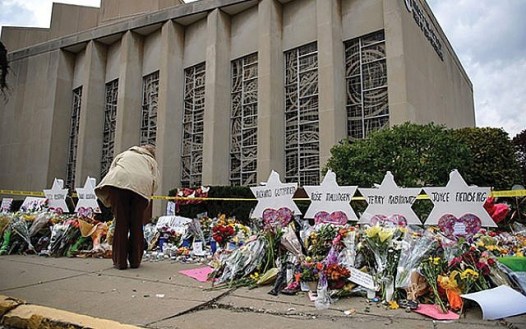
On the evening of May 1st, Israelis will begin to mark Yom Ha Shoah, Holocaust Remembrance Day.
It is a day when we remember the destruction of an entire civilization. The world of European Jewry came to an end in gas chambers, crematorium and countless ditches and rivers. We remember people like us slaughtered without mercy or cause, simply because they were Jews, It didn’t matter if they were orthodox or atheist, Zionist or communist, healthy or disabled, rich or poor, old or young, man or woman, even babes in their mothers’ arms were pitted on bayonets.
An estimated one third of the Jews of the world were brutally exterminated. Two thirds of the Jews of Europe, 90% of Poland’s Jews, were all to meet in mass graves or have their ashes dumped in rivers, lakes or plowed under with bulldozers.
First, they lost their civil right and then they were robbed of all their property and possessions, forced into ghettos and traumatized with disease, starvation and slave labour-before they were transported to the death factories.
Who is guilty?
Is it the German Nazis and their henchmen who perpetrated these atrocities? Absolutely. The Nazis who along with all those who benefited from the slaughtered? Of course. But there is more. The world is guilty.
The British who closed off the gates to what was then mandate Palestine, the ancestral homeland, to those fleeing from the killers.
The Americans who denied visas to those who desperately sought asylum in the land of immigrants. Even their fellow Jews who in their comfortable safety in many nations, were fearful to demonstrate in their millions to cry out for their trapped brethren. Silence was not golden; it was a death sentence. Whatever happened to the biblical exhortation “Thy shall not stand idly by thy brother’s blood?”
There will be many fine speeches and many calls of “Never Again,” but I want to make this more personal.
My mother’s parents were lucky enough to have left Europe many years before the Holocaust. My maternal grandmother and her brothers and sister left the Polish city of Przemsyl, after the area was ravaged during WW I. Their family had been successful for middle class Jews in Poland, owning a flour mill and fruit orchards. My grandmother often told me of how, as a child, she and her siblings would catch fish in the stream that powered their father’s mill where the local peasants would bring their grain to be ground into flour. Had there not been the destruction wrought by the war, they would have remained in Poland and I would never have been born, and they would have ended up, like the other Jews of Przemsyl, in the death camp at Birkenau.
My mother’s father, my Zaide, was born in Vienna. The son of a family of furriers, well off by most standards and fiercely proud of being part of the Germanic world. My grandfather served in the Kaiser’s army during the Great War as a cavalryman and fought against the Allied armies of America, England and France. Why did his family leave a prosperous existence? They were by no means religious Jews, but, as they would say, “Germans of the Mosaic persuasion.” But the raging anti-Semitism after the war, when the new nations that emerged after the dismemberment of the old Austro-Hungarian Empire were feeling their birth pangs, the new nativist parties descended on their minorities with a vengeance and the Jews of Austria caught the enmity of their neighbors in their faces. Regardless of my grandfather’s service in the military, he was beaten and broken by the hatred and his family also left for the shores of America and arrived at the gates of New York.
My father’s family left Kaminetz-Podolsk in the Ukraine, after the Bolshevik revolution. My paternal grandfather was a bootmaker and had a small shop where he made all types of leather goods from boots and shoes to harnesses for horses. The Soviets took his shop and called him a lousy “Zhid,” Russian for “dirty Jew”. When I first heard this story, as a small boy, I couldn’t understand why they hated this man, with his shining blue eyes, quick smile and warm embrace. But, now I know, that they did him a favour because it motivated him along with my grandmother and my father, his two brothers and baby sister, to make the trek that ended up in an apartment building in the Bronx, weirdly, not that far from where my mother was living as her family also lived not far away.
So, for me, because my family took an often hazardous and dangerous sea voyage across the Atlantic, I eventually came to be. I used to tell my students when I was teaching children in my temple, that for want of a sea voyage, many of them would never have been born-including their esteemed teacher.
That is not to say that I didn’t lose hundreds of cousins who weren’t fortunate enough to have left Europe, and even though I never knew them, I grieve for them.
Only G-d knows how many souls were destroyed, how many artists, musicians, doctors, teachers, went up as greasy smoke in the crematoriums of the death camps, or were machine gunned and fell into muddy pits all over the European continent. Was the cure for cancer murdered at Majdenek, or burned at the stake at Kluga, or drowned in the Danube? Was anyone of them my kith and kin?
But as a people we have survived and thrived. We have rebuilt our sovereignty in our own homeland, and I am doubly blessed to be alive and living in the land of our ancestors. I wake up and see the flag flying from the pole in front of the elementary school across the street; I see and hear beautiful Israeli children schlepping their book bags to classes, laughing and talking in Hebrew. I watch as young men and women in the uniform of the IDF standing at the bus stop on their way back to their bases and, most importantly, I know that every day the sun rises over a free, proud and independent Jewish state and blesses her people with a bright, shining “boker tov” that another Holocaust shall never happen to this people again. We continue – not in mourning for what was lost, but in celebrating of being alive, free and forever Israeli.
Irwin Blank was born in NYC in 1952 and has a BA in Political Science from Colombia University NY. He was part of the Speakers’ Bureau American Zionist Youth Foundation and editor of the Zionost Organization of America. He made Aliyah in July 2008 and lives in Maaleh Adumim.
Everyday. Everyday we are reminded that it is everywhere. The cancerous hatred that is antisemitism is rapidly metastasizing around the world.
It has manifested in the images of swastikas on schools, the defilement of monuments to the Holocaust, the thin disguise as anti-Zionism – as if telling us that we have no right to self-determination as a nation makes it better!
The new phenomenon of politicised antisemitism that lurks the halls of the UK Labour Party, as well as the ill-disguised venom of the Ilhan Omar’s, Linda Sarsours et al that are pervading American discourse. The soccer thugs chanting “Jews to the gas” and the repugnant images of the hook-nosed, money hungry Jews, the vile BDS campaigns against our state Israel, the institutionalised obsessive hatred in the UN and in NGOs who have forgotten about the oppressed of the world with their disproportionate focus on Israel.
Two Faced. Two new faces on a contrived crusade against Israel – Ilhan Omar and Linda Sarsour.
As I write this, it a matter of hours since news broke of yet another shooting in a synagogue in the USA. This time at the Poway Chabad in San Diego, killing one and wounding others. The attack occurred six months to the day of the deadly Pittsburgh synagogue shooting that claimed the lives of eleven. Communities around the world are reeling because an attack on one is an attack on us all.
Antisemitism is visible in WASP, exclusionary snobbery and the trolls on social media who hide behind avatars and cowardice. Social media is fast becoming the playground of the hater evident in the number of posts and comments as the medium is abused by these perpetrators to state their intentions or publish their manifestoes.
Breaking News, Breaking Hearts. Jew-hating gunman fires upon congregants in Poway Chabad, San Diego during the Jewish festival of Passover.
Every day. Everyday more news breaks about antisemitic incidents on university campuses. It is not just restricted to students but also faculty members and universities who seek to divest from co-operation with Israeli universities. While volumes can be written about this, two recent examples include:
– South Africa’s top university, the University of Cape Town (UCT) mulling an academic and cultural boycott of Israel. A resolution to this effect will be further addresed by UCT’s Senate on the 10th May.
– a chemistry professor from Vermont’s Middlebury University who posed the following question to his class:
“Calculate the lethal dose of poisonous gas that was used in the Nazi gas chambers during the Holocaust.” He has been suspended but antisemitism is becoming mainstream and it is our duty to fight it.
The Madding Crowd. Protestors call for the severing of diplomatic ties with Israel during a march in Cape Town, South Africa. (photo credit: MIKE HUTCHINGS / REUTERS)
Every day. Every day we see how more and more complicit the media is becoming in disseminating anti-Jewish rhetoric. It is alarming that many media outlets cannot seem to make the correlation between some of their content and rising antisemitism. The most recent example of this is a cartoon published in the international edition of the New York Times that shows a blind Donald Trump, yarmulke on his head, being led by Netanyahu who is portrayed as a dog. This could quite easily have come from Der Sturmer circa 1939 and again traffics in a dangerous trope that was espoused by the Nazi’s and many hatemongers today who compare Jews as either controlling global leaders or as inhuman and like animals.
The New York Times international edition published this offensive cartoon that has led to widespread condemnation for trafficking in antisemitism.
The New York Times offered a weak apology that excluded “we are sorry”.
Every day. It is happening every day and the silence of the world that has not learnt from the history of the Holocaust is deafening. Today, space has been created for Holocaust revisionism and blatant denial. This is the greatest insult to the Jewish people and compounds an already spreading hatred that must be fought. This week as we approach Yom HaShoah -Holocaust Martyrs and heroes Day in Israel – we are reminded again of what happens when hatred goes unchecked. It spreads like the malignant, rapidly metastasizing cancer that it is.
Caricatures in Aalst, Belgium are reminiscent of medieval antisemitism
Every day we need a reminder. We need to be reminded that the Holocaust started with words – not gas chambers. We need to be reminded that hatred and intolerance is not just a Jewish issue, it belongs to us all.
The time is now. Do we choose to stay silent and complicit or raise our voices and take a stand? After the Holocaust we declared NEVER AGAIN. Never again has become every day. Whether it is the far left or the alt-right, political figures or campus activists, the media or non-governmental organisations and once-revered global institutions, this hatred needs to be checked.
NEVER AGAIN – well, it is happening again. Everyday. ENOUGH is ENOUGH
Down To The Wire. ‘Never Again’ should mean ‘never again’.
My Name is Rella Krok. I was born in the small town of Rakashik, Lithuanian in 1918. My father Yankel Krok was a leather merchant. He was a wealthy man and upstanding member of the community. My mother, Dvora Gruniye (nee Assness) took care of us all. We were six kids – Ettie, Ollie, Yaakov, Zalman, Sonya, Sima and me. I was the baby.
I was the lucky one.
Ettie married Mendel Maron – and Ollie married David Yaakov. The young couples made the long sea journey to Cape Town, South Africa, where their children were born. The pain of separation was excruciating.
The rest of us stayed.
I finished school and went on to study nursing. I was living in the ghetto of Kovna and working in the hospital nearby. The atmosphere was tense. Everyone was afraid. I was engaged to be married to a fine young man. He wanted to escape. He decided to run. He was going to cross the border of Lithuania and keep going until he was safe.
Kovno Ghetto
He begged me to run with him. I refused. I could not leave my home, my family.
He was shot dead near the border.
One of my colleagues, a Gentile doctor in the hospital, approached me quietly. He told me that if I was ever in trouble to come to him.
People were starving. There was no food. I made a decision. That night I was going to look for bread. I removed my yellow star and snuck out after dark. I found someone willing to sell me some bread. I hid it under my thick winter coat. I was almost back in the ghetto when I was caught by soldiers. I was terrified. What now? They took me to a room somewhere and locked the door. They told me to strip naked. I did. I was shaking from fear. Are they going to rape me? Are they going to murder me? They forced me to lean over and they whipped me. It was agony. The humiliation more than the pain. They told me to get dressed again. They had had their fun. They dumped me back in the ghetto, without the precious bread. Everyone was still hungry.
What now? What next?
I approached the Gentile doctor. I told him I need a place to hide. He did not hesitate.
I spent the next two years in a tiny crevice dug below the basement floorboards. I never saw daylight. The Gentile doctor’s wife was angry that he had brought me into their home and endangered their lives. She was terrified. I was hidden from their children. They lived in fear that the neighbours would hear a noise. I was alone all day and most of the night in this tiny little hole. Once a day, late after dark, they let me out to relieve myself and eat. I was embarrassed and ashamed to use a pot. A pot that the doctor’s wife had used to empty and clean. A meal was raw potato skins and hard bread. But a meal it was.
Fate Sealed. In August 1941, German authorities sealed off the Kovno ghetto, with approximately 30,000 Jewish inhabitants.
I owe them my life. I survived.
After the liberation, I returned to Rakashik to my family home, hoping and praying that I would find my family alive. It was not my family I found. The Lithuanian neighbours had claimed our family home. It was now theirs. I begged them for knowledge of my family – of their whereabouts. They would not let me in. They slammed the door in my face, so I knocked again. My mother’s Lithuanian neighbor and friend opened the door and threw some of my mother’s belongings at me. My mother’s winter coat. My mother’s starched white linen. I sobbed. She threw my mother’s things at me and told me to go.
My old school friends crossed the street to avoid me.
My brother’s twin infant boys were cared for by a Nanny. She adored those boys. A streak of hope…. Maybe she took them to be her own. Maybe my nephews were alive. Maybe they were safe and sound. I started to run. I ran all the way to her house and knocked on the door. But I was wrong.
They were all dead. My family had not survived.
My sisters Ettie and Ollie sent me a ticket to Cape Town. I travelled by boat. I was with them for nearly a year. They begged me to stay, to settle in South Africa, to be close to them. I refused. I would not. I could not.
My Bobba Ethel on the left with glasses & Aunty Rele on the right….
I made Aliyah and settled in Petach Tikva. I found a job at HaSharon Hospital as a surgical nurse. There was no other place for me. Israel was now my home. Israel was now MY home. Here I was safe. I would always be safe. I was safe for 60 plus years.
I died August 2004. I was 86 years old. I died of old age.
I am buried in the Yarkon Cemetery. I have a grave.
Martine Maron Alperstein made aliyah from Cape Town 21yrs ago. She currently resides in Modiin with her husband, kids and kitty cats.
The passing of a French pilot in Nice this week, brought back memories of the heroism of two South Africans in Israel’s ‘The Great Escape’.
By David E. Kaplan
When the news broke in Israel on the 28 March 2019 that the Michel Bacos – the pilot the pilot of the Air France flight from Tel Aviv that was hijacked in 1976 and landed in Entebbe – had died at age 95, it brought back memories and a huge amount of pride.
“He refused to abandon his passengers, who were taken hostage because they were Israeli or of Jewish origin, risking his own life,” Christian Estrosi, the mayor of Nice, where Bacos lived, announced Tuesday on social media. “Michel bravely refused to surrender to antisemitism and barbarism and brought honor to France.”
When the hijackers were planning to let Bacos, the rest of his crew and the remaining non-Jewish hostages go, he refused.
“I gathered my crew and told them there was no way we were going to leave – we were staying with the passengers to the end,” he said. “The crew refused to leave, because this was a matter of conscience, professionalism and morality…. I couldn’t imagine leaving behind not even a single passenger.”
Captain Courageous. The captain of the hijacked Air France flight, Michel Bacos (right), who refused to abandon his passengers, addresses the media in 1976. (photo credit: AFP PHOTO)
While President Reuven Rivlin said Wednesday that Bacos was “a quiet hero and a true friend of the Jewish people. May his memory be a blessing,”
Prime Minister Benjamin Netanyahu tweeted that the pilot “stayed with the hostages through all their hardships, until IDF soldiers – led by my brother Yoni – freed him in a daring operation. I bow my head in his memory and salute Michel’s bravery.”
One of the bravest and most successful rescue operations in human history, many who were around at the time will recall where they were when the story broke. I was a law student in South Africa in 1976 travelling by car between Durban and Cape Town and was sitting in a Wimpy Bar in Grahamstown when the restaurant’s TV broke to Breaking News to announce the unfolding drama. Little did I know at the time that years later I would be interviewing two South African heroes who participated in the rescue Dr. Jossy Faktor and Ricky Davis. Both had been members of South African Jewish youth movements before immigrating to Israel.
Honouring Heroism. Formally of Pretoria, South Africa, Dr. Jossy Faktor (right) of ‘The Entebbe Raid’ medical team, receives further rank from Chief of Staff, Ehud Barak (left).
The crisis that led to the Entebbe Raid began on the 27th June, when four terrorists seized an Air France plane, flying from Israel to Paris with 248 passengers on board. The hijackers – two from the Popular Front for the Liberation of Palestine and two from Germany’s Baader-Meinhof gang – diverted the aircraft, ‘flight 139’ to Entebbe. There, the hijackers were joined by three more colleagues who then demanded the release of fifty-three of their associates held in jails in Israel and four other countries. The clock was ticking. If the detainees were not released, they would begin killing hostages.
Shades of the Shoah
The plot of the unfolding saga drew in a global audience mesmerized by the twists and turns of a modern-day Homeric epic. Abduction and rescue – the stage was set for a cataclysmic clash of wills. On the one side, an anguished Israel, while on the other, German and Palestinian terrorists aided and abetted by one of Africa’s most notorious dictators, President Idi Amin. Stories abounded by this man’s evil proclivities, notable that he had a certain taste for eating his enemies.
It was said that his palace fridge had been a real ‘who’s who’ in Ugandan politics – leftovers to go with the salad. Some 3,400 kilometres away, a nervous Israeli government was agonizing which way to move. No options were risk free.
The terrorists then played a card that simplified the decision.
They separated the passengers – Jews from non-Jews – releasing the latter. Shades of the Shoah colored the unfolding drama and Israel now stood alone.
It also knew what it had to do.
It was a proud cast of characters who participated in the mission dubbed by the Israeli military – “Operation Thunderbolt”. Amongst the medical team on board one of the four C-130 Hercules aircraft, was a former South African from Pretoria, Dr. Jossy Faktor. A gynecologist and obstetrician, Jossy at the time was serving in the permanent force of the Israeli Air Force (IAF) and would later rise to become its Surgeon General.
When the call came summoning the 36-year-old doctor to report for duty, Jossy and his wife Barbara were clicking champagne glasses celebrating the tenth wedding anniversary of their old Habonim friends, the Kessels in Ra’anana. Little did they all know when Jossey hurriedly stepped out of Terry and Carol’s front door, that he was about to enter the history books.
Ready To Rescue. Originally from Port Elizabeth, South Africa, Ricky Davis at the time of ‘The Entebbe Raid’, whose unit was tasked with neutralising the Ugandan Russian Migs on the airport tarmac.
At roughly the same time, 21-year-old Ricky Davis was with his paratrooper unit at Wingate when the call came through. Only two years earlier, Ricky, a member of Betar in Port Elizabeth, made Aliyah and within three months joined the IDF. “We immediately packed up and assembled at a base near Petach Tikva. Although we were aware of the hijack drama playing out at Entebbe, we had no idea that we would be connected. We went on so many hair-raising missions into Lebanon and Jordan in those days that we assumed it was another of the ‘usual ops.”
Once assembled at the base, “Everything became top secret. We began training, still not knowing our destination. Only at the last stage, were we brought into the picture. My unit was to secure the escape by destroying, in advance, anything that could jeopardize our escape.”
“No Going Back”
The next day saw Jossy being briefed by the Surgeon General, the late Dan Michaeli. “I was instructed to quickly put together an aero-medical team.” Although Jossy’s specialization was gynecology, he had been trained in aviation medicine that included ensuring the health of aircrews and aero-medical evacuations. While there had been missions and escapades in the past, nothing would come close to what he was to experience in the next few days. “The success of the operation was secrecy, and because the public at the time was well aware of the hostage crisis, we had to come up with something to deflect attention. Also, we needed to obtain a large supply of blood from Magen David Adom (Israel’s Red Cross), and that necessitated a credible cover story. We did not want anyone – least of all the media – questioning why we suddenly needed so much blood. Because nothing quite like this had ever been attempted, we had no idea of what casualties to expect. Anyway, the word went out that a crisis was developing on the northern border with Lebanon, and we would need medical teams and blood. The story held, and we took off with only those involved in the operation in the know.”
The final briefings were divided according to the different roles to be performed by the various participants. “We were briefed by Dr. Ephraim Sneh, who was the overall commander of the medical teams.”
Jossy describes the flight as long and uneventful.
“We left Friday morning and landed at Sharem el Sheik, stopping for essentially two reasons. Firstly, for refueling. We had enough to get us to Entebbe, but no more. And as we did not expect the ground staff at Entebbe to accommodate us by refueling our planes, we needed sufficient fuel to take off after the rescue and make it to Nairobi.” The other reason for the stopover was no less intriguing. “When we took off in Israel, the Cabinet had still not decided to go through with the mission. The risks obviously weighed enormously with them and so wanted to keep the option to abort open until the last moment. On the runway at Sharem El Sheik, we received the final green light. Now there was no going back.”
The last stretch of the flight to Entebbe “we flew at a very low altitude to avoid radar detection. The turbulence was heavy, but it did not bother me,” says Jossy. “I recall there was very little chatting; everyone was so wrapped up with their own thoughts. I spent much of my time in the cockpit as the captain, Amnon Halivni, was a good friend of mine.”
Hostage Crisis. Rather than report that Israel recues its hostages, a Ugandan newspaper reports that “Israelis invade Entebbe”.
Jossy traveled with the medical teams in the fourth Hercules. “Our plane was virtually empty ready to accommodate the hostages and expected wounded.”
The other three planes carried ground forces, with the black Mercedes Benz and Land Rovers on board the first aircraft. The word out on the street was that the Mercedes was owned by an Israeli civilian and was apparently sprayed black so it would appear as the Ugandan’s president’s car when approaching the terminal building. However, the intelligence was dated. The two Ugandan sentries on duty that morning were well aware that their President had recently purchased a white Mercedes replacing his black one. They ordered the motorcade to stop. Had they had the opportunity for a closer look they would have also noticed that the steering wheel was on the wrong side of the car, but by that time, they were both dead.
Planed To Perfection. The Black Mercedes used to fool Uganda soldiers in the Israeli raid on Entebbe parked aboard an Israeli transport plane upon return from the July 4 operation. (AP-Photo)
In fear of prematurely alerting the terrorists inside the terminal, the subterfuge motorcade sped up and the assault teams quickly went into action.
Into Battle
Jossy’s aircraft had been the last to land. Throughout the operation “we stayed on board, preparing for the arrival of our passengers. It took just under forty minutes for the first casualties to arrive. The waiting was the worst. We felt like sitting ducks as the battle ensured. In the end we needed only six stretchers, one of which was used for Yoni Netanyahu, who died on the way to the aircraft.”
Ricky’s unit, tasked with getting away safely, took care of the Russian Migs on the airport tarmac. “The real danger was that they could give chase, easily catch us, and shoot us down. We were not taking any chances and blew them up with anti-tank missiles.” Adds this warrior, “Yes, we stopped for coffee in Nairobi on the return flight home.”
Heroes Return. A crowd lifts the squadron leader of the rescue planes on their return to Israel. (Photograph: David Rubinger/Corbis via Getty Images)
The enormity of what these daring men had pulled off “only sunk in,” says Jossy “when we touched down at Tel Nof Airbase and were met by Prime Minister Yitzhak Rabin and Defense Minister Shimon Peres. It was only then, safe on Israeli soil, that people felt free to express their emotions.”
July 6, 1976 – The World Learns A Word: Entebbe
In the immediate aftermath of the rescue mission, the government of Uganda convened a session of the UN Security Council to seek official condemnation of Israel for violating Ugandan sovereignty. The Security Council ultimately declined to pass any resolution on the matter. The words of Israel’s ambassador to the UN at the time, Chaim Herzog, in his address to the Council resonates no less today: “We are proud not only because we have saved the lives of over a hundred innocent people – men, women and children – but because of the significance of our act for the cause of human freedom.”
Enter Hollywood. Following the successful rescue, several movies were made including this one – Raid on Entebbe – staring Charles Bronson, Peter Finch, Martin Balsam, Horst Bucholz, John Saxon, Jack Warden and Yaphet Kotto as Idi Amin.
The history of the Jewish people and that of many African countries is more similar than it is different. There are some striking parallels – tribal allegiances, love of the indigenous land and a shared history of persecution and colonialism.
In the fledgling days before the founding of the modern State of Israel, Jews fought to end the British mandate that effectively colonized their ancient land.
Theodor Herzl
It was with philosophy that both the founder of modern Zionism, Theodore Herzl and Israel’s Prime Minister, Golda Meir, who was the first to recognize that the Jewish state was the natural partner to help beleaguered African countries.
They recognized the shared desires of the African people as well as the Jews to live free in their homelands and respected the national liberation movements of the time, sensing a mutual desire to that of their own Zionist ideals. Zionism after all, is the national liberation movement of the Jewish people.
But today, much like in many other parts of the world, anti-Semitism is rearing its ugly head on the continent. A continent that has suffered more than its own share of discrimination and persecution.
Israeli PM Golda Meir (while serving as FM) and Kenya President Jomo Kenyatta laying cornerstone of Israeli Embassy in Nairobi (December 1963)
From the north to the south
Many would be surprised to find out that there once were thriving Jewish communities in many countries across the continent and while communities are sparse in sub-Saharan Africa, in Tunisia, Algeria, Morocco and Egypt, they once flourished.
The Lemba of Southern Africa, the Igbo of Nigeria, Ethiopan Jews, the Abuyudaya of Uganda and the Sephardi and Ashkenazi of Europe, many of whom settled in Africa to escape persecution and who can forget the Mizrahi Jews of Arab countries, who were forced to flee Islamic rulers.
Due to rising anti-Semitism and poverty, these communities barely exist anymore. Outside of South Africa which has the largest community on the continent, there were communities in Ethiopia, Kenya, Sudan, Uganda, Zaire (the Democratic Republic of Congo) and Zimbabwe. While many left for Israel, others left for Europe or elsewhere.
The continent’s massive poverty rates and political turmoil in the late 20th century led to some African national leaders blaming Jews for the problems of their countries which they claimed, “are operated by a conspiracy against the African race”. Anti-Semitism in Africa includes false rumors and allegations that the AIDS pandemic, was bioengineered by either the US, the United Nations or “the Jews” in a plot to exterminate millions of black Africans and that the disease is a part of the “Jewish” or “white Europeans’ maneuvers against Africa” or a continuous practice of “racial genocide”. African nations are prone to accept unreliable anti-Semitic reports and revisionist history that the slavery of black Africans in the new world was because of “Jewish merchants working for European colonial masters”. According to social scientists, these theories are appealing to some impoverished and downtrodden people without enough education to know the “Jewish conspiracy” myth is false and unprovable.
The South African story
In post-Apartheid South Africa, the Jewish community has not been spared. This is particularly troubling considering that the contribution made by the Jewish community during the Apartheid years was significant in the fight to end the racist regime. One famous example was that out of the 13 Rivonia trialists, 5 were Jewish.
Who can forget the inimitable Helen Suzman, the lone voice of opposition in parliament to the Apartheid government? Jewish and a woman to boot! Some of the greatest names to enter the pantheon of anti-Apartheid activists, be it through political, cultural, religious or civil action, include Johnny Clegg, Rabbi Isaacson, Joe Slovo, Arthur Chaskalson, Nadine Gordimer, Gill Marcus and Albie Sachs to name but a few. The founding fathers of the Rainbow Nation, Mandela, Sisulu and Thambo were intimately involved with Jews, having worked alongside many throughout their legal careers. Mandela famously visited Israel with “his” Rabbi Cyril Harris and met with then Prime- Minister, Shimon Peres. Mandela famously refers to Menachem Begin and the Irgun as the basis on which he hoped to model the armed wing of the ANC, Umkhonto we Sizwe in his autobiography, Long Walk to Freedom:
“I read The Revolt by Menachem Begin and was encouraged by the fact that the Israeli leader had led a guerrilla force in a country with neither mountains nor forests, a situation similar to our own.”
Chief Rabbi Cyril Harris and former President Nelson Mandela (Credit: Afrika Tikkun)
I think that these great stalwarts of human rights would be greatly hurt to witness the appalling invective levelled against South Africa’s Jewish community.
Good Jew, Bad Jew
Manifesting more as anti-Zionism rather than traditional anti-Semitism (although the two cannot be separated) the clarion call seems to be “Jews are welcome, Zionists are not.” Or are they? Over the past few years, anti-Semitism is manifesting on the Southern tip of the continent much like it is all over the world. Social media platforms have become new battlefields and threats of violence and subsequent incidents have increased.
Wits University Johanneburg
There seems to be a division between who is termed “good” or “bad” Jew. Good Jews apparently are not Zionist and identify as Jewish by “cultural ties”, not those awful traditional, Israel loving kind. There have been atrocious incidents of anti-Semitism ranging from the BDS (Boycott Divestment and Sanctions) movement and their cries of “shoot the Jew” at a conference hosted by the South African Zionist Federation to the appalling tweets from populist Black Land First leader, Andile Mngxitama and a whole host of incidents and issues in between.
Pretoria University 29/08/2017
Many look to Europe or the USA as the barometer on how anti-Semitism manifests but if we ignore the South African model, we do so at our peril. It would appear that when BDS and their supporters in South Africa sneeze, their global network catches a cold. This is not to say that anti-Semitism in South Africa is restricted to BDS and the far left but the far right, perhaps emboldened by the alarming rise of their counterparts in the USA are rearing their ugly, neo-Nazi heads as well.
Pretoria University 29/08/2017
The consequences of rising anti-Semitism in South Africa are worrying. This could mean the marginalizing of a minority group that has played a vital role in not just the fight against the injustice of the past but continues to punch far above its size in helping to build a new country. It would also result in many of South Africa’s Jews leaving for safer pastures – and along with them, investment and employment opportunities for many of the country’s impoverished.
Mr Bongani Masuku found guilty of hate speech against the Jewish community in South Africa, 2017
South Africans fought against Apartheid and many paid a painful price. After the struggles of the country’s dark past, do we really want to see this vicious cycle of discrimination and racism rise again?
Silence is no longer an option and the message that Jews are just as much a colour in the Rainbow Nation as any other community needs to be heard. Loudly.
Recollections, Revelations and Remorse from the Descendants of the Perpetrators of the Holocaust
The United Nations designated January 27 – the anniversary of the 1945 liberation of Auschwitz-Birkenau – as a day for member states to honor the Jewish victims of the Holocaust and millions of other victims of Nazism.
With the alarming rise today in Holocaust denial and antisemitism – even in the very lands where the Holocaust happened – LOTL explores the hatred of the Shoah (Holocaust) by interviewing Pastor Jobst Bittner, who heads the movement of the descendants of Nazi perpetrators to openly confront the hatred of the past that it will foster a genuine healing, and hopefully – “Never Again”.
ByRolene Marks and Lindy Hoffman
Author’s note:
This was a profoundly emotional and moving experience. It takes an enormous amount of courage to delve into the past, especially that of your family and navigate a painful past. To explore this can also bring about great healing. After Apartheid in South Africa came to an end in 1994, there were many attempts through the ‘Truth and Reconciliation Commission’ to try bring healing and understanding between victims and perpetrators but too few sat down with each other on a one-to-one basis and shared the experience of the other. Perhaps March of Life sets an example that the traumas of the past, when spoken about and addressed openly, fosters great healing.
Jobst Bittner greets you with a warm smile and twinkling blue eyes. He immediately puts you at ease when he shakes your hand and his presence is reassuring. Bittner, apart from being a Pastor, is the Founder and President of March of Life – a movement of the descendants of the German Wehrmacht, the SS and the police forces of the Third Reich, and who organise memorial and reconciliation marches at sites across Europe where atrocities were committed.
Tübingen Today. A colourful façade hides a dark past.
How did it all begin?
Turbulence in Tübingen. A march by of the Sturmabteilung (SA) in Tübingen.
Sounds of Silence
The German city of Tübingen was a hotbed of training for the Nazi party. A university town, many of the intellectual elite of the Nazi party would gather in Tubingen where they later created an institute known as the Institute for Racial Hygiene. This “institute” would in time decide who was an “Aryan” and who was an “untermensch” (subhuman); who was a “superior” and who was an “inferior”; and was responsible for the ‘selection process’, which saw millions of Jews and other “undesirables” sent to their deaths.
Enveloping Evil. With uniform and swastika flags, the square in front of the New Aula in Langemarckplatz in Tübingen was renamed in May 1938 to be followed in November with the burning of the Tübingen Synagogue during Kristallnacht.
The March of Life was born is 2007 when Pastor Jobst Bittner and his wife Charlotte decided that something had to be done about the history of the city. Growing up in the post-war generation, Bittner and his wife realised that their parents and grandparents never spoke about the war or their experiences. The past was related by sticking to just the historical facts; never a mention of the experiences of those persecuted by the Nazi regime.
“My parents”, says Bittner, “never spoke of the deaths of six million Jews and this was the same for all of Germany. People pushed aside or repressed their guilt or played it down.”
Pastor Jobst Bittner and wife, Charlotte
Up Close And Personal
“But once we realised we needed to take responsibility, at least in our own city, we had to engage with our own family histories – to make it personal. We started training members of our church to take a careful look at their own family history which in Germany is simple because Germans are so thorough and everything was recorded. So we started training our members to ask their families “What happened?” and “What did you do?” I found a term for it – ‘Breaking the Veil of Silence’. It is now a recognized term in Germany because the two decades after the war are known as the decades of silence,” says Bittner. “Most families don’t talk about what really happened, preferring instead to say that “nobody was involved”. But this was not the case. The perpetrators of the Nazi genocide against the Jews were still able to resume normal lives and careers after the war. Many returned to their careers, resumed positions as judges, in government, in the civil service and academia – they simply returned to their normal lives and professions in society.”
From Erudition To Evil. A town that housed the famous University of Tübingen associated with eleven Nobel laureates notably in the fields of medicine and chemistry, also housed the infamous Institute for Racial Hygiene responsible for the ‘selection process’, which saw millions of Jews and other “undesirables” sent to their deaths.
The members of Bittner’s church started to research their family backgrounds and each one of them discovered terrible details about the involvement of their own families. One member discovered that his father had been in the Wehrmacht in Poland and active in genocide there. Others were involved in the Ukraine, and in general, it was expressed that “Nazis were somebody else”. The Bittners believe that in some way, every single German was involved. Nobody could say: “I was not involved.”
Someone learned that their grandfather had been a guard at Dachau – but the family made the excuse that he was “just a book keeper” or “just sitting around”. On closer investigation, it was discovered that the system at Dachau ensured that all duties rotated and everyone had the chance to do each “duty”.
Face to Face
Pastor Bittner feels an incredible sense of duty and responsibility to face the pain of the past so that the trauma that affects both descendants and victims of the perpetrators can be healed.
“Traditionally, Germans have played down the magnitude of of the atrocities. We teach them to speak the truth and own up to the past. Yes, my father was involved in the genocide. My parents remained silent and were just as guilty. The vast majority remained silent. It takes something to say my parents were silent as our Jewish neighbours were taken away, dispossessed, sent to concentration camps and killed. They were as much an accessory to the Holocaust as pulling the trigger on a gun. And so a movement was birthed. I wrote a book on the veil of silence. The same silence we saw from perpetrators, we saw from the descendants of the victims. The tragedy is passed down through the generations. The silence of the fathers became the silence of the sons,” says Bittner. “We can understand the silence of the generations of victims; the pain would be too much and the silence was passed down as pain. We realized that as long as the pain was still there through the generations, we have a responsibility to the victims to do something about it. In our experience, when we speak to survivors, we needed to find ways to ask the forgiveness our fathers and grandfathers would not ask. Only then can we start to heal the pain.”
As one could well understand, the eventual meetings between survivors and descendants were extremely emotional. Both parties were extremely touched and opened up their hearts to each other. This created the space for healing.
During the war, “Tübingen had been surrounded by concentration camps,” says Bittner. “Not large but terrifying; and towards the end of the war they were razed to the ground and the surviving prisoners forced on death marches. Over 250 000 people perished in plain sight on the streets of Germany. They were either shot or died from sheer exhaustion. Nobody could say, “I didn’t know”. So what we started to do was to trace the route of one of those death marches from Tubingen to Dachau. This is why we called it ‘March of Life’ – to reaffirm life that the death marches could become a march to sanctify life.”
Breaking The Silence. A public ‘March of Life’ event in Tübingen in 2016, confronts people with their country’s dark past.
March of Life is connected to the annual educational programme called March of the Living “which invited me to address 25 000 participants in Budapest. While March of the Living is connected to the survivors, what we say is that we are so closely connected to them because we are the descendants of the perpetrators. “
Before participating in their first march, “we had not met with any survivors and during that march, we received a call from a survivor who asked to walk with us. Rose was a survivor of six concentration camps and liberated from Dachau at the age of sixteen. We considered it an honour, and then Rose asked to bring thirteen more survivors. For some it was their first trip to Germany and many were fearful to hear German, the language of the persecutor. We were at a loss what to do. We knelt and we washed the feet of survivors and at first they did not know how to react but after a while were so deeply moved at the healing taking place at the moment. We started to embrace each other. We thought this is what we can do to bring healing.”
A Movement Is Born
This was one of the most pivotal moments of Bittner’s life and from these deep, emotional roots, a movement was born. Healing for descendants who carry guilt and shame as their heritage is just as important as that of the survivors. As we lose more and more survivors, so the responsibility to teach the next generations becomes ours. While there are many who say we must move on, the importance of memory and bearing witness is so important, especially as antisemitism rises around the world.
March of Life advocates that we cannot be silent in the face of antisemitism and hatred. Delving into the past is painful. But the results are evident. The media started to pick up on this extraordinary story in The Jerusalem Post, and The New York Times and the message started to spread. It grew organically, gaining momentum.
“We were invited to Poland and the Ukraine. By telling our story it encouraged others to do the same. In Poland and Lithuania where they had previously denied involvement, they began to talk. Our message as Germans was if we could face this, so can you. Now we educate – we are in a university town. So historians are considering how the culture of commemorating is done. Memorial events or historic remembering of facts is important but antisemitism is exploding. It has become disproportionate in the last five years. History can only come alive if we make it personal. If not us, then who? In the recent issue of Der Spiegel, we were the main cover story with personal stories but there is so much more to do with people still reluctant to talk about it,” laments Bittner.
Many people are resistant to the descendants telling their personal stories, feeling it dishonours the memory of their parents. Nevertheless, the descendants took a conscious decision to press on and the grandparents started to talk. “They found it easier to talk to their grandchildren than their children,” says Bittner.
Silence Is Not Golden
One could call March of Life a truly pioneering movement. While the government of Germany feels that working through the past is a high priority and share a sense of responsibility for the state of Israel, many ministers resist revealing their family history. March of Life has exhibited true courage to go where many dread – the past; and work closely with Yad Vashem, Israel’s national Holocaust memorial museum and education centre. And this has found a welcome response from Germany’s Jewish community, and in 2017, the Jewish Community of Halle in Germany, awarded the March of Life with the Emil L. Fackenheim Prize for Tolerance.
Marches take place all over the world from Germany to Switzerland, Poland, South America and Jerusalem.
The impact is massive, reaching to millions of people.
Pastor Bittner says that despite the fact that they march proudly with Israeli flags and in cities like Paris where security is vital, they have faced no aggression, something “ We don’t take it for granted.” In Austria, they marched at the Mauthausen Death camp and taught seminars. “People revealed symbolic Nazi paraphernalia that had been in their family’s possession for years and some were shocked to discover what they meant. We even had reformed neo-Nazis in our congregation. Bittner believes that “antisemitism will cease to exist once it leaves the church.” They are also present in schools teaching about the Holocaust. “I take some experts from Israel to schools and we are invited on a regular basis and we take survivors. Hearing from a survivor has a profound impact. We have seen this with Muslim students who have never been exposed to this. One story from a survivor is more important than fifty lessons.”
March of Life is a living memorial to history and a testament to the power of dialogue, no matter how painful it is. Silence and indifference propagate hatred. After the Holocaust, Jews took the vow “NEVER AGAIN”. Never again would we allow hatred to rise to the levels that it results in genocide. Never Again would we be silent. Never Again would we allow the wholesale slaughter of our people.
Illuminating Darkness. At Israel’s March of Life office in Caesarea are (left to right), Pastor Jobst Bittner, the article’s co-writers Rolene Marks & Lindy Hoffman, the director of March of Life in Israel, Yigal Even-Ziv and clinical psychologist, Carolin Hohnecke, who is a 3rd generation descendent of a perpetrator.
Our gratitude to Pastor Bittner and March of Life – they have given wings to our vow and a tailwind to our voices.
With the passage of time, Southern African volunteers who fought in Israel’s 1948 War of independence are passing away, and with them, a living link to the genesis of modern Israel
By David E. Kaplan
Israel’s 1948 War of Independence , despite all the odds was won decisively.
So how come we are still fighting it?
Mainly because of the nature of what is “decisive”. The current theatre of battle is not “On the Ground”, “in the Air” and “at Sea” but “in the court’ of world opinion”. Today’s “Battleplan” involves documenting and securing the truth, so that the history of the War of Independence is not subverted by revisionists and purveyors of falsehood as is wont by BDS in South Africa that ‘attacks’ Israel not over its dispute over territory but its very existence. It opens the file not of 1967, when Israel conquered the West Bank in a defensive war, but the “1948 file” that transforms the Israel-Palestine debate from a negotiation over territory, into an argument about the conflict’s older and deeper roots – the establishment of a Jewish state.
Who has been spearheading the campaign of recording the role of volunteers who came to fight in Israel’s war of birth in 1948 is former South African, Smoky Simon, Chairman of World Machal, today 98 years old. (The word MACHAL is an acronym for the Hebrew, Mitnadvei Chutz L’Aretz, meaning “Volunteers from Overseas.”)
Once a fighter plane navigator, Smoky is still ‘navigating’; this time securing a flight path towards educating the young and the old, Israelis and foreigners on the existential contributions to the 1948 war by the 4500 volunteers from abroad – over 800 of them Southern Africans – who put their futures on hold, and risked their lives to fight for a nation in the making.
Sir Winston Churchill’s apt depiction after the Battle or Britain that “Never in the field of human conflict was so much owed by so many to so few” could equally apply to the debt the State of Israel owes to these volunteers.
They left jobs, interrupted their studies, and some even postponed weddings, while others brought their weddings forward to come on ‘honeymoon’ to fight in Israel’s War of Independence as did Smoky and his wife, Myra, who was the first meteorological instructor in the Israeli Air Force. “Many of her graduates became squadron and base commanders,” reveals Smoky proudly.
Literally rescheduling their lives, they dropped everything to come and fight for the fledgling Jewish state. In cockpits and on board ships, in tanks and armored vehicles, treating the wounded in hospitals and on the front lines, these young idealistic men and woman – Jews and non-Jews – helped change the tide in Israel’s War of Independence and forged the birth of a nation.
One in this illustrious “band of brothers” who participated in the most exciting adventure for a Jew in 2000 years was another former South African from Johannesburg, Joe Leibowitz, who passed away in January 2019 in Hod Hasharon in central Israel. It is important with the passing of these Machalniks to record and relate the service they performed.
Joe was born in Lithuania “where a Jew knew what anti-Semitism was” and came to South Africa at the age on nine. Then, three years after WWII and the prospect of a Jewish state, “I was torn to pieces inside. I had a strong feeling that we had a moral pact with the slaughtered Six Million of Nazi Europe. This was the first chance to fight back against a world that hadn’t cared.”
War of Independence. ‘Mahalniks’ of the 72nd Battalion including many Southern Africans opposite the Syrian lines at Mishmar Hayarden in 1948.
He reveals in writings recorded in Henry Katzew’s “South Africa’s 800 – The Story of SA Volunteers In Israel’s War of Birth” that his thoughts at the time were “mixed up with other things.” He felt he was “in rebellion against the old supine ways. Our rabbis used to snatch us indoors when we threw stones at Gentiles throwing stones at us. The rabbis broke our spirit before we could develop it. Turning the other cheek was no answer.”
Then when Philip Zuckerman of the South African Zionist Federation approached him to serve, 21 year-old Joe volunteered without hesitation. “The battle inside me was resolved. I could be helpful to my people.”
Band Of Brothers. Joe Leibowitz is seen here (left) in 2012 for a photoshoot of Southern African Mahaliniks at Kfar Saba police station having borrowed the rifles. The entire police force came out to observe and enjoy a history lesson. Back row: Joe Leibowitz (SA), Maurice Ostroff (SA), David “Migdal” Teperson (SA), Moshe Amiram (Argentina) Middle row: Monty Bixer (UK), Stanley Sober (USA), Avi Grant (UK), Hymie Josman (SA) Front row: Smoky Simon (SA), Stanley Medicks (UK), Hymie Goldblatt (SA)
The ‘Plane’ Truth
Arriving in pre-state Israel on the 10th May 1948, this ex-SAAF air gunner WWII veteran with 102 sorties under his belt in North Africa and Italy, noted at Sde Dov airfield in Tel Aviv, that the strength of the nascent State’s “Air Force” comprised “two Rapides, a Fairchild and a Bonanza (ZS BWR).”
Hardly a force to hold back invading armies coming in from all directions!
With no option of being an air-gunner, Joe teamed up with South African pilot, Elliot Rosenberg, becoming a “bomb -chucker” of one of the Rapides, a fabric covered bi-plane. “Bomb-chuckers” as they were called, carried 25 and 50 pound bombs on their laps, and on reaching the enemy target, the safety pins were released and the bombs were manually dropped onto the target.
It was a nerve-wracking business – so much could go wrong!
Flying Scrap. South African Borris Senior braving himself for the first test flight of a Spitfire put together with scrapped aircraft bits and pieces found on former RAF scrap heaps.
With the door of the plane removed, “there was always the possibility,” said Joe that “in leaning over while chucking out the bomb to slip, and follow the bomb.” The plane carried no parachutes and communication between the pilot and “chucker” was by torch with “a flash from the pilot, indicating “Over target” , and a flash from the “chucker” “All bombs unloaded.”
Despite the lack of sophistication of the nature of this war over the skies of Israel, there was some compensation for the airman recalled Joe: “We were so admired by the local Israelis that we were always treated to free meals in restaurants and free haircuts at the barber shop.”
Joe recalled the strains of those early days of the war. One morning the legendary Moshe Dayan came striding into Airforce O.C. Aharon Remez’s office demanding to know why the Air Force was “sitting on its arse.” He had reason to be angered; Israeli units were being hard pressed at several points by the invading Arab armies. However, the men on the ground had little understanding of the war in the air and “how the bombs thrown out could as easily fall among the Israeli men on the ground as among the enemy.”
Enemy At The Gates. A very worried Aharon Remez, Chief of the IAF, Smoky Simon, Chief of Air Operations, Shlomo Lahat in charge of bomber operations (later mayor of Tel Aviv) and Chris in charge of maps.
Joe recorded an experience when the Israeli forces were pinned down along the “Burma Road” to Jerusalem and a Palmach unit was surrounded and radioed in for support. “We had to drop by parachute, two Piat guns and two bags of ammunition.” Complicating the mission, “we had no wind intelligence and no calculation of drift allowance and a real danger of the Piat and the ammo falling into enemy hands.”
With the door of the Rapide removed, there was only the metal handle on the side with the ammo bags tied to the handle until ready for the push. Joe used his feet against the banking of the plane. Then, “a mysterious thing” happened over at the 4th attempt of the drop. The metal handle broke and Joe would have gone hurling into space with the bag had not the pilot, Elliot Rosenberg, at that precise moment tilted to port. “The mystery is that from the cockpit, Elliot could not see me and had no logical reason to tilt. Some mysterious instinct came into play that ensured that Joe’s passing was delayed by over seven decades – “How did Eliot know something was wrong, we spoke about it for years afterwards.”
Those Magnificent Men In Their Flying Machines. Prime Minister David Ben Gurion visits 101 ‘First Fighter’ Squadron. With sunglasses Modi Alon. Behind Alon’s left shoulder stands South African ace fighter pilot, Syd Cohen, who Israel’s future State President, Ezer Weizman said “taught me most of what I needed to know in a cockpit,” to the left, Gideon Lichtman and Maurice Mann, a Battle of Briton RAF pilot.. (Public Domain/Wikimedia Common)
Close shaves were Joe’s calling card, even when not in the air. On one occasion during a UN brokered truce, Joe had an unsettling encounter with Count Folke Bernadotte, the UN Security Council mediator, known to be most unsympathetic to the new State of Israel.
“We had just landed with supplies at Sdom in the Negev desert, and who surprisingly was there was Bernadette who came up to me and asked what supplies we had brought.” Only knowing a few Hebrew words, Joe said:
“Ani medaber rak ivrit” (I only speak Hebrew)
Bernadette tried German.
“Rak Ivrit,” Joe repeated.
This went on until Bernadotte was distracted, never discovering that among the crates of carrots were hand grenades, certainly a violation of the truce agreement, “but this was a fight for survival.”
In truth it was.
The Machalniks’ contribution represents one of the proudest chapters in modern Jewish history, when ordinary people – like Joe Leibowitz and the over 800 Southern African volunteers – behaved quite extraordinarily. As Israel’s first Prime Minister Ben-Gurion said:
“This was a war not won by heroes. It was won by ordinary men and women rising above themselves.”
Above and Beyond. Short clip of volunteer fighter pilots in Israel’s War of Independence.
In honour of Rev Dr. Martin Luther King Jr. Day, Lay of the Land pays tribute to this great civil rights leader and his tremendous support for the State of Israel and Zionism as the national liberation movement of the Jewish people. At a time when Zionism is being maligned by many, we pay tribute to his support by examining who is a Zionist and historical ties to the civil rights movement in the article below.
The King’s Message Is Alive. Martin Luther King Jr.’s birthday has been a national holiday for 34 years.
There has been a lot of debate, discussion and social media brouhaha lately over who is or what defines a Zionist.
In simple terms Zionism is nothing more that the yearning of the Jewish people to return to their ancient homeland. The great civil rights leader, Rev Dr. Martin Luther King, was rumoured to have coined this definition of Zionism and I reckon he knew quite a bit about human rights. And he was a Zionist! And he wasn’t Jewish!!
The reason that I am writing about this is important.
After thousands of years of being made well aware that Jews are unwelcome in many countries, we have returned en masse to our ancient and ancestral homeland. The word ‘Zion’ refers to those biblical ties since time immemorial. It is proven that Jews have “indigenous people’s rights to the land” and in case anybody has doubt, antiquities are being unearthed every day in solid support.
Zionism is also the National Liberation Movement of the Jewish people. It is a guarantee of our rights to organize ourselves politically and assign it a name that hearkens back to our ancient roots and love for Zion. Many thought that with the realization of the modern state of Israel, antisemitism would disappear but instead it has reared its head in a new form – anti-Zionism.
To say that Jews have no right to organise themselves politically, and calling it Zionism, is racism. And many agree – that is why we have a phenomenal support base that includes many Christians who work tirelessly in support of the Jewish state and Muslims, some of whom put their lives at risk to support Israel.
The Rev Dr. Martin Luther King Jr. identified strongly with Jews and proudly marched alongside us as we mutually supported each other’s activism for civil rights. Today, many have forgotten the noble history and historical relationship between Jews and African Americans and have tried to hijack this to serve a different agenda. Christians in America are and remain some of Israel’s most ardent supporters.
Sadly, there are many that denigrate this relationship and demonise those of us who proudly identify as Zionist – Jews and non-Jews alike.
Comrades-in Arms. Rev. Martin Luther King Jr., other civil rights leaders and clergy, including Rabbi Abraham Joshua Heschel, second from right, during a civil rights march (Getty Images).
I am a card carrying, loud spoken, flag carrying, Hatikvah singing Zionist. I don’t care much for labels or wings but take exceptional pride in the fact that our beautiful flawed democracy – the State of Israel – is brilliantly multicultural, and allows for divergent opinions. Robust discussion and debate is a point of pride in a neighbourhood where you can be killed for disagreeing with the leaders or following a different religion.
Are we all not heartbroken by the visuals coming out of Syria or news of Christians being slaughtered in our region?
Is Israel perfect? No – sometimes we are guilty of an epic fail or many, but I believe part of being a Zionist is being able to criticize and self-correct. I believe that Zionism means you want to see an exemplary Israel. An Israel that is tolerant and welcoming and grateful for all who support her. This is dignified; this is keeping with the tenets of our founders who envisioned this. There is room in the Zionist tent for everyone – Christian, Muslim, left and right.
“The State of Israel will be open for Jewish immigration and for the Ingathering of the Exiles; it will foster the development of the country for the benefit of all its inhabitants; it will be based on freedom, justice and peace as envisaged by the prophets of Israel; it will ensure complete equality of social and political rights to all its inhabitants irrespective of religion, race or sex; it will guarantee freedom of religion, conscience, language, education and culture; it will safeguard the Holy Places of all religions; and it will be faithful to the principles of the Charter of the United Nations.”
I am proud of the many Arab, Druze, Christian and other minority groups who proudly serve in our diplomatic corps and IDF, laying their lives on the line every day for our safety. The rights of minorities, while not always respected (and this must be corrected), are enshrined in our Declaration of Independence.
The Rev Dr. Martin Luther King Jr. recognised this.
His support was not contingent on perfection but rather the shared values of what both Zionism and the civil rights movement represent.
Marching Together. (From left) Martin Luther King Jr., Rabbi Maurice Eisendrath and Rabbi Abraham Joshua Heschel march in Montgomery, Alabama.
The world is becoming a hostile place for Zionists. Ask the students on campus that are bullied and sometimes physically threatened for their political beliefs. Or the store owners in Europe who find their shops ransacked for carrying Israeli products. Or the travelers turned away from accommodation for being Israeli. The rise of the alt-right in the USA with their Nazi salutes and propensity for spray painting swastikas or the neo Nazis and BDS supporters in Europe or South America and South Africa has many Jews feeling afraid and isolated.
It is a fear shared by many who worked hard and fought for equality for all.
It was the dream of another great Zionist who while addressing civil rights in America in the 1960’s, voiced a sentiment that is universal and as relevant today as it was then when he said:
“We cannot walk alone. And as we walk, we must make the pledge that we shall always march ahead. We cannot turn back.”
Rev Dr. Martin Luther King Jr. had a dream. The time is long overdue to make it come true.
One of the world’s most famous human rights icons and uber-Zionist, Natan Sharansky, theorised that you can measure anti-Semitism through what he calls “the 3-d lens”. It is not a fabulous accessory for your eyes but rather a logical checklist to measure anti-Semitism.
Can it be clearer? The rhetoric and imagery that gave rise to the Holocaust appear today in America and Europe.
The world seems to be suffering from an age-old disease for which there seems to be no cure – anti-Semitism. Often lying dormant until it can manifest in whatever trendy guise is part of the current zeitgeist, anti-Semitism has currently reared its ugly head as hatred against the Jewish state, Israel. The 3-d lens has helped define this ugly phenomenon a lot more clearly. It seems that lately that you cannot open a newspaper or scroll through your social media news feed without mention of an anti-Semitic incident somewhere in the world. The ominous site of the Nazi swastika is now common on university campuses across the USA and other parts of the world with its appalling message – Jews not welcome!
Equating Nazism with Zionism = the New Anti-Semitism. Poster comparing Zionism to Nazism found on the University of Illinois at Chicago (UIC) campus.. (photo credit: EVA ZELTSER)
Recently, Jews around the world commemorated 80 years since the horrific events of Kristallnacht on the 9th of November 1938. Kristallnacht is a brutal reminder that the Holocaust did not start with gas chambers and Auschwitz. It started with words.
Many believed that after the atrocities of the Holocaust were made public, anti-Semitism would have ended. Today it is manifesting in new forms. In the past, anti-Semitism has revealed itself “traditionally” in ugly caricatures and stereotypes, the desecration of cemeteries and places of worship and discrimination against Jews. I remember a time in my life when sports clubs and organisations where what we called “JNA” – Jews not Allowed.
America The Free! The US Stars & Stripes appear above the Swastika.
Today it is different – and no less malignant.
It has become a gross and dangerous global phenomenon – France reported a 69% growth in anti-Semitic attacks in 2018 and German Chancellor, Angela Merkel, has issued her own caution against growing levels, and in the United Kingdom, concern that it has been given a tailwind by Labour Party leader, Jeremy Corbyn has given rise to yet another manifestation – that of political anti-Semitism.
It is often said that when the world is in a time of chaos the first scapegoats to bear the brunt of peoples’ frustration and anger are the Jews. Images of the new ‘yellow vest’ phenomena in France with their virulent indictment against what they see as wealthy Jews responsible for their misfortune does not happen in a vacuum. It happens when we fail to examine anti-Semitism through the 3D lens.
It is not specific to the European continent either. This cancer is prevalent in the USA as well.
The horrific events in the Tree of Life Synagogue in Pittsburgh where 11 people, with an average age of 73, were slaughtered during Shabbat prayers simply because they were Jewish, has exposed startling levels of anti-Semitism in the United States. Their killer clearly stated on more than one occasion that “All Jews must die”. This horrific attack has been termed the worst anti-Semitic incident in US Jewish history.
Murder In The Synagogue. 2018 witnessed the worst anti-Semitic attack in USA history at Pittsburgh’s Tree of Life synagogue in October that left 11 dead. Getty Images
Anti-Semitism is spreading its tentacles in a variety of forms. It is present in the far-right to far-left, from the lowest of the low KKK member to the upper echelons of the political establishment. It is also present in a new trend called Intersectionality – which can basically be defined as all suffering or oppression is linked. In other words, if you feel discriminated against as a woman or for your sexual orientation, you could immediately identify with oppressed Palestinians. Context and nuance be damned! This is impacting on the Jewish community as the message is simple – all are equal, all are welcome, except Zionists.
Evil Amongst Us. Members of the National Socialist Movement rally near Los Angeles City Hall on April 17, 2010. (David McNew/Getty Images/JTA)
In a world where women’s rights and gender equality is growing in the collective global consciousness, spurred on by movements like the Women’s March, one would think that these seemingly progressive organizations would embrace diversity. And they do. Except if you are a Jewish woman who identifies as Zionist!
This is where intersectionality is finding a support base. The leaders of the Women’s March have come under increasing criticism for their support of arch anti-Semite, nation of Islam leader, Louis Farrakhan. Farrakhan meets all 3 of the d’s in Sharansky’s lens. He demonises – having referred to Jews as “termites” or “satanic” and “have infected the whole world with poison and deceit.” He questions Israel’s legitimacy (de-legitimization) by calling or the destruction of the Jewish state. At the end of a talk to students at the University of Tehran law school, Farrakhan led the chanting of the common Iranian refrains “Death to Israel” and “Death to America,” and was joined by members of the audience. Farrakhan also displays an appalling double standard when it comes to racism. An “advocate” for racism, he employs the grossest vitriol against Jews – “The Jews have been so bad at politics they lost half their population in the Holocaust. They thought they could trust in Hitler, and they helped him get the Third Reich on the road.”
Frightened In France. David (identified only by his first name), a 59-year-old Jewish teacher who was severely beaten in Paris in 2014. The attackers drew a swastika on David’s chest
This is a man that Tamika Mallory, one the leaders of the Woman’s march declared “GOAT- Greatest of all time” and that her colleagues Carmen Perez and Linda Sarsour proudly align themselves with. What could have been a revolutionary movement for women, has descended into a cesspit of hatred and discrimination that is resulting in chapter after chapter cancelling their solidarity marches because of accusations of Anti-Semitism.
Anti-Semitism has found fertile ground on the African continent as well. Once the economic powerhouse of the continent, South Africa and in particular its ruling ANC (African National Congress) party, have created an environment that is allowing the seeds of hatred to firmly take route. The ANC have cemented their relationship with international terror organization, Hamas. The irony of it all is that the Charters of these two organisations could not be more different but yet they have found common ground, signing a Memorandum of Agreement to increase co-operation and entrench their mutual solidarity against the State of Israel. Apart from the absurdity of this alliance, this has a knock-on effect and is evident in the increased vitriol on social media, support for BDS and amongst populist groups like Black Land First and the EFF (Economic Freedom Front). It is deeply worrying that the Rainbow Nation is forgetting the lessons of its past and descending into a cesspit of intolerance – especially since the rest of the continent is opening up to and warming ties with Israel.
True Colours. Ukrainian football fans unfurl a Nazi flag during a match between Dynamo Kyiv and Karpaty in Kiev in 2012. Photograph: Ukrinform/AP
Whenever the world seems to be in chaos, Jews are blamed for this and today anti-Semitism is embarking on a dangerous world tour. It can no longer be viewed as solely a Jewish issue or a left- or right-wing phenomenon. Eighty years after Kristallnacht, we are reminded that the Holocaust started with words and not gas chambers and if we treat all forms of racism as equal, then we all need to start looking at anti-Semitism through Sharansky’s 3-d lens.
Writing On The Wall. A German flag with Nazi swastika graffitied on a wall in Johannesburg, South Africa, on June 20, 2018. (SAJBOD)) Anti-Israel sentiment is spilling over into ‘hateful slurs’ against Jews who are being warned “your time is coming”, and told the “Holocaust will be a picnic by comparison.”
It is often said that Jews are the proverbial canaries in a coalmine and that what starts with the Jews does not end with the Jews. In times of turbulence, Jews are often the first scapegoat but very rarely the last.
For anyone who deigns to deny that anti-Semitism is a growing international problem, perhaps they need to borrow Sharansky’s 3D glasses.
The saying “It’s not the number of years in your life but the life in the number of your years,” resonates in describing the relatively short but extraordinary lives of three members of one heroic Israeli family – Ilan Ramon, son Asaf Ramon and today’s sad news, wife and mother – Rona Ramon.
By David E. Kaplan
Rona Ramon (1964 – 2018)
“He has never left us – his spirit, his values and his message to future generations lives on for all time,” said Rona Ramon in an interview with this writer in 2014 about her late Israeli astronaut husband, Ilan Ramon, who died in the Columbia Space Shuttle disaster in 2003. She could so easily as well be referring to her beloved son Asaf Ramon, who followed in his father’s footsteps becoming a pilot and was tragically killed in an Air Force training accident in 2009.
And sadly, as the news broke that Rona too, was taken before her time – passing away at age 54 from cancer – the Jewish world can say about Rona, “her spirit, her values, and her message to future generations lives on for all time.”
Match Made In Heaven. Rona and Ilan Ramon (Photo: Craig H. Hartley
In the years following the tragic passing of her husband and son, Rona showed the same bravery, determination and grit as she spearheaded the perpetuation of the family legacy through the Ramon Foundation.
A life characterized by triumph and tragedy, the writer sat down with Rona Ramon for an exclusive interview for a major magazine in Israel.
Colonel (Aluf Mishne) Ilan Ramon perished at the age of 48 when the Columbia space shuttle disintegrated on its re-entry into earth, killing all seven astronauts on board. An ace Israel fighter pilot, in 1981 Ramon was the youngest – participating in Operation Opera, Israel’s impressive strike against Iraq’s near-completed and threatening nuclear reactor in Osirak.
Space Shuttle Columbia: Mission of Hope. Front (L-R): Rick Husband, Kalpana Chawla, William McCool, Rear (L-R): David Brown, Laurel Clark, Michael Anderson, Ilan Ramon
A global icon, Ramon is the only foreign recipient of the United States Congressional Space Medal of Honor which he was awarded posthumously in 2004.
With Israelis enjoying a love affair with the Ramon family – the surname embedded in the minds of most – my first question opened with their ‘love affair’.
How did you and Ilan meet?
“We met on my 22nd birthday party at a friend’s house in Kiryat Ono. My friend’s eldest sister invited her neighbor – this 32-year-old good looking guy with a million-dollar smile – and to this day I always say, “Ilan was my 22-birthday present.”
Six months later they were married.
“Why wait, we were in love,” the couple thought at the time, and nine years later with their four children, they were living in a suburb close to NASA’s Johnson Space Center in Houston, Texas. All this would come to a crashing, cataclysmic end as billions of people stared in disbelief at their television sets as the Columbia space shuttle disintegrated in flame as it reentered the earths atmosphere.
This nation was unprepared.
It was just not possible!
After 16 days of almost constant news coverage about “our Ilan’s” exploits in space – from how he spent Shabbat (Sabbath), the various experiments he was conducting in space and what special mementos he took with him such as a prayer book to recite the Kiddush (blessing) as well as a Kiddush cup, a picture drawn by a 14 year-old boy who perished in Auschwitz and a Torah scroll that survived the Holocaust – Israelis felt they knew him personally.
He was family!
As one newspaper at the time expressed it:
“He represented us all – our country, our people, our past and our future. He was our hero at a time when we sorely needed one.”
The son of Holocaust survivors, he represented a nation’s rebirth – the young, proud modern Israeli rising from the ashes of the Shoah (Holocaust) to a child of a new nation, reborn in its ancestral homeland and who in one generation was seeking answers to earth’s problems in the heavens.
Israel In Space. Israel’s first astronaut, Col. Ilan Ramon
How perceptive and prophetic were Ilan’s words from space:
“The world looks marvelous from up here, so peaceful, so wonderful and so fragile.”
From a prolonged high to a sudden low, how did Rona cope?
“Before finding answers, I had to understand the questions. I felt such conflicting emotions to a situation I was unprepared. I was not only dealing with a profound personal loss but a national loss, so while having to keep my young family together, I also could not forsake my national responsibilities and obligations all under the international spotlight.”
Hard for anyone to be prepared, how did you find the strength?
“My family – my wonderful kids who brought me to a place that I found I was not afraid and I found the strength to shift from thinker to doer.
Did it make it easier or more difficult that all Israel shared in your grief?
“It added to the huge weight on my shoulders as I was representing Israel not only symbolically but physically. I was compelled to channel my grief through action. I had to present myself before several investigation committees relating to the accident; addressed conferences and attended commemorative ceremonies, such as accepting from President Bush in 2004 the Congressional Space Medal of Honor. Ilan is the only non-American to have ever received this prestigious award.”
From Pilot To Astronaut. Ilan Ramon with his F-16
Was it stressful taking on all these responsibilities?
“Actually the exposure to so many people and situations gave me strength, and after returning to Israel from the USA, I found solace in returning to academia. I took my Masters in Holistic Studies through Lesley University, Boston. My thesis dealt with how personal loss impacts on our lives – physically, emotionally, spiritually and cognitively. Through my studies, I navigated my return journey home to normalcy.”
Trying Times To Ramon Foundation
If losing her celebrated husband was not enough, Rona would be tragically tested once more. In June 2009, President Shimon Peres had awarded Captain Asaf Ramon his air force wings at Hatzerim base in southern Israel. The President had been close to the Ramon family and it was Peres who has encouraged President Clinton to include an Israeli astronaut in a future NASA space mission. “Peres felt at the time,” said Rona, “that the country needed a boost; that there had been much division in the society following the Rabin assassination and that an Israeli traveling in space would unite the nation like no other event.” This proved correct. The nation did unite around this spectacular venture.
Inspired by his father, Asaf had excelled in his training and had expressed the hope that he, too, would one day become an astronaut.
It was not to be.
On the 13th September 2009 Captain Asaf Ramon, age 21, was tragically killed when his F16-A jet crashed during a routine training exercise.
Asaf Ramon, left, withPresident Shimon Peres upon his graduation at Hatzerim air force base in June 2009, several months before he was killed.
The way Rona dealt with this further blow was to channel all her energies in founding the ‘Ramon Foundation’ which would honor both her husband and her son.
“The foundation,” said Rona, “promotes and initiates projects that can influence our society for the better. We focus on the field most associated with the Ramon name – space and science, as we view these fields best to inspire children and young people to dream, to pursue, and to make their dreams a reality. Just like his father, Asaf fulfilled his dream of becoming a fighter pilot, and just like his dad, he graduated from the flying academy with honors.”
Rona quotes from both Ilan and Asaf, whose writings from their diaries were the inspiration for her founding the Ramon Foundation. Ilan wrote: “The children and youth are the future of the development and advances in space research, especially since they are open to new creative ideas and not prisoners to old ways and therefore so important to our future in space.” And following his graduation, Asaf wrote: “My siblings and I were lucky to grow up with parents who helped us to fulfill our dreams and reach our unique potential.”
Rona says she was “humbled and moved reading this,” and took this short appreciative passage of Asafs’ as her Magna Carta in founding the Ramon Foundation.
So what are some of the programs?
“We have many and use the world of space and aviation, associated with Ilan and Asaf, to encourage personal excellence and community involvement. We support groundbreaking excellence in academic achievement among Israeli youth and promote STEM (Science, Technology, Engineering and Math) education involving scientists, pilots and young leaders, all determined to make these goals a reality.”
Do you work with schools?
“Yes, we are working with 20 schools all over the country and including all the communities – Jews, Arabs, Druze and Bedouin. We look beyond ethnicity to enthusiasm. All who want to excel are welcome. So for example in our elementary schools, we have set up Aviators Clubs where squadrons from the Israeli Air Force adopt a school and where the students are inspired by the pilots who serve as role models.
We have witnessed trouble-makers transform into outstanding students. All they wanted was to excel and we provide the tools and the inspiration to follow their dreams. The pilots inspire the children to strive for excellence and be better students, citizens and leaders of their society.”
Ramon Legacy. Rona Ramon (left) visits a school in Modiin named after her husband, Ilan Ramon, along with two NASA astronauts in February 2008
Projects Out Of This World
For the older students, I understand you have a program called the Ramon Space Labs. Can you explain the program?
“Imagine the excitement of a school kid knowing that an experiment he is working on will be tested by a real astronaut onboard an International Space Station (ISS)! There are currently 100 students in four schools who are planning an experiment soon to be launched, while some have already watched their experiment launched into orbit. Basically, students design and build an experiment to be performed on the International Space Station. They watch it then being launched into space, performed by the astronauts on the ISS and then on the return to earth, the results are analyzed and published.”
Rona was also working with the Conrad Foundation, named after the late Apollo 12 astronaut, Charles “Pete” Conrad, who had struggled academically due to dyslexia and only because of a perceptive headmaster, saw Pete’s spark of genius and gave him the confidence he needed. He went on to earn a scholarship to Princeton University and in November 1969, Pete became the third man to walk on the Moon.
Spearheading The Ramon Legacy.Rona Ramon, speaking at a Space Convention.
We too are looking for that ‘spark of genius’ in our Israeli students and this year, twelve of our schools are participating in the Conrad Foundation’s
‘Spirit of Innovation Challenge’ which invites high school students from all over the world to its annual competition.
Using science, technology, engineering and math skills, teams develop innovative products to help solve global and local problems while supporting global sustainability. We are sending our best students to represent our country and hope to reach the semi-finals. The finals, where the participants will present their products and vie for seed grants, patent support and commercial opportunities will be held as a space camp in Houston.”
Can you foresee future Israeli astronauts like Ilan?
“We need to equip the dreamers to emerge as doers. Everyone has their own calling. I have a son who is a talented musician composing his own material. Our foundation helps young people identify their talents and explores ways for them to reach their full potential. We are offering opportunities to kids which would not otherwise have them. However, as our young participants grow older, we zone in on those who have the potential to make a global impact.
For such individuals we have a program called ‘Ramon Breakthrough’. This program is open to those who can through innovative technology, improve the lives of one million people in Israel. The prize is a scholarship to Singularity University in California where the student will together with other students from around the world will explore solutions aimed at solving some of the world’s most pressing challenges.”
It would seem you are busy now than ever before?
“Well, from losing members of my family, I feel the Ramon family is expanding as we are touching the lives of so many kids. Today, I have a large family.”
There are parks, sixteen streets alone in Israel, museums, schools, playgrounds, departments at hospitals, soon the renaming of the airport in Eilat and even an asteroid named after Ilan Ramon. How special for you is the new Ramon Museum at Mitzpe Ramon?
“When the government decided to honor Ilan with a national memorial, I pressed for the focus to be less about a memorial and more about education. I also felt that Mitzpe Ramon would be the ideal location. The crater has a surreal space quality about it and on the personal level – Ilan was a child of the Negev having grown up in the desert’s capital, Beersheva. With the crater below and the space above, the museum’s exhibits project both the heaven and earth.”
Reach For The Stars.Rona Ramon with Kiryat Yam Mayor Shmuel Sisso join children at the inaugural World ORT Space and Science Seminar last year.
Rona’s Proudest Moment
After the first anniversary of her husband’s death, Rona received the program of the first anniversary ceremony of the Columbia tragedy to be held at Arlington Cemetery in Virginia. She saw that it did not include the Hatikvah – the national anthem of Israel – so she called her friend at NASA who explained to Rona that the protocol at such ceremonies allows only for the American national anthem.
“In which case, I will not be attending,” Rona replied.
There was silence at the other end of the phone “and my friend replied he would call back. It apparently went all the way to President Bush who approved. It was the first time a foreign national anthem had ever been played on such an occasion. I felt truly proud when I stood at Arlington Cemetery listening to Hatikva.
The personal legacy of Ilan for me is his wonderful smile. I suspect wherever he was that day looking upon me having stood my ground defiantly, he was smiling.”
On behalf of a mourning nation, Israeli President, Reuven Rivlin said today, “Rona Ramon left us as she lived among us – noble, pure, full of faith.”
Rona joins her husband and son but leaves a legacy that will forever enrich the lives Israelis today, tomorrow and into the far future.


 Irwin Blank was born in NYC in 1952 and has a BA in Political Science from Colombia University NY. He was part of the Speakers’ Bureau American Zionist Youth Foundation and editor of the Zionost Organization of America. He made Aliyah in July 2008 and lives in Maaleh Adumim.


 Martine Maron Alperstein made aliyah from Cape Town 21yrs ago. She currently resides in Modiin with her husband, kids and kitty cats.