
Like us? You can now follow us on Facebook.
Lay of the Land now has its own facebook page and you can share our articles and comment easily here:
https://www.facebook.com/LotLSite/?epa=SEARCH_B0X


Reliable reportage and insightful commentary on the Middle East by seasoned journalists from the region and beyond

Like us? You can now follow us on Facebook.
Lay of the Land now has its own facebook page and you can share our articles and comment easily here:
https://www.facebook.com/LotLSite/?epa=SEARCH_B0X

By David E. Kaplan
Legendary SA ocean swimmer known as the “King of Robben Island’’ dies suddenly in Cape Town
“Swimming in the ocean is my ultimate joy,” he once said of his favourite pastime. “There are no boundaries, no lane ropes to constrain me and very few people to disturb me.”
Having faced off the perils of the open sea from dangerous currents, Great White sharks, poisonous giant jelly fish and sheer exhaustion, it was a routine check-up in Cape Town on the 17 October for asthma that surprisingly struck down South Africa’s legendary ocean swimmer Theodore Yach at the young age of 60.
Holding the record for the most crossings to Robben Island – hence his nickname in the ocean swimming fraternity as “The King of Robben Island” – Yach made quite a splash in Israel in 2016 when he swam across the Kinneret (Sea of Galilee) “not the width like most long-distance swimmers but the LENGTH – 22 kilometres from south to north,” says Stanley Milliner from Kfar Saba Israel who has been a friend of the Yach family since childhood.
“It was a tough swim because he was more accustomed to swimming in the cold temperatures off the Atlantic Cape coast and not the 26 degrees of the Kinneret and thus took him over 8 hours,” recalls Milliner. “There was great excitement at the time as members of the Israeli Swimming Association joined him for sections along the way.” Apart from the famed St. Peter’s fish, “He appreciated the human company.”
“It’s been such an unexpected shock for his friends and fans. He was a titan in the water and an example to future generations of ocean swimmers.”
Away from the water, the Yach family name on terra firma is synonymous with philanthropy supporting causes both in South Africa and Israel.

Leading Light
A leading member of Cape Town’s general and Jewish communities and an inspiring role model of philanthropy, Theodore Yach’s mother, Estelle has been a devoted friend of Israel and the Hebrew University whose benevolence significantly advanced the University and enabled hundreds of its students to pursue a higher education.
It all began in 1938, when Theodor’s grandfather, Morris Mauerberger, established the Mauerberger Foundation Fund, which his son-in-law and Theodore’s late father Solm Yach went on to head. His mother chaired the Foundation for over twenty years; thereafter passing over the reins to his sister, Dianna Yach.
Since the 1960s, the Mauerberger Foundation has lent its support to a wide range of projects at the Hebrew University, including the Mauerberger Medical Bursaries, the Morris and Helen Mauerberger Chair in Agricultural Entomology, research projects in diverse areas and, notably, numerous research fellowships and scholarships for Israeli and international students, many from underprivileged backgrounds.
Africa Israel – A Pulsating Partnership
Africa is benefiting today from the launch in 2017 of a prize by Haifa’s Technion-Israel Institute of Technology together with the Mauerberger Foundation Fund in South Africa. Each year, Israeli scientists now compete for a $500,000 prize for suggesting ways of addressing a major development priority in the African continent – and in doing so, also advance the role of women in science.
Dianne Yach called on scientists to collaborate in tackling impediments to the full development of people and societies, while Technion president, Prof. Peretz Lavie committed the Technion to fostering Israel-African partnerships “with purpose and impact.”
The new prize builds on 80 years of the Mauerberger Foundation Fund support for those areas in Israel and South Africa that include the initial support for the Technion’s Soil Engineering Building in 1955; chairs in nursing, preventive cardiology and neurosurgery at the University of Cape Town; and the advancement of public health at the University of the Western Cape.
Theodore’s grandfather and founder of the Fund first visited the Technion in 1955.

Today, the Helen and Morris Mauerberger Soil Engineering Building is home to ‘Engineers without Borders’, a programme that the fund continues to support, and that enables Technion students to initiate community projects in Israel and abroad and promote the University’s goodwill in Africa.
In Cape Town, Theodore Yach with his expertise in property development, was one of the key strategists behind the Central City Improvement District, “which helped the city avoid the inner-city decay that has affected so many other cities in South Africa and across the world.” In keeping with the family tradition of Tikkun Olam (Hebrew: “repairing the world”), Theodore Yach has over the years, raised millions of Rands for various charities.
During office hours, Yach was a divisional director at Zenprop, one of South Africa’s top property development and investment companies. He has also been a director of his family’s philanthropic Mauerberger Foundation and supporter of the Cadiz Open Water Swimming Development Trust.
The Cadiz Freedom Swim is an extreme 7.5 kilometres open water swimming race from Robben Island to Big Bay, Bloubergstrand. It takes place annually close to Freedom Day – the 27th April, the date of SA’s first democratic elections in 1994 when Nelson Mandela was elected President of South Africa, marking the end of Apartheid.
The Cadiz Freedom Swim is recognised as one of the world’s most extreme sea races due to the extremely cold water characteristics of the Atlantic Ocean, unpredictable sea and weather conditions, and the presence of the Great White Shark.
Legacy of a Legend
Deserving of the moniker “The King of Robben Island”, Yach had at the time of his passing, 108 Robben Island crossings to his name – more than any other swimmer in the world. He has also swum across the English Channel, and he is the first person to swim from Cape Town around Robben Island and back, taking 11 hours. Despite the freezing temperature of the water, the area is popular for sharks, including the Great White. This never deterred Yach who always took the necessary precautions.
Yach comes from a family of swimmers and his love for swimming was nurtured from an early age.

In His Element
Theodore’s late father Solly, himself a champion swimmer, “told me as a kid to keep a record of my swimming achievements, which I did,” and led to his internationally acclaimed autobiography.
Titled, ‘In My Element’, it is an inspiring story that brings alive the sport of open water swimming and reveals how the boy matured to a man with every stroke.

“I planned a simple paperback book until my editor looked at all the photographs and material I had, and she convinced me otherwise,” he reveals in his preface to the book.
The world of ocean swimming in South Africa is not for the faint of heart. “It requires guts, training and a sense of adventure, all of which characterized Theo,” says Milliner. “It was no wonder,” continues Milliner, “that his book was nominated in the ‘World Open Water Swimming Offering’ of the year category,” which recognises innovative products or services that have made a positive impact on the world of open water swimming.
Set in the backdrop of the wild waters off the South African coast, In My Element is filled with photographs, memories and personal highlights of his often-risky open water sea-swimming exploits undertaken since the 1980s, including stories about swimming with sea life such as sharks, seals and dolphins.
The autobiographical book sets out to motivate other swimmers and offers training advice.
An unrivalled pastime
“Swimming in the ocean is my ultimate joy; there are no boundaries, no lane ropes to constrain me and very few people to disturb me.”
Long distance open water swimmers are always exposed to the threat of hypothermia, jellyfish stings, bluebottles and the ever-present danger of sharks, yet Yach enjoyed every opportunity to get into the water.
“The best part of swimming in open water is that it isn’t structured. I don’t want structure in my leisure time,” he said. “I like the solitude and the fact that I am in the middle of nature and I like the possibility of a Great White that can come visit!”
But he was never reckless. He always swam within two metres of his support crew and with a shark shield that hung off the boat. The device created an electronic force field around him that kept sharks away.
He maintained that open water swimming was a tough sport that involves as much psychological preparation as physical endurance.
“The mental aspect of ocean swimming is more important than physical preparation because you are dealing with the sea, the cold water, currents, sea life and the fear of what is under the water.”
“Hypothermia and heart failure are biggest risks for open water swimmers – even more than shark attacks.”
Yach noted that South Africa was becoming the preferred destination for top open water swimmers to train, “as the water on the Cape coast is so cold.”
He explained that training in water with optimal temperatures was critical for open water swimmers who were preparing for races. “A swimmer’s ability to cope with cold water is essential and this is why they train in our waters for races such as the English Channel.”
The cold water of the Cape has lost its warm friend.

By David Saks
To mark the 70th anniversary of the birth of the State of Israel, the editorial board of Jewish Affairs, a journal published under the auspices of the South African Jewish Board of Deputies since 1941, decided to devote the Rosh Hashanah 2018 issue of the journal to the topic. Contributions, particularly personal memories relating to the founding and early years of the Jewish state, were invited, and people, both from the local Jewish community and former community members now living abroad, took up the invitation. The result was a true landmark issue of the journal, one providing much original material and many fascinating new insights into Israel’s establishment and the noteworthy role that South African Jews played in its birth and early struggle for survival.
‘Fighters and Founders’
The first section features first-hand accounts of South Africans (mainly, but not exclusively Jewish) who participated in the tumultuous early months of Israel’s existence, when the fledgling Jewish state was faced with critical challenges from both within and without its borders. All of them volunteers, they included soldiers, kibbutz workers and medical personnel. The section includes the memories of six South African Machalniks – foreign volunteers who fought in the Israeli War of Independence – namely Leslie Marcus (as recorded and written up by Leila Bloch), Eddie Magid (based on extracts from a recent biography on him by Michael and Suzanne Belling), Ellie Isserow, Audrey (Benedict) Meyersfeld, Henia Bryer (by Veronica Belling) and Elie Zagoria (with an introduction by David Solly Sandler). Marge Clouts records what it was like to work on a kibbutz in the years 1948-9.

Some excerpts:
Says Leslie Marcus: “My late brother Sam had a clothing shop, so I got a few shmattes together in a suitcase. There was a fellow called Solly Levin (from Claremont kosher butchery) who had a car; he came and fetched me at six the next morning and took us to the airport.
There were two of us, me and Max Korensky from Paarl. I had never been on a plane before It took us four days to get to Israel We had to stop every four hours to refuel. When we landed…we were taken straight away to some camp in Haifa. Two days later I was in the army, fighting. I was all of 21 but I was ready for it.
There were 32 of us in our unit of various nationalities. I was second in command. There were eight South Africans. We were the first to go into battle. Why did we go into battle first?
Because we were the most trained.”
Marge Clouts who spent two and a half years in Israel soon after the founding of the state records: “The excitement of landing in Israel was intense. We did not land at Lod (now Ben Gurion Airport) but on some very small airstrip. We were then transported by truck to the army base at Tel Levitsky. A few days later, in Tel Aviv, we visited the welcoming and comforting South Africa office. The kibbutz they found for us was called Bet Keshet, a four-year-old basic settlement of about seventy Sabras located in the foothills of Mount Tabor in the lower Galilee. The settlement had recently been traumatised by the deaths in an ambush of seven of its leading members.
Our first Sunday at Bet Keshet we heard the church bells of the monastery on Mount Tabor, and at the same time the ominous sounds of distant gunfire.”
“One Sunday Morning in May 1948…”
Part II looks at perspectives from Diaspora Jewry in the period leading up to Israel’s establishment. Glenda Woolf’s memoir of how Bloemfontein Jewry celebrated the inauguration of Israel’s independence is reflective of how South Africa’s fervently Zionistic Jewish community will have greeted the much longed and hoped-for occasion.
“I remember waking up early one Sunday Morning in May 1948, and hearing, “Wake up. Quickly, get up. Today is a very special day. We Jews have our own country again. Soon we are going to shul to celebrate. The children must wear fancy dress. Hurry, we don’t want to be late.”
Glenda continues, “….The flag was raised. We sang Hatikva, and slowly a murmur of sobs came from here and there among the crowd. It was then that my mother said, “You must always remember this day. For the first time in thousands of years we Jews have our very own country. Your generation will be different to our generation.”
Veteran contributor and editorial board member Gwynne Schrire has made available the recollections of her mother, Mary, a stalwart worker for the women’s Zionist movement first in Kimberley and later in Cape Town. Florrie Cohen recalls her days on hachshara – an agricultural training programme for prospective olim – in the English countryside in the early days of World War II. As with all the memoirs in this issue, one gets a sense of the powerful spirit of idealism and self-sacrifice that underpinned the Zionist movement during those crucial years. Another veteran JA contributor, Cecil Bloom, evaluates the impact made on Zionism in the UK by Haham Moses Gaster, at the time a prominent figure in the Zionist movement but today largely forgotten.
The deeper significance of Eretz Yisrael in Jewish religious thinking, as well as how this history is being distorted by those driven by an implacable hatred for the reborn Jewish state, are the subjects of Part III of this issue. Artist and poet Abigail Sarah Bagraim reflects on the meaning of the Patriarch Abraham’s spiritual journey and connection to the Holy Land, a thoughtful piece complemented by one of the writer’s most recent paintings on Jewish religious for which she is justly renowned. (As will be recalled, another of A. S. Bagraim’s paintings, “The Welcoming of Shabbat”, graced the front cover of the Pesach 2018 issue of Jewish Affairs. The artist’s work can be viewed, and prints ordered, at www.abigailsarah.co.za).
We next have reprinted an address given by the late Chief Rabbi B M Casper on the spiritual and historical connection of the Jewish people to Jerusalem, an analysis that is both erudite and deeply felt. Finally, Rodney Mazinter, also a regular JA contributor, considers how contemporary antisemitism and hard-line anti-Zionism – to the extent that they can be separated at all – overlap with and inform one another. It is a sobering reminder that while Israel has to date emerged triumphant in its battle for survival, final victory in that struggle is still to be achieved.
Writes Mazinter: “Antisemitism did not just disappear with the end of World War II. Like most Jews, we got used to having ugly things said about us from time to time. Mostly we were lucky and grateful for the many Christian friends who stood up for us, and still do. But nothing prepared us for today’s misinformation, demonization of Israel, and the gut-wrenching anti-Israel, antisemitic hostility expressed by many students, professors, church members and even established “liberal” newspapers – and now, even Jews who act out their anti-Israel stance for whatever reason. The new form of bigotry against Israel is called the :new antisemitism” which replaces “Israel” with “Jew”…”
On a more positive note, Mazinter continues, “Meanwhile, venture capital continues to pour into Israel. The business world, the engine of growth, education and prosperity, is voting with its feet to seek investments in the only reliable country that constantly points the way for the future of humanity.”
The special “Israel at 70” issue of Jewish Affairs, as well as all previous issues of the journal from the beginning of 2009, can be freely accessed on http://www.sajbd.org/pages/jewish-affairs. Those with a particular interest in Israel are referred to the Rosh Hashanah 2017 issue, which likewise is very much focused on the Israel-themes.

————————————————————————————–

David Saks is Associate Director of the South African Jewish Board of Deputies and Editor of Jewish Affairs.
Feature picture: South African volunteers, engineers at the Sodom Camp, meeting with some of the 7th Battalion Infantry soldiers who walked down to Sodom through the waids and reached it a while before our jeeps did. First and second on left – Dov Golanty and Zvi Sikoler (Israelis), third on left – Hymie Kurgan (SA), extreme right – Sydney Bellon.

By David E. Kaplan
As Beth Protea Retirement Home Celebrates 26 years it’s a story not about bricks and mortar but about people.

“What are you guys planning to serve for lunch?”
“Can you believe it? That was the first question asked by a bunch of South Africans at our first fundraising campaign in Haifa in 1985. We had no land to build on; we hadn’t raised a dime, and people wanted to know what we would serve for lunch,” relates Walter Robinson the founding chairman of Beth Protea, a retirement home in Herzliya primarily for the Southern African community in Israel. Dublin-born Robinson was quick off the mark.
“Well, if you don’t start donating, there will be no dining room in which to serve lunch!” replied the masterful fundraiser.
Nearly three decades later, and today himself a resident at Beth Protea, it is now Walter who asks:
“What’s for lunch?”
In October 2018, Beth Protea celebrates its 26th year.

South Africans in Israel have every reason to be proud. For a community that was the first to establish an immigrant organization (Telfed); pioneered the concepts of Absorption Centers and acquiring property to rent to their new Southern African immigrants at below market rentals, as well as initiating and promoting housing projects from the city of Ashkelon in the 1950s to the town of Kochav Yair and the community village (Moshav) of Manof in the 1980s, it was only natural, that at the dawn of the 1980s, serious thought was given to leaders in the community for the wellbeing of their seniors.
At that time there was a group who were “toying with the idea” – mainly to cater for parents who were left behind in South Africa. The concept found little traction until Robinson made Aliyah (immigrated) from Cape Town in 1981. Well known and respected for his communal work back in his adopted South Africa, the ad hoc group roped him in and within a few months of his arrival in Israel, he was chairman of a steering committee. “They allowed me to unpack my suitcases first,” he bellows with a boisterous Dublin guffaw.
Right Man For The Job
Walter once nearly ended up in jail and was rightly proud of it!
The year was 1944 and Walter and his Zionist chums at the university in Dublin started a newspaper called the Dublin Jewish Youth Magazine. One day, Walter opens the evening paper, and “I see this MP, Oliver Flanagan, questioning whether the directors of the DJYM have a license to publish and whether our articles had been submitted for censorship as required by wartime regulations. Both were serious offences, carrying prison sentences. Of course the answer to both was – NO,” says Walter, delighting in his mischievous past. Flanagan was a notorious anti-Semite who in his maiden speech in the Irish Lower House the previous year, had urged the government “to rout the Jews out of the country.”
Well Flanagan was not about to “rout” Robinson. “The owner of the paper’s printers was a great friend of Prime Minister Eamon de Valera and so if the printer could not go to prison, neither could we.” Walter’s Zionism continued to soar, culminating nearly fifty years later in his finest communal achievement – the opening of Beth Protea in 1992.
“We quickly changed the focus – not a retirement home for prospective immigrants but for the community in Israel. People, who had quite literally rolled up their sleeves and helped build this country.”
Now it was time to build a home for them. However not just a home, “but one that’s DNA was South African,’ said Robinson, “a home that felt like home.”
Benchmark of Excellence
Robinson quickly roped in a younger feller “who had a knack of asking the most intelligent questions.” And so began the partnership between Walter Robinson and Joel Katz that would steer the Beth Protea project in its formative years.
Bricks and motor ‘sprouted’, and like the ‘protea’, started to grow. The architect was another South African, Gert Gutman and while still under construction, South Africa’s State President, F.W. de Klerk visited where he was wined and dined in a ‘dining room’ on a floor of cardboard over sand and mud and between mounds of rubble.
While in the throws himself in transforming South Africa, de Klerk predicted amongst the rubble “this South African community is transforming the landscape of Israel.”
How right he was.
Beth Protea in Herzliya became the benchmark of excellence in caring for seniors, and in a few years the name ‘protea’ resonated across the land as its ‘seeds’ sprouted with other retirement complexes carrying the brand name – such as Protea Village further north and Protea Hills near Jerusalem.

The Magnificent Many
Joel Katz would become the first chairman of the Management Board and at the official opening in 1992, the guest of honor was the President of Israel, Chaim Herzog who expressed:
“One is never surprised at the admirable level of volunteering and performance on the part of South Africans in Israel. You have done it again by establishing Beth Protea, a golden retirement home for those in their golden years.” Paying tribute to the volunteers over the years, Katz spoke of the “lonely few” that grew to become “the magnificent many.” This 1992 observation holds even more so today as “volunteers from all walks of life continue to give freely of their time, energy, expertise and of course, their generosity, to upholding Beth Protea as a glowing example of retirement living and private initiative,” says current chairman Michael Silver.
Sensitive to the initial apprehension that the project would become elitist and only available to the wealthy – a feature of most new retirements homes in Israel today – the founders were determined that Beth Protea would be a non-profit association and established a fund, Keren Beth Protea to assist those in financial need. This is what distinguishes a community project such as Beth Protea from commercial, profit-motivated senior citizen facilities. The total financial assistance given by Keren Beth Protea over the last 26 years, is in itself a revelation of beauty.
Out of Africa
Wanting to learn firsthand about Israel’s specialized health care of its seniors, Dr. Harriet Chapasuka, a doctor from a clinic in South Africa’s northernmost province Limpopo, visited Beth Protea. Her husband Pastor Reuben Chapasuka, is President of the Cape to Cairo Israel Mission with churches across Africa that welcomes the Blue & White flag of Israeli innovation and ingenuity flying in the African breeze. “When I visit Israel,” says Pastor Reuben, “I always return to South Africa not with Israel’s ‘holy water’ but Israel’s ‘holy ingenuity’.”
Harriet, who shares her husband’s desire of tapping into Israel’s expertise “for our people”, visited Israel to explore its best practices of health care that could be replicated in rural South Africa.
With so many of the residents and staff at Beth Protea being former South Africans, Dr. Chapasuka felt, “quite at home.” Taken on a tour by the Director Lynn Lochoff, she visited the three sections: independent, the assisted living, and frail care unit. She met doctors and nurses and learnt about Israel’s unique health system where everyone is covered.
She visited the art studio and was amazed to see many of the paintings and sculpture reflecting the memories of the artist’s South Africa. “We remain so connected,’ she remarked and hoped the connection will be strengthened, particularly in the field of medical health.”
And the best answer to the first question asked way back in 1985, Dr. Harriette Chapasuka answered it after a desert, “the lunch – WOW! I loved it.”

Living History
For this writer, it’s the residents that makes Beth Protea special. Having interviewed many of them over the years, they all represent a microcosm of the history of modern Israel. There was the late Julie Slonim ( née Levinson) who arrived in 1946 from Johannesburg and recalls the day Israel’s first Prime Minister, David Ben Gurion, declared Israel’s independence in Tel Aviv. Newly married to a lawyer, “we joined in the festive mood that had gripped the city and on Allenby Street’s Moghrabi Square, masses of people were dancing and shouting. Later we went to the fashionable Café Pilz overlooking the sea where we danced on the tables and our partners lifted us into the air.”
Reality set in on the drive back home to Haifa “where we were shot at by Arab snipers. Luckily we escaped harm. The coastal road between Tel Aviv and Haifa was no longer safe, and motorists were suddenly running the gauntlet. There we were earlier dancing with joy and now we were now officially at war.”
When Beth Protea opened its doors in 1992, one of its first residents was Rona Baram ( née Moss-Morris), a law student and trained nurse, who arrived in Palestine from South Africa in the mid-forties. A member of the Habonim youth movement, she joined Kibbutz Kfar Blum in the northern Galilee. During 1948, settlements in “our area were like fortresses, surrounded by trenches and barbed wire,” says Baram. “The Arabs ran a water canal across the only approach road to our kibbutz cutting us off entirely from the outside world. Post, food and medicine were dropped from a single engine plane that flew in low. Aside from having to deliver babies and care for the sick and wounded, it was a cold winter and we didn’t have enough food or fuel.” Baram recalls the letter from her parents in Durban, with the memorable line “We hope you’ve dug yourself in Rona and have enough ammo to last out the siege.” Baram would go on to establish Tipat Chalav, the first child-care clinic in Kiryat Shmona.
On the 6th June 1948, the late Maurice Ostroff, and fellow ‘Machalniks’ from South Africa, all volunteers responding to the call to fight in Israel’s War of Independence, were flying into Israel in a P.A.A.C. Dakota. Not sure of his position, the pilot radioed in that he was coming in on an emergency landing. Of all the places to land, he brought the plane down at the last remaining British-controlled enclave of Haifa. “The British officer on duty was baffled by the arrival of these “tourists” and asked Ostroff:
“Whatever makes you want to come to Palestine at this time. Are you crazy!”
“Just passing through,” replied Ostroff.
“We are pulling out of here,” the officer shouted, “but it won’t be more than two weeks before the bloody Jews will be yelling at us to come back.” While the British officer soon left never to return, Ostroff would serve out the war as a signaler, commanding a radio station near the Weizmann Institute. Nearly six decades later, Ostroff still had his antennae out and still locking horns with Israel’s enemies. From his fifth floor apartment in Beth Protea he daily monitored the world media on its coverage on Israel, responding to unfair bias by writing to newspapers, TV networks and political leaders around the world.
The late Sam Solomon was another first resident to Beth Protea. He had little interest in Zionism, but “I did have an interest in girls.” In the late 1930’s he was a young man living in Bloemfontein in South Africa. “I asked a pretty girl out on a date, but she told me she would only go out with me if I picked her up after a meeting at the Zionist Hall where an important leader from Palestine was talking. I was not keen to attend thinking it would be boring, but I arrived early and so with nothing to do, I sat in and was so taken up with what I heard about the Halutzchik (pioneering) way of life that three weeks later I was on a plane to Palestine.”
“Whatever happened to the girl?” I asked.
“Who knows”” replied Solomon. “After that night, I never saw her again and my first job in arriving in Palestine was building the road from Tel Aviv to Haifa.”
At a special Beth Protea event some years ago, the late Herman Musikanth, a “financial whiz” who worked very closely with Walter to get Beth Protea literally “off the ground”, quoted the words of Albert Price written in the early 1800s:
“What we do for ourselves dies with us. What we do for others and this world is – and remains – immortal.”
He concluded with, “I believe that Beth Protea is probably as immortal as one can get.”


By Rolene Marks
A perverted “pay for slay” scheme sponsors environment of terror.
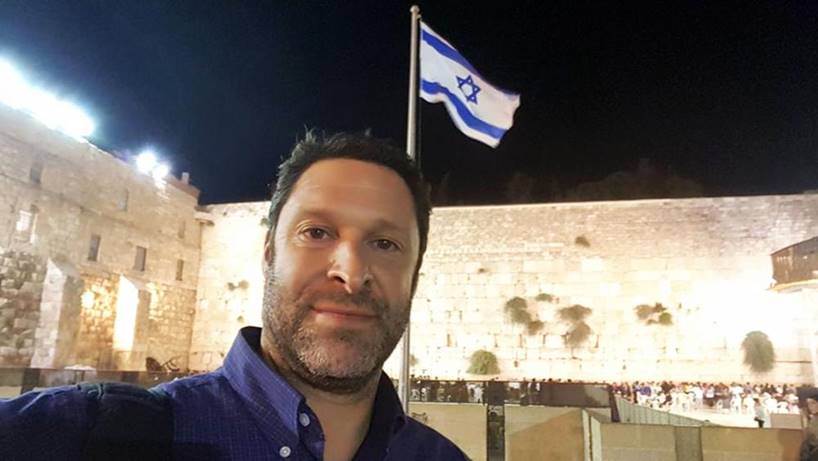
It takes a lot to fell a lion. Several weeks ago, a 17 year old terrorist felled one of Israel and the Jewish world’s most recognized activists, the Lion of Zion, Ari Fuld. Ari Fuld, was 45 years old, a father of four, slain while he shopped in a nearby supermarket. Mortally wounded from the stab wound in his back that hit a major artery, Fuld managed to chase and shoot his murderer before succumbing to his wounds.
The Lion of Zion, who roared his support for Israel across social media and inspired legions of activists was no more.
Teenage Terrorists
Teenage terrorists are sadly, not a new or unusual phenomenon. Over the last two years this has been a common occurrence. Motivated by a growing hatred that is indoctrinated into them from baby-hood, these killers have claimed many innocent lives.
It is not just the steady diet of hatred that is consumed but a whole industry has grown around terrorism. It even has a fancy name that rhymes – “pay for slay”. In a nutshell, there is a scale “of benefits” that determine how much of a monthly stipend the family of a terrorist receive.
If you kill a Jew AND get killed then – jackpot – you get the most cash. If you stab a Jew and kill him/her but are merely wounded then second prize, a lot less money.
It is money for jam for aspiring terrorists – and this comes with an instructional “how to stab for maximum casualties” videos.
The “pay for slay” industry is growing so much that the Palestinian Authority even has a name for the millions of dollars in supposed aid that they have re-budgeted to pay their young terrorists – The Martyr’s Fund.
Death Dollars
Foreign aid that countries earnestly donate to the Palestinians with the hope that it will go towards improving the lives of Palestinians is re-routed to the Martyr’s Fund to support this “pay for slay” economy. This is a rough breakdown of how the economy of terror funds are allocated according to an expose published in the Washington Post:
The Washington Post’s analysis showed that in 2017, $160 million was paid to 13,000 beneficiaries of “prisoner payments” ($12,307 per person) and $183 million was paid to 33,700 families in about in “martyr payments” ($5,430 per family), of which:

Economy of Death
Stipends are paid to families of both prisoners and Palestinians killed in political demonstrations that turn violent where protesters are killed by non-lethal riot control methods (such as being hit by a tear gas canister) and to individuals imprisoned for “common crimes”. The fund also pays $106 a month in “canteen money” to all imprisoned Palestinians, including those imprisoned for non-political crimes such as car theft and drug dealing, for prisoners to spend in the prison canteen. This must be where Marwan Barghouti got his money for his chocolate he was eating during his hunger strike…
Families of individuals killed by Israeli security forces are paid stipends of about $800 to $1,000 per month. The families of convicted Palestinians serving time in Israeli prisons receive $3,000 or higher per month.
Yossi Kuperwasser, an analyst with the Jerusalem Center for Public Affairs, estimated that in 2017 half of the $693 million that the Palestinian Authority receives as foreign aid, $345 million, was paid out as stipends to convicted terrorists and their families
How many schools, hospitals and other infrastructure that would be beneficial could be built with this money? Asking for a friend….
Instead, this money continues to fuel terror. Incitement to hate and kill Jews is manifesting itself in these ongoing spates of stabbings and shootings perpetrated by teenage terrorists.
Incitement of hatred that motivates children to become stealthy killers and not nation builders falls under the remit of child abuse and the international community is starting to take notice. The United States has started to cut funding dramatically. On 23 March 2018, U.S. President, Donald Trump, signed the Taylor Force Act (named for victim of terror, Taylor Force) into law, which will cut about a third of US foreign aid payments to the Palestinian Authority. This is on the provision that the PA ceases making payment of stipends to terrorists and their surviving families and Australia has followed suit. In July 2018, Australia stopped the A$10M (US$7.5M) in funding that had been sent to the PA via the World Bank, and have decided to send it instead to the UN Humanitarian Fund for the Palestinian Territories. The reason given was that Australia did not want the PA to use the funds to assist Palestinians convicted of politically motivated violence. Other governments are starting to review their funding as well.
The Lion of Zion may have been silenced but in his memory and for those who have been slain our voices will not be. We say loud and clear the jig is up – perpetuating a cycle of violence and terror is no longer going to be profitable.

Feature picture credit: Yishai Fleisher