


The State of Israel goes to great lengths to retrieve its soldiers, whether alive or dead.
By Lennie Lurie
In light of the crucial importance Jews attach to the religious necessity to bury the bodies of their fellow Jews, one can now comprehend the vital role played by those dedicated and steadfast members of that unique Israeli Defense Forces (IDF) unit given the name Eitan Unit, whose members represent the very best in furthering the sacred obligations of the Jewish religion and fulfilling the mitzvah of Chessed shel Emet (English: “True Kindness”), in finding the bodies of missing Israeli soldiers for burial.
This is the phrase that has echoed in my mind ever since that tragic date of 7th October, 2023, when the Hamas terrorists from Gaza, attacked Israeli towns and settlements located along the Israeli-Gaza border, murdering 1,195 people, comprising 831 Israeli civilians, security force members and foreign nationals as well as 364 Israeli civilians killed at the Nova musical festival.
251 people of both sexes and all ages (including foreign nationals, mainly workers from Thailand) were abducted by Hamas and hidden in underground tunnels in the Gaza Strip.
A total of 1,968 Palestinian prisoners and detainees were returned to Gaza in exchange for the final group of living Israeli hostages on October 13, 2025. This exchange included 250 prisoners and 1,718 detainees from Gaza.
Israel and Hamas became locked in lengthy and tense negotiations over the return of the remaining 13 bodies of Israeli hostages who died in Hamas captivity. To many people outside the Jewish community, the idea of fighting for the return of bodies can seem hard to grasp. Why would Israel go to such lengths to recover the remains of the dead?
However, there exists in the Israel Defense Forces (IDF), a very special unit whose name and primary function is unknown to most Israelis.
Within the IDF Manpower Directorate there is a specialized unit known as the Eitan Unit, which is primarily responsible for locating bodies of missing and dead IDF soldiers. The Eitan Unit is dedicated to the ongoing effort of finding missing IDF soldiers, whether they disappeared recently or in past conflicts (some cases date back to the 1948 War of Independence).


The Hebrew word Eitan is אית”ן , whichis an acronym of the Hebrew words “איתור נעדרים” meaning:
“Locating missing Persons”
The Eitan Unit is active on an everyday basis, as well as during emergencies, to try find missing soldiers. The Eitan Unit plays a critical role in saving the lives of missing soldiers as well as giving closure to families whose loved ones have been killed in action and the body goes missing.
The Eitan Unit utilizes advanced technologies along with intelligence and investigative processes in order to quickly detect a missing soldier during active combat or even after a long period of time.
Major Yoav, an unmanned aerial vehicle – UAV (also called drones) operator and a specialist in tracing missing and kidnapped IDF soldiers states:


“We are supposed to respond as fast as possible once a soldier is determined to be missing. Be it in an abduction or on the battlefield, we must find and bring the soldier back. Locating the soldier right away prevents a family, national, and international crisis down the road.”
Eitan UAV operators have been taught how to serve as the IDF’s eyes in the skies over enemy territory in order to trace and locate missing persons and also to thwart the next attempt of abduction. By using existing technology, 12-digit location coordinates are given that point to the place where a missing person is, dead or alive. This enables the Eitan operators to explore enemy territory and narrow the missing person’s search. It allows them to traverse through places which would not be possible without the UAV.
Major Yoav describes a particular finding:
“When you bury someone, a mound is created. Later, that mound turns into a very particular shape, which can be spotted. In addition, we learned that when someone digs a grave, the soil is turned over and seeds are mixed in. The mound holds a greater amount of moisture. The moisture and the mixed seeds result in a unique effect that features vegetation different from the surrounding natural habitat. These findings helped us locate Dana Bennett [an Israeli teen murdered in 2003].”
Another crucial benefit of the UAV is its sophisticated cameras. Major Yoav explains:
“The UAV has a thermal camera on board that provide superior resolution and quality. Thermal techniques allow for further analysis of the terrain. We can even mark suspicious areas for further investigation. Our focus here is on getting to the soldier before the terrorists do”.
Since the IDF’s establishment in 1948, there are 179 missing soldiers, the majority from the War of Independence. The investigators of the Unit visit IDF archives, State archives, and additional archives where they talk to people and try to understand what happened. They spend hours in the archives trying to piece together the circumstances of a disappearance in order to locate and identify the bodies of missing soldiers.
It has always been the goal of terrorist organizations to take Israeli soldiers, dead or alive. History has shown that the State of Israel has gone to great lengths to retrieve its soldiers, even solely for burial purposes.
The Eitan Unit supervises all recovery attempts of missing soldiers in Israel, taking full advantage of the most innovative technological advancements, such as unmanned aerial vehicles (UAV’s) and ground analysis, to identify potential burial sites or search areas. These physical search operations, conducted by a department within the Eitan Unit, has combat soldiers specially trained to operate in these delicate situations.
The commander of the Eitan Unit, Lieutenant-Colonel Nir states:
“There are faces behind every case. Behind every case there’s also a story. In recent years we’ve had a fair share of successful cases and we’ve managed to find missing soldiers. Every time we receive a new case, I’m part of the investigation and I’m amazed at the team’s dedication”.
There are some cases that are close to being solved and others that are further away, but the Unit continues searching for clues and evidence.
Says Lt. Col. Nir:
“For example, there are cases where the soldier died at sea and the chances of finding them are close to none!”
Within the Eitan Unit is a department that is in charge of mapping and analyzing the ground in order to know where to look for missing soldiers. “I can take a map from 1948,” explains Lt. Col. Nir,“and compare it to a current map, and then direct the investigators in that geographical area”.
Another Eitan Unit has combat soldiers who undertake regular drills and exercises in physically searching for missing IDF soldiers. During emergencies, the teams take notes on the missing soldier cases, keeping the information up to date, and then presents the information to the Military Rabbinate and the Head of the Manpower Directorate. Says Lt. Col. Nir:
“We then decide whether the soldier is missing or a fallen soldier whose burial place is unknown. It will be then up to them to decide; our job is to provide them with as much information as possible.”
Once the family is notified, the Unit accompanies them to activities and meetings, providing them with any additional support they need. Although fraught with challengers, Lt. Col. Nir is never discouraged adding:
“After 70 years, the window of opportunities is closing and if we don’t act fast, we won’t have the testimonies because they’re a dying generation.”
However, the Unit continues to discover more information about missing soldiers, even from 70 years ago.
Lt. Col. Nir concludes:
“It’s important for soldiers to know that the IDF and Israel do everything in their power to bring back missing soldiers. A strong saying I heard while investigating a case of a missing Givati Brigade soldier from 1948 was, ‘After what I witnessed today, I hope and pray that if I am ever taken hostage or am missing, people will look for me the same way we looked after missing soldiers from 1948’. We will do everything to bring a hostage or missing soldier back to his home and family in Israel.”
Sadly, there are 179 missing in action (MIA) IDF soldiers whose bodies were never found. Nevertheless, the State of Israel has honored them with the establishment of the commemorative Garden of the Missing in Action [Hebrew: גן הנעדרים – Gan HaNe’edarim – (literal) Garden of the Missing] located on Mount Herzl in Jerusalem.


The garden memorializes fighters and officers of the Israel Defense Forces and Land of Israel MIAs starting from 1914, whose resting place is unknown. The garden also contains memorials to those lost aboard the submarine INS Dakar and the 23 Palmach commandoes lost in Operation Boatswain. The establishment of the Garden of the Missing was initiated by Moshe Oren, head of the Ministry of Defense Commemoration Division in 2003. It was dedicated in February 2004 in a ceremony attended by army chiefs, Israeli Defense Minister at the time, Shaul Mofaz, and members of the Jerusalem Municipality.


An annual memorial service for the missing soldiers of Israel takes place in the garden’s main plaza on the Seventh of Adar, the day in the Hebrew calendar which marks the traditional date of the death of Moses, whose grave, according to the Bible, is known only to God.


According to the rabbis, ransoming of captives is closely tied to the commandment of saving a life, and is thereby supremely important in Jewish law. Jewish law obligates searching for those who are missing in action even if there is only a remote chance of finding the person. The policy of the Israel Defense Forces is never to leave a soldier behind.


COMING HOME
Master Sergeant Ran Gvili (aged 24 years) was an Israel Police combat officer in the elite Negev YASAM unit.
He was killed fighting Hamas terrorists near Kibbutz Alumim on October 7, 2023, after taking medical leave to join the defense. His body was abducted to Gaza, making him the final captive held there until his remains were recovered in “Operation Brave Heart” and returned to Israel on January 26, 2026.


The long and agonizing wait came to an end for the family of Master Sergeant Ran Gvili when, on Wednesday morning, 28th January, 2026, he was buried in the military cemetery of his home town Meitar, located 19 km (12 miles) northeast of Beersheba. The formal funeral procession began at 10:30 A.M. at the IDF Camp Shura in central Israel, just south of the town of Ramle. Dozens of police officers stood in silent salute along the road, with Israeli flags spontaneously displayed by Israelis from all walks of life in honor of the Israeli cop who left his home and charged into battle against the invading Gaza terrorists on 7 October.


Eulogizing at the funeral of his brother Ran, Omri Gvili, the brother of Ran, expressed the sentiment in the heart of all Israelis and which lies imbedded in the DNA of the IDF:
“I’ve closed the circle – my hero brother has come home.”
About the writer:

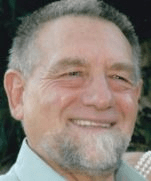
A B.Sc. graduate in Economics and Geology from the University of Cape Town (UCT), Lennie Lurie may be the only volunteer from abroad who was granted permission to leave his group on kibbutz during the 1967 Six Day War to rejoin his paratroop brigade that he had served with years before following his matriculation in Cape Town. In Israel, Lennie has worked as an Export Manager for some of the country’s major food manufacturers and chemical companies as well as an independent consultant in Export Marketing guiding many small Israeli businesses to sell their products and services in the world-wide market. As a result of a work accident in 1995, Lennie made a career change and became an independent English teacher working mainly with hi-tech companies and associated with universities and colleges in the north of Israel.
While the mission of Lay of the Land (LotL) is to provide a wide and diverse perspective of affairs in Israel, the Middle East and the Jewish world, the opinions, beliefs and viewpoints expressed by its various writers are not necessarily ones of the owners and management of LOTL but of the writers themselves. LotL endeavours to the best of its ability to credit the use of all known photographs to the photographer and/or owner of such photographs (0&EO).